Starship's Orbit Push Could Upend Global Launch Economics
SpaceX's next Starship flight aims for orbit—a milestone that would compress launch costs and reshape the global market. We examine who wins, who loses, and what happens next.
The Orbit Threshold
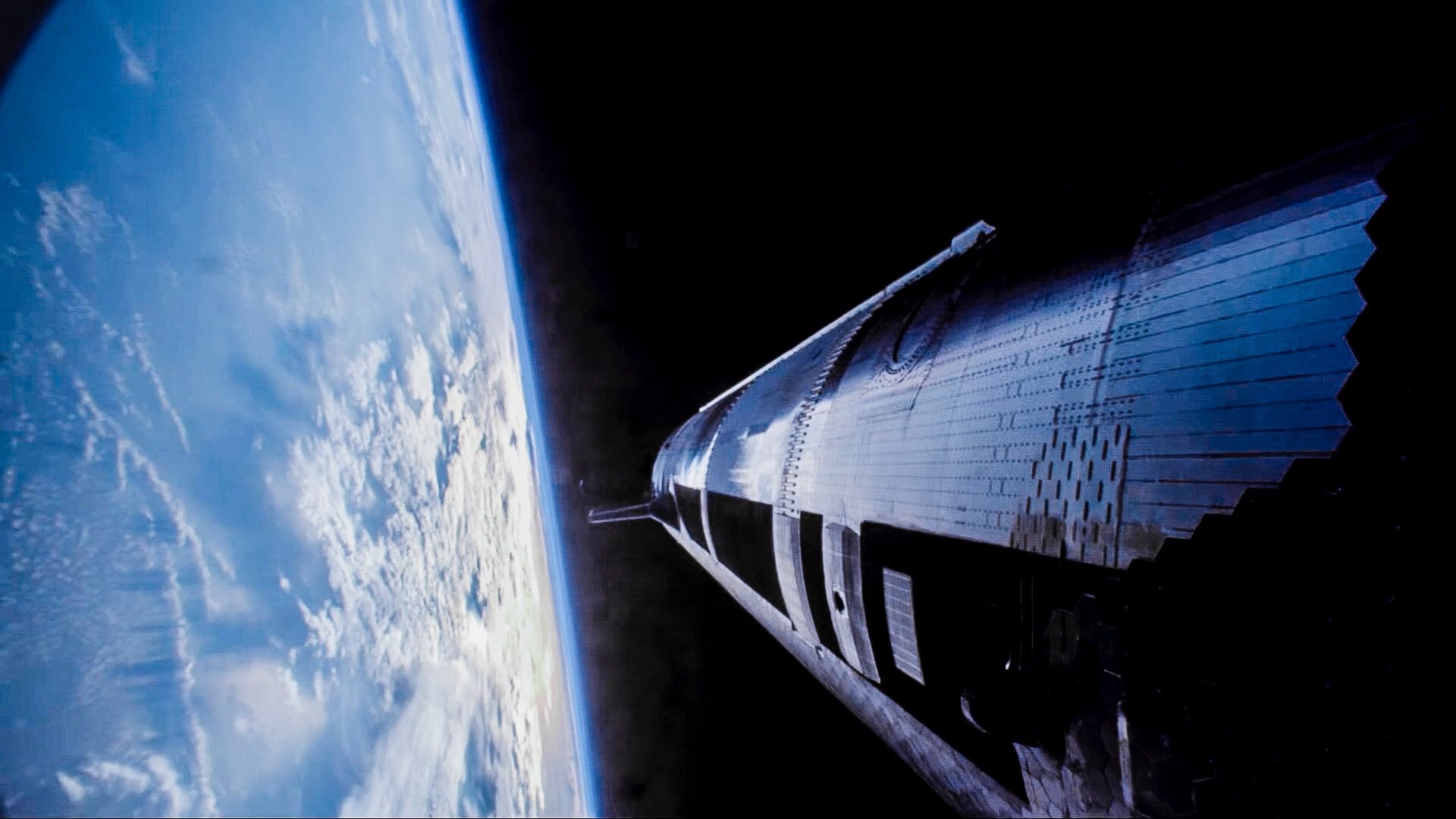
SpaceX is about to attempt something it has never done before. Flight 14 of its Starship vehicle, scheduled for Sept. 28, targets orbital insertion. All thirteen prior flights have been suborbital, arcing above the atmosphere but never achieving the velocity needed to circle Earth. If successful, this will mark the first time Starship—and any public vehicle in history—sustains an orbit from a fully reusable stack.
The mission profile is starkly different. Rather than the hour-long suborbital hops, Flight 14 will last roughly ten hours. After liftoff, the 407-foot-tall Super Heavy booster will separate, perform a boostback burn, and splash down in the Gulf of Mexico. The Ship upper stage will continue to an altitude of about 170 miles (275 kilometers), execute a twenty-second orbital insertion burn, and then coast for six complete revolutions around the planet. Finally, a deorbit burn will guide it to a Pacific splashdown.
Embedded in that circuit are twenty-six operational Starlink Version 3 satellites, the first batch SpaceX has ever placed into a sustained low-Earth orbit. Three carry cameras to inspect the heat-shield tiles—a critical step toward proving reusability. This is not just a test flight; it is a delivery run for the very constellation that will define SpaceX’s commercial future.
The Economics of Orbit
Why does reaching orbit matter beyond the engineering triumph? Because orbit is where the economics of launch change fundamentally. Until now, Starship has been a spectacular suborbital demonstrator. Orbital insertion is the threshold that separates novelty from utility.
SpaceX has repeatedly stated that full reusability—the ability to land and reflay both the Super Heavy booster and the Ship stage—is the key to slashing cost per kilogram. The company calls it “the Holy Grail of Rocketry.” With a payload capacity of 100 tons to orbit today, and a design goal of 200 tons in later iterations, Starship promises to deliver payloads to LEO at a fraction of the cost of existing heavy-lift vehicles.
Consider the numbers. A Falcon 9, SpaceX’s workhorse, charges roughly $50–$60 million per launch for up to 22.8 tons to LEO. ULA’s Vulcan Centaur starts around $119 million for 20 tons. Arianespace’s Ariane 6, once operational, will compete in the same ballpark. Starship, if fully reusable, could drive launch costs down by an order of magnitude. Even early estimates suggest prices below $10 million per launch for massive payloads.
That compression would reshape every segment of the space economy. Satellite operators could deploy larger, more capable platforms for the same money. Mega-constellations like Starlink, OneWeb, and Amazon’s Project Kuiper would become even more affordable to scale. Space tourism, orbital manufacturing, and in-space fuel depots—all depend on cheap access to orbit.
Supply Chains in Turmoil
The disruption would not stop at launch providers. A cheap, high-capacity vehicle sends shockwaves through the aerospace supply chain. Tier-1 contractors who currently build rocket stages, avionics, and propulsion systems for ULA, Arianespace, and ISRO would face sudden demand contraction. Many of these firms operate on thin margins; a price collapse could force consolidation or layoffs before they pivot to new contracts.
Conversely, SpaceX’s domestic supplier base—firms like Relativity Space, Rocket Lab, and numerous California-based component makers—could see explosive growth. Starship’s manufacturing relies heavily on rapid iteration and in-house production, which means smaller vendors who can deliver at speed and low cost will be courted aggressively. The ripple effect would concentrate economic activity in Texas and Florida while hollowing out legacy aerospace hubs in Alabama, Mississippi, and Southern France.
Who Wins, Who Loses
A successful orbital flight puts SpaceX miles ahead in the race for launch dominance. But the ripple effects will be felt worldwide.
SpaceX wins immediately. It validates the core technology, accelerates Starlink V3 deployment, and unlocks NASA’s Artemis lunar lander contract. The company can begin flying Starlink satellites to orbit at scale, reinforcing its monopoly on high-bandwidth global internet.
ULA, Arianespace, and ISRO lose market share. These agencies and companies have built businesses on predictable, albeit expensive, launch services. If Starship becomes operational, they will face pricing pressure that could make many of their rockets economically unviable. ULA’s Vulcan, already plagued by delays, may struggle to justify its price point. Arianespace’s Ariane 6, designed to compete with Falcon 9, would suddenly look doubly outdated. ISRO’s GSLV and upcoming SSLV programs, though cheaper, cannot match the payload capacity or reusability promised by Starship.
Chinese state-owned operators face a different dilemma. China has been developing its own heavy-lift vehicle, the Long March 9, but it remains years from completion. A mature Starship could undercut even Chinese domestic launches, forcing Beijing to either subsidize heavily or seek alternatives.
Satellite manufacturers and operators stand to gain if they can secure launch slots at lower prices. But there is a catch: SpaceX’s vertical integration means it controls both the payload and the launch. Competing operators may find themselves at the mercy of a single provider, a dynamic that could trigger regulatory scrutiny in Europe and the United States.
Regulatory and Geopolitical Fallout
Washington and Brussels are likely to react. Antitrust concerns are already surfacing among European lawmakers, who view SpaceX’s dual role as launch provider and satellite operator as a conflict of interest. The European Space Agency has quietly begun exploring partnerships with alternative providers to reduce reliance on a single company. In the United States, Congress may push for mandates requiring government payloads to fly on non-SpaceX vehicles, a move that could fragment the market further.
Geopolitically, a Starship-dominated launch architecture would shift center of gravity away from traditional spacefaring nations. Countries without domestic launch capability—most of Africa, Latin America, and parts of Southeast Asia—would become entirely dependent on SpaceX for access to orbit. That dependency carries soft-power implications far beyond economics.
The Bigger Picture
Orbit is only the first hurdle. Starship still must master on-orbit refueling, long-term cryogenic propellant storage, and mid-air catch-and-reflight of both stages. NASA’s Artemis IV lunar landing in 2028 depends on a dozen refueling launches to topping off the lander’s tanks—a capability that lies well beyond Flight 14.
Yet the psychological and market impact of an orbital success would be immediate. Investors would pour capital into SpaceX-related ventures; governments would accelerate their own lunar and deep-space programs; and the satellite internet race would intensify.
For the global launch market, the message is clear: either adapt to the new economics or risk obsolescence. The era of high-cost, low-volume access to space may be coming to an end. Starship’s Flight 14 will tell us whether that era is truly over.