The Supreme Court’s Next Trade War Decision Could Rewrite American Power
Trump is using a forgotten 1930 statute to justify 50 percent tariffs on Canada. If the Supreme Court upholds it, the ruling could grant presidents sweeping tariff authority and send global supply chains reeling.
The Legal Backdoor Behind Trump’s Latest Tariff Blitz
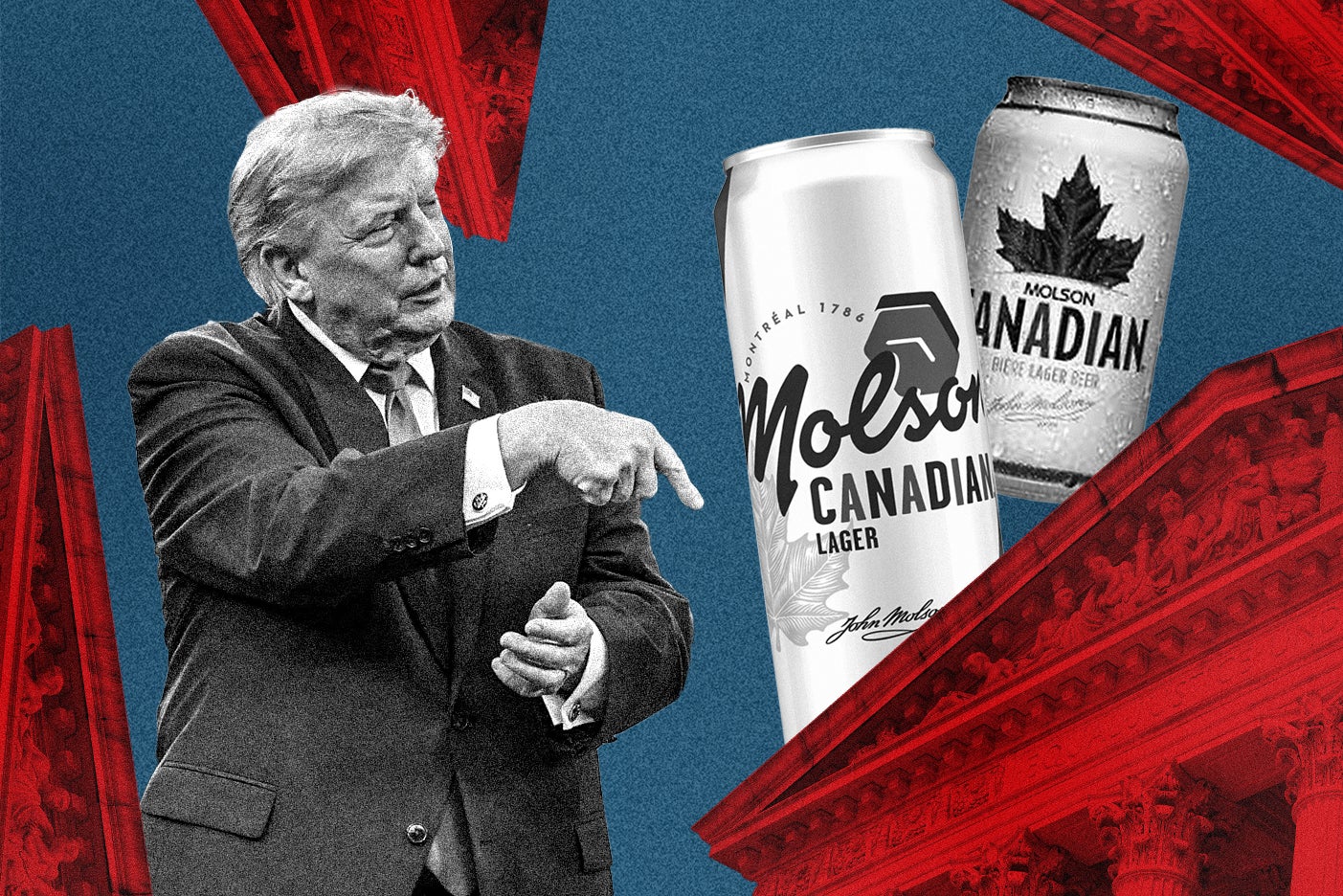
President Donald Trump just announced 50 percent tariffs on $20 billion in Canadian goods—hockey sticks, feathers, building materials. He’s also threatening a 50 percent levy on Canadian autos by January 1, 2027. The legal justification is almost as surprising as the penalty: Section 338 of the Tariff Act of 1930, a provision so dormant that no U.S. president has ever invoked it to impose tariffs before.
This isn’t a repeat of last year’s chaos. When Trump first deployed the International Emergency Economic Powers Act to unleash sweeping tariffs in 2025, the Supreme Court shut it down in February 2026, ruling that IEEPA contained no textual basis for unilateral tariff authority. The administration has since refunded roughly $100 billion to American businesses because of that decision, though consumers have yet to see a check. Rather than concede, the Trump team has been methodically hunting for alternative statutory hooks—and Section 338 may be the one that actually holds.
Why Section 338 Changes Everything
The statute authorizes the president to impose duties of up to 50 percent on any country found to have “discriminated” against the United States, “directly or indirectly.” That word—discrimination—is remarkably undefined. There is no bright-line test, no requirement for a formal investigation, no clear mandate to consult the International Trade Commission. Marc Busch, a former adviser to the Department of Commerce and the U.S. Trade Representative, told Slate that the provision “just says discrimination. It clearly says tariff. It clearly says he doesn’t need to really consult widely.”
That ambiguity is precisely why legal scholars and trading partners are bracing. Where IEEPA required the president to declare a national emergency, and Section 122 of the Trade Act of 1974 was limited to temporary measures for balance-of-payments problems (and already struck down by the Court of International Trade), Section 338 appears to offer far broader discretion with far fewer procedural guardrails. It is, in Busch’s assessment, potentially “the only way he gets closer to the degree of freedom he had under IEEPA.”
The administration’s case against Canada rests on two pillars. First, Ottawa imposed retaliatory tariffs on U.S. goods—including whiskey, aluminum, and steel—after Trump’s initial 25 percent levy on Canadian products. The White House now treats those countermeasures as discrimination against American commerce. Second, Canada granted the European Union a more favorable cheese import quota than it extended to the United States. Both arguments are legally thin and politically transparent. Busch called the cheese dispute “odd,” noting that the U.S. itself grants preferential market access to countries with which it has trade agreements, including Canada under USMCA.
The Cheese War That Isn’t About Cheese
The real target behind the tariff fury is not dairy. It is a demonstration effect. Canada was one of the few nations to push back hard against Trump’s initial tariff wave, and Washington wants to send a message: retaliation will not be tolerated. The fact that Canada became the beta test for Section 338 is almost beside the point. The provision is a general-purpose tariff gun waiting for a target.
Busch put it bluntly: “Section 338 got dusted off and used to take a swipe at Canada because the president has a particular grudge against Canada and China for having retaliated for his earlier tariffs and needs to make a demonstration effect come across as a result of this action.”
That calculus matters beyond North America. If the courts uphold this reading of Section 338, every country that imposes retaliatory tariffs—or simply offers trade terms the United States dislikes—becomes eligible for a 50 percent levy. The provision’s text contains no geographic limitation, no requirement that the discrimination rise to a particular threshold, and no clear endpoint. The result is a statute that effectively rewrites the postwar trading order through executive action alone.
Who Wins, Who Loses, and How Fast
The immediate winners are not the American workers Trump claims to protect. They are the White House counsel’s office and any future president who inherits the same legal blueprint. A ruling that validates Section 338 would decouple tariff policy from Congressional intent and place it squarely in the executive branch’s discretionary bucket. That shift would outlast Trump and reshape the relationship between Congress and the presidency on trade for decades.
The losers are far more concrete. Canadian exporters face an immediate threat to a sector that accounts for roughly $300 billion in annual bilateral trade. Automakers in Ontario and Michigan are locked in a single integrated supply chain; a 50 percent tariff on Canadian autos would not simply raise prices—it would fracture a production model built over thirty years. U.S. manufacturers that depend on Canadian inputs, from aluminum to finished auto parts, would face cost spikes passed directly to consumers. And Europe, already navigating a fragile transatlantic trade relationship, would watch closely to see whether Washington’s definition of “discrimination” now includes lawful competitive advantage.
Small importers are also in the crosshairs. As Busch noted, plaintiffs challenging the tariffs are still assembling. “We’re just waiting for someone who imported a hockey stick,” he said. But the pool of standing plaintiffs is not limited to Canadian exporters. Any U.S. business that imports goods subject to the Section 338 levy has a direct financial injury and a credible path to litigation.
The Timeline That Will Decide the Order
Here is what makes this moment structurally significant rather than merely political: the Supreme Court has already shown willingness to intervene in trade-authority disputes, but it has also declined to review certain lower-court outcomes. In July, the Court refused to hear the challenge to Trump’s use of Section 301 of the Trade Act of 1974, which allowed the president to tariff 60 countries over alleged forced-labor violations. That refusal left the tariffs in place without setting a precedent. The Court now faces a similar decision on Section 338, but with higher stakes because the legal question is sharper—this statute actually mentions tariffs by name.
A ruling could arrive as early as late 2026 or into 2027, but Trump has already announced that auto tariffs could take effect on January 1, 2027. The administration may simply force a constitutional confrontation by imposing the levy before any court can rule. That is a familiar tactic: create facts on the ground, then ask the judiciary to catch up.
What Happens Next for Global Supply Chains
The ripple effects will extend far beyond Washington and Ottawa. A Section 338 precedent would signal to every trading partner that the United States no longer treats tariffs as a tool calibrated through Congressional authorization or multilateral negotiation. It would encourage盟友 to diversify away from the U.S. market faster. It would push European and Asian manufacturers to accelerate nearshoring and friend-shoring strategies already underway. And it would destabilize the dispute-resolution mechanisms embedded in agreements like the USMCA, which was supposed to replace the chaotic tariff diplomacy of the past with rules-based enforcement.
The United States-Mexico-Canada Agreement itself is now in limbo. The U.S. declined to renew the pact last month, adding another layer of uncertainty to a region that has spent decades integrating its economies. A Supreme Court validation of expansive tariff authority would make the already-salvageable provisions of USMCA largely irrelevant—replaced instead by whatever the president decides “discrimination” means this week.
The Real Verdict Is Already Pending
What is clear is that the Trump administration views Section 338 as a durable legal foundation for unilateral tariff action. What is less clear is whether the federal judiciary will treat it that way. The provision has never been interpreted by a court. Its text is brief. Its history is obscure. And its consequences, if upheld, would be enormous.
The Supreme Court’s next move on this question will not simply resolve a dispute between Washington and Ottawa. It will determine whether the president can unilaterally redefine the terms of American trade with a stroke of a pen—or whether the courts will insist that tariff authority, however controversial, remains bound by the constitutional framework Congress designed. Either outcome will reshape supply chains, alliances, and the balance of power between branches of government. The cheese is just the cover story.