Tennessees botched execution exposes lethal injection crisis
Christa Pike remains alive after Tennessee's second failed lethal injection this year. The botched attempt raises urgent questions about capital punishment viability nationwide.
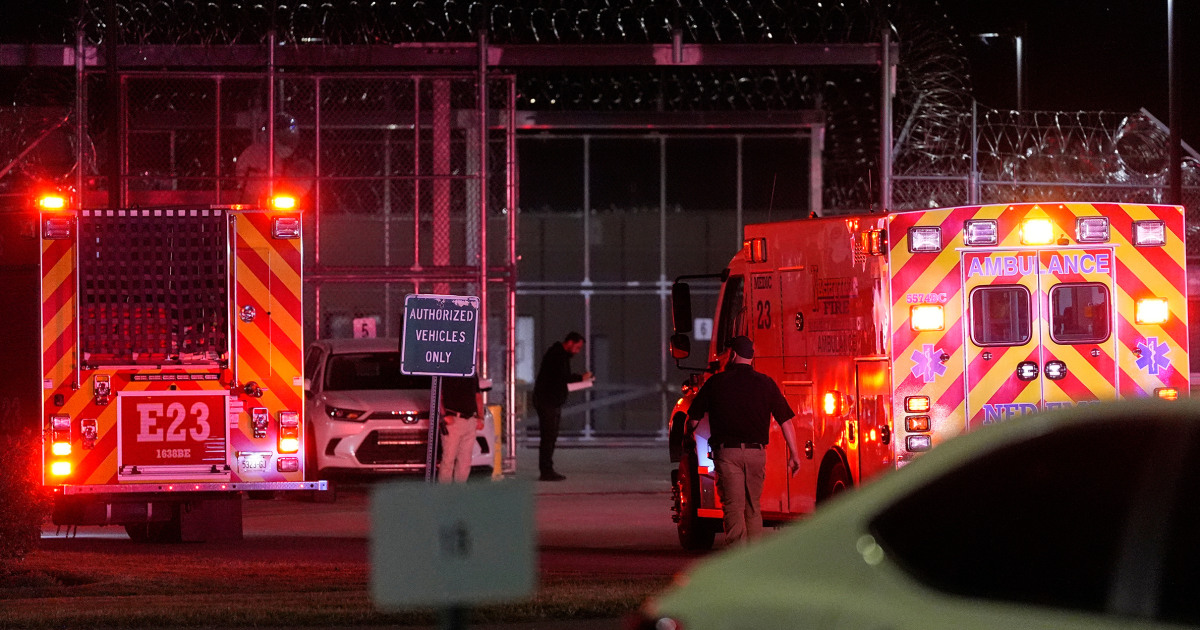
Tennessee tried to kill a woman Wednesday night. It failed.
Christa Pike, 50, is the only woman on Tennessee’s death row. She was convicted of torturing and murdering classmate Colleen Slemmer in 1995, when Pike was 18. The case made national headlines — pentagrams carved into Slemmer’s chest, a skull fragment kept as a “souvenir.” Three decades later, the method of her punishment is under the same kind of scrutiny.
Pike is alive.
Witnesses at the prison said she complained her arm felt like it was about to burst, kicked off the sheets, and was heard snoring. Her attorneys filed a federal court document stating she had not lost consciousness and still had a heartbeat. An ambulance transported her to an off-site medical facility. The Department of Correction did not confirm whether she was alive or dead.
This is the second time Tennessee has failed to execute someone in 2024. In May, executioners could not find a vein for a backup IV in the case of Tony Carruthers, who was convicted of three 1994 killings. Carruthers received a one-year reprieve.
The pattern matters. It is not a statistical anomaly.
What the witnesses saw
Reporters at the Wednesday night execution described an experience that broke every convention of how capital punishment is supposed to work. Execution is meant to be clinical, quiet, efficient. Tonight was neither.
Tori Gessner, a reporter at WKRN in Nashville who has witnessed five executions in the state, said at a news conference: “Nothing about today was normal, typical, at all.”
She recounted that at 7:34 p.m., Pike told executioners her arm felt like it was about to burst open. She asked whether that was normal. The curtain was closed twice. Journalists could only hear sounds.
May Martinez, Slemmer’s mother, called the failed execution “a mess.” She was furious — not at Pike, but at the state. “They didn’t say anything, and then, all of a sudden, they asked all the victims to leave,” Martinez said. “And he said that it didn’t work.”
Her message to Governor Bill Lee, the director of the Department of Correction, and the attorney general was direct: “They f—– up.”
The legal scramble
The execution had nearly been blocked at the last possible moment. About an hour before the scheduled 10 a.m. start time, the 6th U.S. Circuit Court of Appeals granted a short reprieve to review Pike’s claim that she should be allowed to reopen proceedings about allegations of severe child sexual abuse — abuse the state did not dispute at a special hearing in August.
The state attorney general asked the Supreme Court to intervene. Hours later, the Court vacated the lower court’s stay. Justices Sonia Sotomayor, Elena Kagan, and Ketanji Brown Jackson dissented. Sotomayor wrote that the majority’s decision “interferes with the Sixth Circuit’s routine administrative handling of a capital case and unnecessarily prevents that court from giving due consideration to Pike’s claim.”
The warrant for Pike’s execution was set to expire at midnight local time. The Department of Correction has not said whether it will attempt another execution.
Who wins, who loses
No one wins here. That is the point.
Victim advocates wanted justice served. They got a botched procedure instead. Pike’s supporters — including her spiritual adviser — say she expressed remorse and wrote before the execution that she was “at peace” and “not afraid to die.” She described being nervous about the process.
Governor Lee ordered a comprehensive third-party review. He also announced that Tennessee’s final execution of 2024 will not proceed as planned.
The Tennessee Department of Correction issued a statement saying it “followed every step of the State’s lawful, established execution protocol” and that the lethal injection chemical “has consistently been effective.” That claim rings hollow after two failed attempts in four months.
Robin Maher of the Death Penalty Information Center told the Associated Press that what Pike experienced is “singular and unparalleled.”
The bigger picture
Tennessee’s trouble is not isolated. Lethal injection has become the most contested method of execution in the United States. Pharmaceutical companies refuse to supply drugs for use in executions. States have turned to experimental compound cocktails — sometimes compounded by pharmacies with little oversight. The result is repeated suffering, repeated legal challenges, and a system that cannot guarantee the basic requirement of capital punishment: that the condemned person actually dies.
The Supreme Court has allowed these executions to proceed despite dissenting opinions and mounting evidence of dysfunction. The three liberal justices’ dissent in Pike’s case signals a growing recognition that the court is accelerating executions while the legal system designed to review them is being short-circuited.
Pike’s case will not end with this botched attempt. Her lawyers are likely to file new motions based on the medical complications and the ongoing review of her abuse claims. The Third Circuit’s stay may have been vacated, but the underlying arguments remain live.
What happens next
Tennessee will conduct its third-party review. The results will shape whether the state attempts another execution of Pike or seeks a new warrant. The governor has already paused the final execution of 2024.
But the real question is whether Tennessee can ever execute anyone again without raising serious legal and constitutional questions. If the lethal injection protocol failed once — and failed catastrophically, with witnesses reporting pain and movement — can any state defend it against an Eighth Amendment challenge? The answer is not clear.
Pike has been on death row for more than three decades. She was 18 when she committed the crime. She is 50 now. The state has had thirty years to get this right. Wednesday night showed it cannot.
The execution chamber is supposed to be a place of finality. Tennessee proved Wednesday night that it is not.