The Quiet War Just Got Loud
The unsealing of Russian assassination indictments on US soil marks a historic breach of Cold War-era norms—and a new American counterintelligence strategy that turns secrecy into a weapon.
The Line That Broke
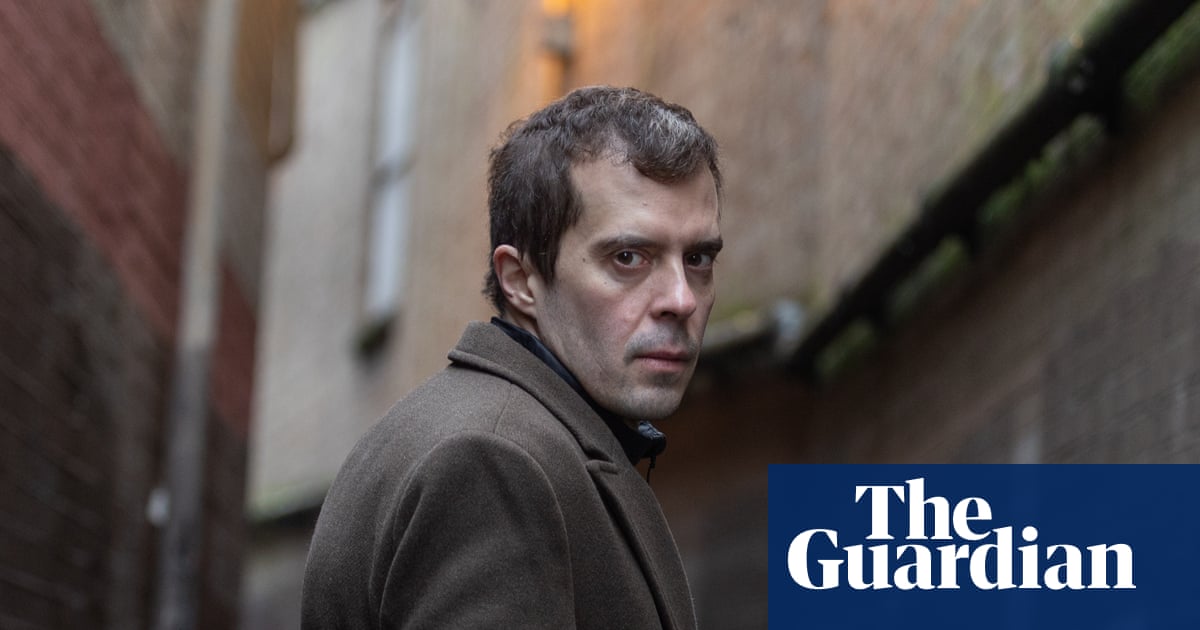
Roman Dobrokhotov stood in a Washington conference hall this week and looked around at a crowd that included people he had once feared never to see again. The Russian dissident journalist, 43, was named during a trial in London last year as one of the targets of a Russian spy ring that appeared to have murderous intent. An operative had texted colleagues about plans to burn him alive, spray him with acid, or use VX nerve agent — methods echoing the tactics used against critics in Britain and elsewhere. America, he told colleagues afterward, was no longer safe.
The setting could not have been more symbolic. The National Endowment for Democracy, a short walk from the White House, hosted the Washington Dialogue conference on Russian affairs — a venue that had long functioned as a sanctuary for Kremlin critics. Inside those high-rise offices, a quiet understanding that had underpinned East-West intelligence relations for decades was being challenged in real time.
What made this moment distinct was not simply the allegation that Russia planned to kill on American soil. It was what happened next: the United States chose to make the plot public.
The Indictments
On Tuesday, the Department of Justice unsealed indictments in absentia against five individuals allegedly working for Russia’s intelligence services. The charges alleged a conspiracy to conduct attacks and murders around the world, including within the United States. The defendants included Kirill Khrameev, a serving officer in the Federal Security Service who is 27, and his father, Yuri Khrameev, a former FSB colonel now 63. Also named were two Cuban nationals, Oemis Romagoza Durruthy and Yaidel Delgado Suarez, along with a 22-year-old Venezuelan, Angel Eduardo Castro.
The FBI had intercepted encrypted messages written in Spanish and shrouded in amateur spy code. One message described the commission as “gravely serious work” — an offer of $40,000 to surveil and then eliminate someone in Washington whom the Russian state wanted to disappear. The plot involved considerations of bringing assassins from Mexico, though the indictment noted those plans were “delayed,” leading the ring to seek a local killer instead.
The identity of the purported victim was not disclosed. Among the rumored targets was Vladimir Kara-Murza, the political activist and former prisoner who was freed from a Siberian jail and brought to the United States as part of a 2024 prisoner swap. He declined to comment when approached by reporters.
A Pattern in the Rearview Mirror
The indictment itself provided a brief genealogy of Russian extrajudicial killings that read like a timeline of post-Soviet assassinations. Paul Klebnikov, the American journalist and historian, was murdered in Moscow in 2004. Alexander Litvinenko, a former FSB officer, was poisoned with radioactive material in London in 2006. Sergei Skripal and his daughter survived a nerve agent attack in Salisbury in 2018; a local woman, Dawn Sturgess, died after contact with the same agent. In 2019, a German court found that Zelimkhan Khangoshvili, a former Chechen commander, had been assassinated in Berlin on the order of the Russian state. Alexei Navalny died in custody in 2024, having previously been poisoned with Novichok outside the country.
Each of these incidents occurred beyond American borders. Each tested a boundary that, while unwritten, had functioned as a rule of the road between the Soviet Union and the United States during the Cold War and into the post-Soviet era. Chris Costa, a former US intelligence chief and executive director of the International Spy Museum in Washington, described it as an informal agreement: aggressive espionage, yes, but with understood limits around physically targeting each other’s personnel and families on home soil.
The allegations, if proven, would represent a crossing of that line.
The Decision to Publish
Perhaps the more consequential detail was not the plot itself but the decision to unseal the indictments. Jack Devine, a former associate director of operations at the CIA, suggested that the Kremlin may have grown comfortable operating with impunity, underestimating the long-term consequences of international isolation. Calder Walton, an assistant director at Harvard’s Belfer Center Intelligence Project, pointed out that the US had handled a similar case differently in 2020, when a Russian assassination squad targeted Aleksandr Poteyev, a defector living in the United States. In that instance, American authorities chose secrecy, presumably to protect intelligence sources and avoid public confrontation with Moscow.
This time, the Justice Department did something different. By exposing the network, the government sent three signals: a warning to anyone considering recruitment by Russian handlers, reassurance to threatened dissidents, and the imposition of costs on individuals who might otherwise have continued operating without detection. Public attribution became, in effect, a counterintelligence weapon.
European diplomats in Washington noted that the timing and visibility of the revelation indicated a shift in posture. “It’s a big deal that the US chose to reveal this now,” one diplomat said. “The decision to do that raises the profile and shows the clear and imminent threat to dissidents in the US.”
What Comes Next
The immediate policy consequences remain limited. All five defendants are reportedly abroad and at large. But the broader implications are already visible. Nikkie Lyubarsky, a research associate at the Soufan Center, suggested the public release could reflect behind-the-scenes escalation tied to Russia’s reported support for Iran in the conflict with the United States and Israel. The indictment’s unsealing coincided with newly passed sanctions in the House and a recent visit by the CIA director to Russia — developments that may be connected in ways not yet public.
Evidence of heightened alertness among dissidents has already emerged. Anastasia Shevchenko, a vocal Putin critic who fled to Lithuania in 2022 after becoming the first person convicted under Russia’s law on “undesirable organizations,” reported being warned during a recent US visa interview that she could not assume safety during her visit. The message was unmistakable: the threat landscape has shifted.
At the conference, dissidents traded theories about whether the timing reflected a political calculation by the Trump White House seeking to distance itself from news that Donald Trump Jr.’s wedding had been partly funded by the Putin loyalist Umar Kremlev. Natalia Arno, founder of the Free Russia Foundation, who experienced symptoms from a suspected poisoning in Prague in 2023, summed up the mood among attendees. “We thought the Kremlin wouldn’t be as brazen as to do something on United States soil,” she said. “It’s a different landscape.”
The older generation of spies who grew up with the unspoken rules of the Cold War will note that those rules never had the force of law. They had the force of mutual interest. When that interest changes — when a Kremlin increasingly convinced of its own permanence decides that distance no longer provides adequate protection for its enemies — the rules change with it. The question now is whether Washington’s decision to make the breach public will restore enough deterrence to rebuild them.