The Tigray Peace Is Breaking: Ethiopia's Darkest Hour Returns
The 2022 Tigray peace deal appears to be collapsing as Tigrayan forces seize airports and fighting spreads beyond the region. With the TPLF forming a six-group alliance and both sides accusing each other of launching offensives, Ethiopia faces the risk of sliding back into the devastating war that killed an estimated 600,000 people — a scenario with major implications for the already-fractured Horn of Africa.
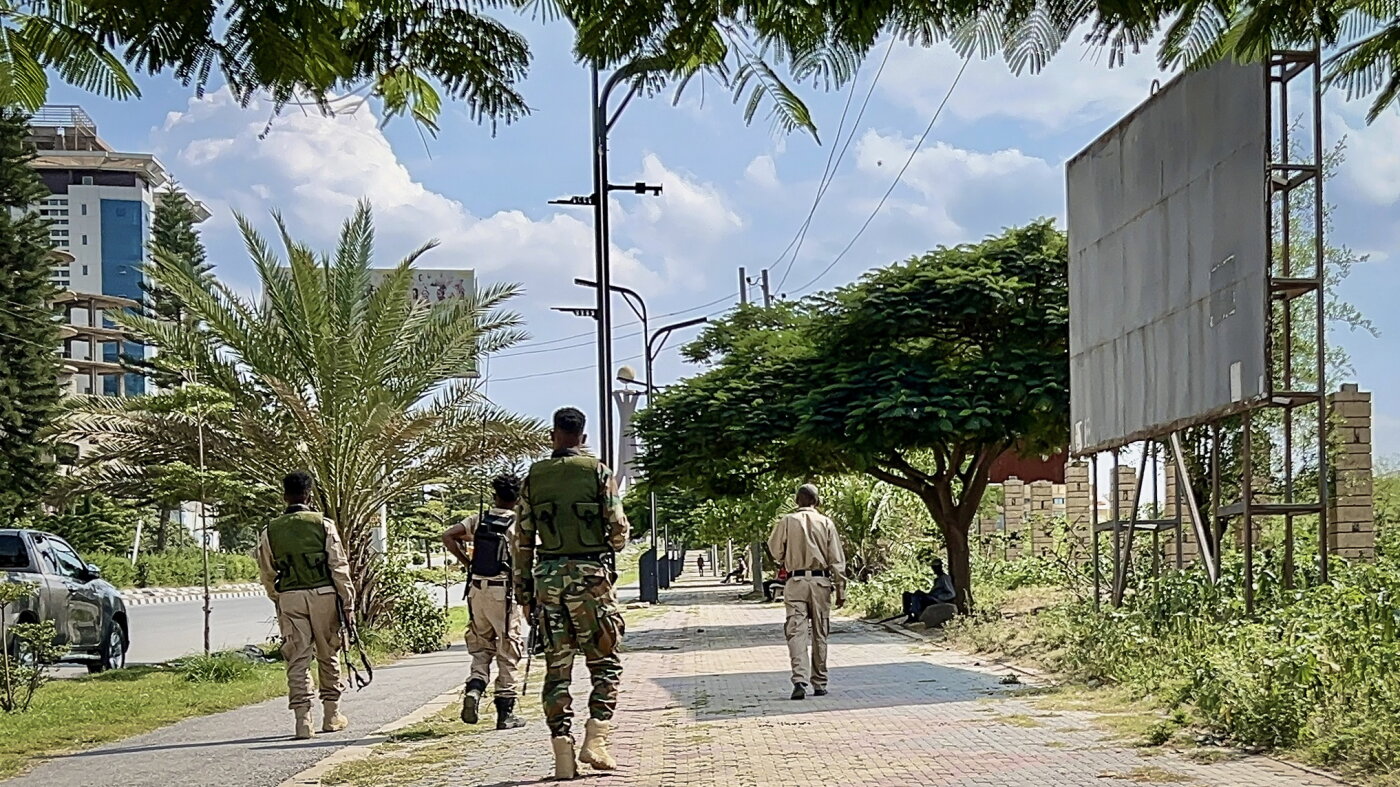
The 2022 Deal Is Unraveling
The peace agreement that ended Ethiopia’s devastating two-year war in Tigray appears to be fracturing. Tigrayan forces have seized control of airports across the region, Ethiopian Airlines has suspended all flights to Tigray, and fighting has spread beyond Tigray’s borders into neighboring Afar and Amhara regions. Both sides are accusing each other of launching the first offensive — a dangerous pattern that often precedes full-scale military escalation.
Getachew Reda, an adviser to Prime Minister Abiy Ahmed, described the Tigrayan actions as an “all-out offensive” against government positions. Tigrayan authorities insist their forces were responding defensively to attacks by federal troops. This mutual denial of aggression, paired with the rapid deterioration of trust between the two sides, raises the alarm: is Ethiopia about to slide back into the war that killed an estimated 600,000 people?
The answer matters far beyond Ethiopia’s borders. The Horn of Africa is already drowning in conflict — Sudan’s three-year war continues to rage next door, and Ethiopia itself is grappling with simultaneous insurgencies in Amhara and Oromia. A renewed Tigray war would not remain contained. It would ripple outward, potentially drawing in Eritrea, destabilizing an already fragile region, and creating a humanitarian catastrophe on a scale not seen since 2022.
How We Got Here
To understand the current escalation, you need to understand how deeply Tigray has shaped modern Ethiopia — and how bitter the fallout has become.
Tigrayans make up roughly 6% of Ethiopia’s population, but they have wielded disproportionate influence in national politics. Tigrayan forces helped overthrow the brutal Derg military regime in 1991, and TPLF leader Meles Zenawi went on to govern Ethiopia until his death in 2012. For over two decades, the TPLF was the dominant political force in the country — until Abiy Ahmed rose to power in 2018, promising reform and marginalizing the very party that had built the modern Ethiopian state.
That tension exploded into the 2020–2022 Tigray war, one of the deadliest conflicts in recent African history. The war involved Ethiopian federal forces, Eritrean troops, and Tigrayan fighters, and it left an estimated 600,000 people dead through combat, siege, and starvation. The 2022 peace agreement, brokered with intense international pressure, was celebrated as a breakthrough — a way to prevent the continent’s second-most populous nation from tearing itself apart.
But the deal never fully addressed the underlying grievances. It established an interim government in Tigray, but in May, the TPLF reasserted control over the region’s government, ending years of interim administration. This move was widely seen as a challenge to federal authority — and it set the stage for the current crisis.
The Six-Group Alliance
Perhaps the most significant development in this escalation is the TPLF’s announcement on Sunday that it had formed an alliance with six other armed and political groups. The stated aim: to remove Prime Minister Abiy Ahmed’s government and establish a transitional administration.
This is not a defensive posture. It is an explicit, organized campaign to overthrow the federal government — a clear rejection of the political trajectory the 2022 peace deal was supposed to enable. By allying with other armed groups, the TPLF is broadening the conflict beyond Tigray and signaling that it is prepared for a prolonged struggle.
The alliance also raises the stakes for Ethiopia’s other restive regions. Amhara and Oromia are already experiencing significant fighting, and a Tigray-led coalition could further fragment the country. If the federal government perceives the alliance as an existential threat, the response could be swift and severe.
Drone Strikes and Broken Trust
The deterioration has not been purely political. According to the Armed Conflict Location and Event Data Project (ACLED), Ethiopian forces have carried out drone strikes targeting Tigrayan forces and TPLF officials in recent months. The strikes were concentrated in Mekelle, the regional capital, and in southern Tigray — areas that were supposed to be under the protective umbrella of the peace agreement.
Drone strikes against a population that the federal government officially declared to be at peace are a stark indicator of how deeply trust has eroded. They also suggest that the federal government may have been planning for the possibility of renewed conflict well before the current escalation.
Both sides have accused each other of violating the 2022 agreement repeatedly. The TPLF reasserted control over Tigray’s government in May. Federal forces conducted drone strikes in Tigrayan territory in the months leading up to the airport seizures. Each violation has been met with escalating rhetoric and military posturing, creating a feedback loop that has made de-escalation increasingly difficult.
The Critical Decision
Alan Boswell, the International Crisis Group’s Horn of Africa director, framed the central question clearly: “The very big question next is how will the federal government respond? With total all-out war? Or will we see a more measured response that tries to contain this and prevent a return to total war in Tigray?”
This is the exact moment that will define Ethiopia’s trajectory. A full-scale military response risks reigniting a war that killed 600,000 people. A measured response risks being interpreted as weakness by both the TPLF and other armed groups within Ethiopia who may see the federal government’s restraint as an opportunity.
The federal government is already fighting insurgencies in Amhara and Oromia. Opening a third front in Tigray would stretch military resources to the breaking point and risk the fragmentation of the state itself.
Regional Spillover Risks
The most dangerous dimension of this escalation is its potential to draw in Ethiopia’s neighbors — particularly Eritrea.
Eritrea has historically backed the TPLF, and the two sides share a complicated history that includes a brutal border war in the late 1990s and Eritrean forces fighting alongside Ethiopian federal troops during the 2020–2022 Tigray conflict. If the war in Tigray expands, Eritrea could re-enter the conflict on the Tigrayan side — reigniting a Ethiopia-Eritrea confrontation that the world spent years hoping had been laid to rest.
Boswell warned directly: “This area borders Eritrea, which is backing the TPLF, so if this war expands there is major risk of conflict between Ethiopia and Eritrea.”
The wider Horn of Africa is already under enormous stress. Sudan’s civil war has displaced millions and created a regional humanitarian emergency. Somalia continues to face Al-Shabaab insurgency. Kenya and Uganda are managing their own internal security challenges. A renewed war in Ethiopia would add a fifth major conflict to an already overwhelmed region — and it would divert international attention and resources away from crises that are already receiving inadequate support.
International Calls for Restraint
The international response has been swift but, so far, ineffective. Mahmoud Ali Youssouf, chairperson of the African Union Commission, called for an “immediate de-escalation” and urged both sides to resume talks. Ervin J. Massinga, the U.S. ambassador to Ethiopia, condemned what he described as the TPLF’s “poor decision to launch a large-scale offensive,” calling it an “unwinnable fight.”
These statements reflect genuine concern but they do not change the calculus on the ground. Neither side appears willing to back down — the TPLF has too much to lose by accepting federal dominance, and the federal government has too much at stake in allowing a coordinated armed coalition to challenge its authority.
What Happens Next
The next 48 to 72 hours will be critical. If the federal government launches a full-scale military offensive into Tigray, the risk of areturn to the devastating warfare of 2020–2022 becomes very real. Drone strikes, ground troop deployments, and the potential involvement of Eritrean forces could reignite a conflict that the world barely survived the last time.
If the government chooses restraint, it risks emboldening not only the TPLF but also the Amhara and Oromia insurgents, who may interpret federal hesitation as weakness.
There is also the question of the six-group alliance. If the TPLF and its partners are truly committed to overthrowing the federal government through armed struggle, then diplomacy alone will not prevent conflict. But if the alliance is partly a negotiating tactic — a way to strengthen the TPLF’s position at the bargaining table — then there may still be room for de-escalation.
The Stakes for the Horn of Africa
Ethiopia is Africa’s second-most populous country and a critical state in the Horn of Africa. Its stability is essential not just for the region but for global security architecture — it is a key partner in counterterrorism, refugee management, and great-power diplomacy.
A return to full-scale war in Tigray would destabilize the entire region. It would create a new wave of displacement, reignite ethnic tensions that the 2022 peace deal was meant to cool, and risk drawing in Eritrea, Somalia, and potentially other regional actors.
The 2022 peace agreement was fragile from the start. It papered over unresolved grievances rather than addressing them. Months of mutual accusations, drone strikes, and political maneuvering have worn away whatever foundation the deal had. What remains is a conflict that is escalating faster than the international community can respond — and one that threatens to unleash suffering on a scale the Horn of Africa thought it had escaped.
The world watched as Ethiopia survived the Tigray war. Now it must watch — and act — as that peace appears to be collapsing.