Trump Repeals Power Plant Emission Rules as AI Boom Fuels Coal Demand
The EPA has rolled back the Biden administration's limits on carbon pollution from fossil fuel power plants, a move officials call historic deregulation. But the decision arrives at a moment when data centers are driving renewed demand for coal-generated electricity — and the last year on record was the hottest ever.
The Repeal
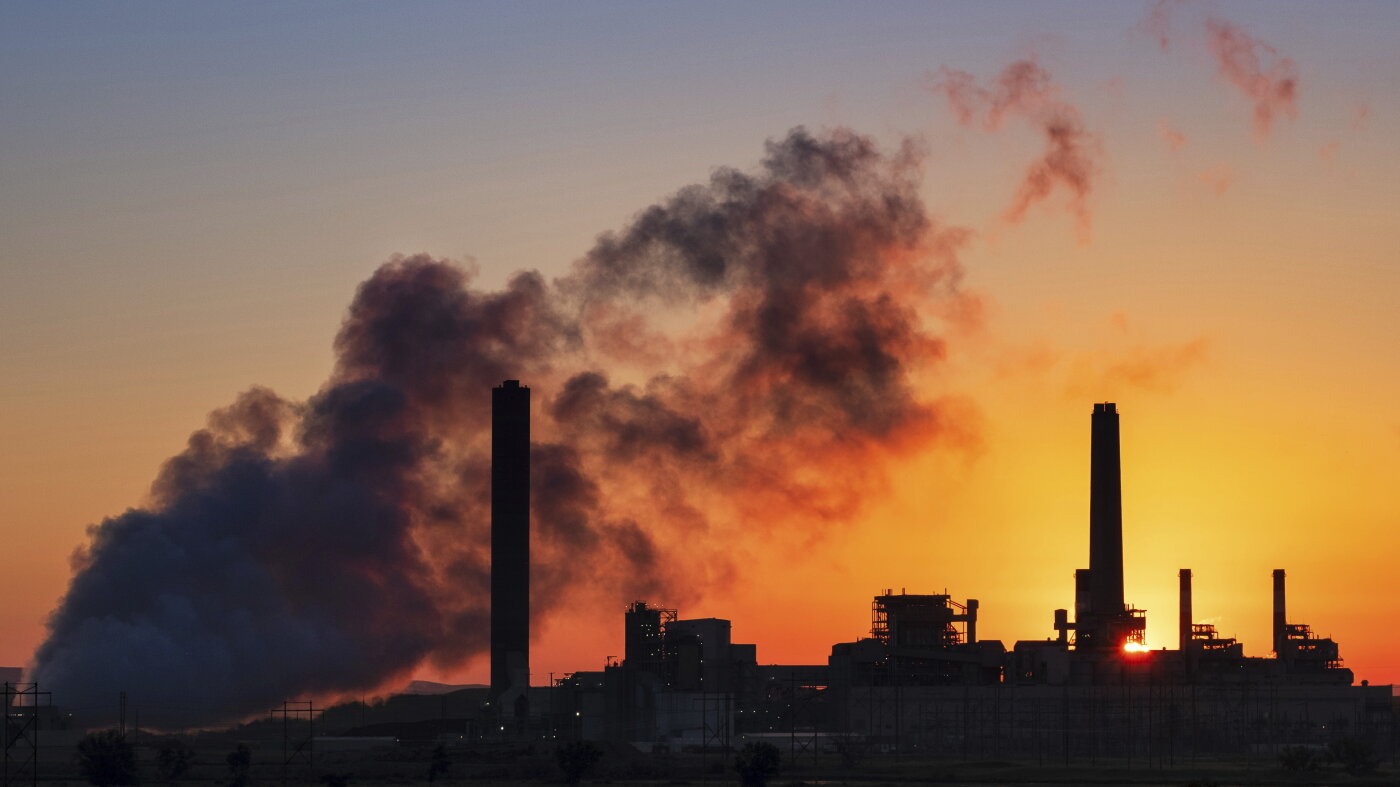
The Trump administration’s Environmental Protection Agency announced on Monday that it is eliminating all remaining greenhouse gas emissions standards for power plants. EPA Administrator Lee Zeldin called it the single largest deregulatory action in the history of the U.S. power sector.
The rules being rolled back were finalized during the Biden administration and would have required existing coal plants and new natural gas facilities to cut their carbon dioxide output significantly, starting in the 2030s. Those limits never take effect. The Trump administration is destroying them before they ever matter.
Zeldin delivered the announcement at a press conference in Houston, where the United States was hosting the G20 Energy Summit. “The days of Biden and Obama working to destroy natural gas and coal are over,” he said.
He was not wrong about one thing: these rules were among the most ambitious federal efforts to decarbonize electricity generation. But his claim that they raised energy prices is not supported by the market. Lazard, the financial services firm, reports that large-scale solar and wind projects now produce more cost-competitive electricity than new natural gas or coal plants. The economics have moved on from where Zeldin thinks they have.
A Legal Path Through Three Administrations
The legal foundation for regulating power plant emissions goes back to 2007, when the Supreme Court ruled in Massachusetts v. EPA that the agency must regulate carbon dioxide under the Clean Air Act. That led to the 2009 endangerment finding and, five years later, the Clean Power Plan — an Obama-era rule that aimed to cut power sector carbon emissions by 32 percent from 2005 levels by 2030.
The Clean Power Plan faced lawsuits and never took effect. Yet the United States met that target before 2030 anyway. Coal generation fell as cheaper natural gas and growing renewable capacity displaced it. The country did not need a federal mandate to do what the market was already doing.
In 2017, Trump replaced the Clean Power Plan with the Affordable Clean Energy rule, which gave plants more flexibility to emit. Biden returned in 2021 with a goal of eliminating climate pollution from the power sector by 2035. When the Supreme Court restricted the EPA’s authority to regulate across entire sectors in 2022, the agency pivoted to individual-plant rules designed to survive conservative judicial scrutiny.
Those rules are now gone too.
Who Is Behind This
Environmental groups are preparing to challenge the repeal in court. Gudrun Thompson, a senior attorney at the Southern Environmental Law Center, said the removed rules protected public health from local air pollution, not just the climate. Trump has called climate change a con job and rejected the basic findings of climate science. This is consistent with a broader effort to make it harder for any future administration to regulate greenhouse gas emissions from power plants.
Michael Gerrard, a law professor at Columbia University and director of the Sabin Center for Climate Change Law, said the timing is especially dangerous. Last month was the hottest month ever recorded globally, driven by human-caused climate change and a developing El Niño. “2026 is shaping up to be the warmest year in recorded history,” Gerrard said. “And we ain’t seen nothing yet.”
The AI Connection
Here is what the NPR report does not spell out but should: the repeal arrives at a moment when electricity demand from AI data centers is pushing utilities to reconsider coal.
Data centers are consuming enormous amounts of power. Major cloud providers have signed long-term agreements for baseload electricity to run their server farms. Natural gas has been the default answer. But supply constraints and permitting delays have left some developers looking elsewhere — including at existing coal plants that could be repowered or kept online with fewer restrictions on what they emit.
The EPA’s decision clears a path for that scenario. Without carbon limits looming, operators face no regulatory pressure to retire coal units or retrofit them. A plant that might have been retired on economic grounds alone now has a regulatory green light to stay open longer. That matters because coal plants emit roughly twice as much carbon dioxide per unit of electricity as natural gas plants.
This is not speculation. Utilities have already signaled interest in keeping coal capacity online to serve data center loads. Kentucky, West Virginia, and Texas — states with both coal resources and growing data center investment — are likely to see the most immediate impact.
What Happens Next
The most direct consequence is atmospheric. Power plants are the second-largest source of carbon dioxide emissions in the United States, behind transportation. Removing the only remaining federal limits on that sector means the United States will emit more carbon from electricity in the 2030s than it would have under the Biden rules. No new regulation replaces them.
The legal challenge will take years. Courts often defer to agency interpretations of their own authority, but the Supreme Court’s 2022 decision already narrowed the EPA’s playbook. A new rule replacing the repealed one might survive. An outright repeal is a different question, and one the courts will have to answer.
Meanwhile, the global temperature record keeps falling. The World Meteorological Organization confirmed last month that 2025 was the hottest year on record. The EPA is acting against that reality.
Zeldin’s statement that the country can now reach its “full energy potential” assumes energy demand is fixed and that fossil fuels are the only way to meet it. Both assumptions are flawed. Renewable capacity additions are accelerating. Battery storage is dropping in price. Data center operators are signing power purchase agreements for solar and wind at record rates. But coal has political protection now, and that matters more than economics in Washington.
The repeal is not just a policy shift. It is a signal that the United States will prioritize short-term energy affordability over long-term climate stability — even as the climate consequences arrive faster than predicted.