Trump Threatens Trade War Over Fed Rates — And Korea Is in the Crosshairs
Trump's demand that the Fed cut rates or face trade cutoffs is the most direct attack yet on central bank independence. For Korea, it's a triple threat: currency pressure, export vulnerability, and a US policy framework that no longer respects monetary autonomy.
The Unthinkable Link
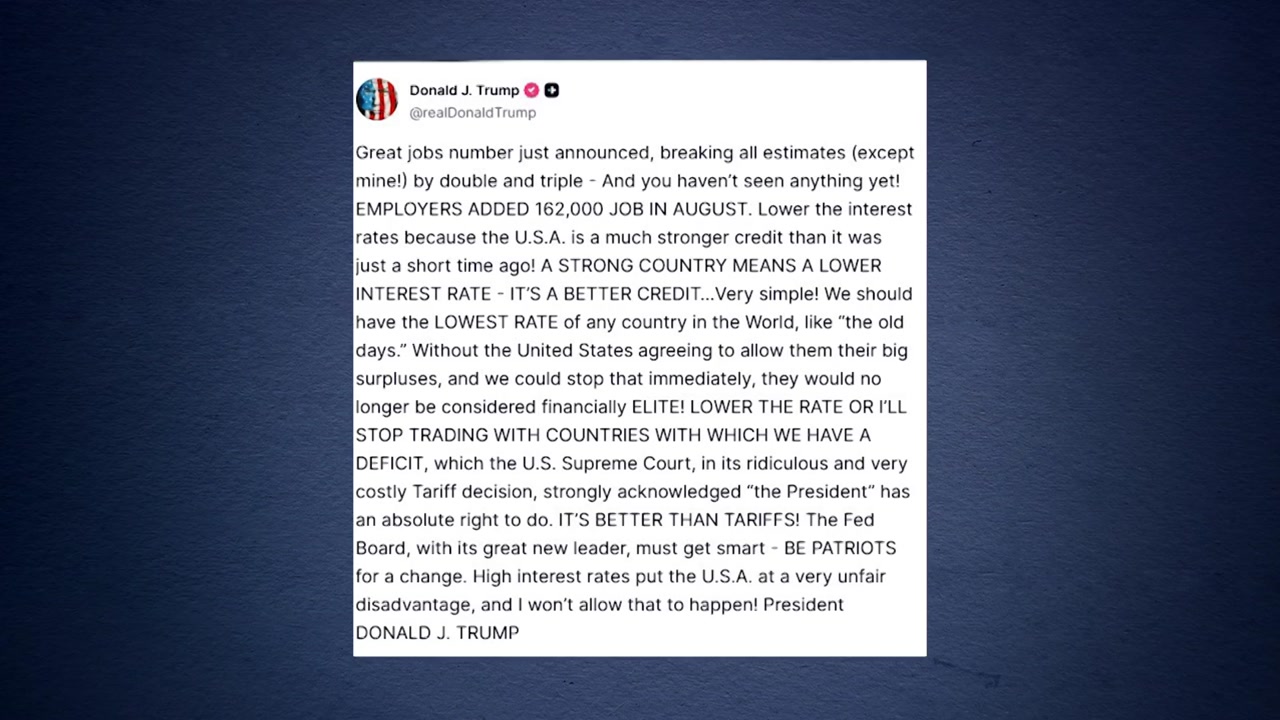
Donald Trump posted a threat on Truth Social this week that would have been unthinkable a decade ago: the United States will cut off trade with countries running deficits against it unless the Federal Reserve cuts interest rates. He did not name a single country. He named no exception. The implication is global.
Trump cited recent strong employment data as proof that American credit can sustain rates at what he called world-low levels, then pivoted to the core of his demand — that the Fed act to protect American exporters. He doubled down by invoking a Supreme Court ruling he described as affirming the president’s broad tariff authority, suggesting he already has the legal mechanism to enforce this threat.
The White House did not issue a follow-up clarification. That silence matters.
A Direct Assault on Central Bank Independence
This is not ordinary political pressure on the Fed. Presidents have lobbied for lower rates before. What Trump is doing now is coupling monetary policy outcomes to trade consequences — essentially demanding that the central bank subordinate its mandate to the executive branch’s trade objectives. The institutional firewall between the two has been breached.
The New York Times called it a powerful ultimatum. CNBC labeled the threat extreme. Both outlets noted that the US runs trade deficits with dozens of countries, including major allies and trading partners, making the practical scope of the threat模糊 — but its symbolic and financial reach unmistakable.
The deeper danger is precedent. If a US president can effectively dictate Fed policy by threatening trade disruption, the central bank’s credibility — the very thing that anchors global dollar confidence — begins to dissolve.
What Trump Is Missing About Trade Deficits
Even setting aside the institutional damage, Trump’s logic is economically flawed. Trade deficits are driven primarily by savings-investment imbalances and currency valuations, not by interest rate levels in isolation. A lower dollar boosts exports but also raises import costs, feeding inflation. The Fed would then face a harder mandate — exactly the opposite of the outcome Trump appears to want.
Historically, when the dollar weakens, emerging market currencies strengthen against it, narrowing US deficits with some partners while worsening them with others. The geometry of trade is rarely as simple as Trump suggests.
That said, simplicity sells on social media. Political impact matters more than economic rigor here.
Korea’s Triple Exposure
For Korea, the implications are concentrated and acute. The country is one of the most trade-dependent major economies, with exports accounting for roughly 40% of GDP. It runs persistent current account surpluses that are sensitive to the won-dollar exchange rate, and it relies heavily on semiconductor, auto, and display exports to the US market.
Right now, the Fed’s high-rate environment is already pressuring the won. A stronger dollar drains capital from Korean assets and complicates the Bank of Korea’s own rate decisions. If Trump forces the Fed to cut rates regardless of domestic inflation conditions, the dollar could weaken — which would temporarily ease won pressure but simultaneously make Korean exports less competitive in third markets where the yuan or euro hold advantage.
If Trump follows through on the trade threat instead, the damage is more direct. Korea’s largest export categories — semiconductors, LCD panels, automobiles — would face tariff exposure. The US is Korea’s second-largest export destination after China. Any disruption there would hit GDP growth in a way Korea has not experienced since the Asian financial crisis.
There is a third scenario worth considering: the market reaction itself. Global investors monitor central bank independence as a signal of institutional stability. A perceived erosion of Fed autonomy could trigger portfolio reallocation away from dollar-denominated assets toward alternatives — gold, yen, Swiss franc, or even non-traditional stores of value. Korea, as a high-beta emerging market, would likely see accelerated capital outflows in such a environment.
Who Wins, Who Loses
Trump wins politically if the threat moves markets or forces a Fed response, regardless of economic logic. He signals toughness on trade without needing to specify targets. Markets punish uncertainty, and this creates maximum uncertainty.
The Fed loses institutional credibility. Every future rate decision will be judged through the lens of whether it appeases the White House or defies it. That is a slow, compounding damage to the dollar’s reserve currency status.
Korea loses in nearly every scenario. Currency pressure either intensifies or reverses unpredictably. Export margins face direct tariff risk. Capital flows become volatile. The one possible gain — a weaker dollar easing won pressure — is more than offset by the loss of export competitiveness and the broader instability.
China and Japan face similar dynamics, but Korea’s structure makes it more vulnerable: higher trade-to-GDP ratio, narrower export product base, and less domestic demand to absorb external shocks.
What Happens Next
The Fed’s next FOMC meeting is the immediate catalyst. If it cuts rates despite inflation risks, markets will interpret it as Trump’s pressure working — and the dollar will likely weaken. If it holds steady, Trump’s threat becomes a showdown between the executive and the central bank, with tariff actions possible against unspecified partners within weeks.
Korea’s policymakers should prepare for both outcomes. The Bank of Korea may face a trilemma: defend the won, protect export competitiveness, or preserve monetary independence — and it may not be able to do all three.
The broader lesson is that the postwar framework separating monetary and trade policy is fracturing. When a sitting president treats the Fed as a lever for trade outcomes rather than an independent institution, the rules of global finance shift. Korea, as a small open economy at the center of those flows, feels it first.