Tucker Carlson Just Broke the Right's Nuclear Red Line
Tucker Carlson's demand that Trump be immediately removed over nuclear rhetoric isn't just a podcast moment — it's the most public fracture in right-wing loyalty since 2020. The question now is whether the base follows the pundit or the president.
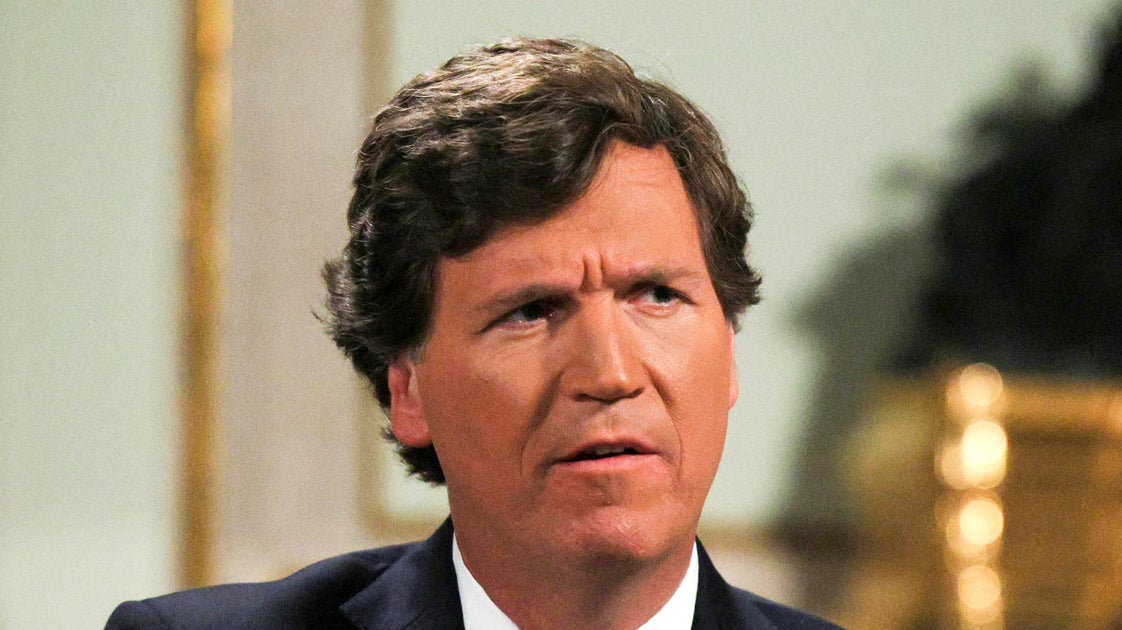
The Fracture Is Real
Tucker Carlson did not softly fade into disagreement. On Friday, he drew a line in nuclear fire and then pointed directly at the president standing behind it.
If any commander-in-chief actively considers first-use of nuclear weapons, Carlson said, that person should be removed from office immediately — and sent to jail. He was not speaking hypothetically. He was speaking about Donald Trump.
The guest beside him was Joe Kent, Trump’s former director of the National Counterterrorism Center, who resigned in protest over the Iran war. Two men who once sat on the same side of every political argument now occupied opposite banks of a channel that did not exist six months ago.
This matters more than it sounds like it should.
Why Carlson’s Voice Changed Everything
Carlson built the most powerful right-wing media platform in America. His show was not just watched — it was absorbed into the GOP’s operating system. Candidates learned to perform for him before they performed for voters. Party strategists treated his approvals as a currency more reliable than polls. For eight years, he and Trump existed in a symbiotic loop: Carlson amplified the president, and the president gave Carlson access.
That loop is broken. Not frayed. Snapped.
What makes Carlson’s rupture different from previous conservative complaints about Trump is the absolutism of the language. Carlson did not say Trump should reconsider his rhetoric. He said the president has forfeited his right to lead. He used the word lunatic. He compared the punishment for nuclear advocacy to jail time for tax evasion. He called for immediate removal before any formal process had even begun.
This is not criticism. This is excision.
The Nuclear Question Trump Avoided
Carlson’s central factual claim — that Trump has threatened the total destruction of Iran and its civilization — is the hinge this whole argument turns on. The White House position, as Carlson acknowledged, is that the president has never suggested using nuclear weapons. That distinction between rhetorical threat and operational consideration is the entire defense Trump’s allies will raise. It is also the exact distinction that separates constitutional controversy from impeachment fodder.
Carlson dismissed that distinction by pointing to the semantics of total destruction. You cannot destroy a civilization conventionally, he argued. Therefore the threat implies nuclear intent regardless of what the president says in private briefings. It is a logical chain, and it is also a chain that most Americans have never been asked to follow.
That gap — between what a president threatens in public and what he considers in secret — is where the constitutional crisis would live. And Carlson is the one who just dragged it into the open.
Who Wins and Who Loses
The immediate winners are anyone outside the Trump orbit who has spent four years telling the Republican Party that its loyalty consensus was a one-way valve. They can now point to Carlson and say: even the loyalists were wrong.
The losers are more numerous and harder to name precisely because no one knows how far this goes. Carl’s cascade would reach every Republican who built their career on loyalty-first governance. It puts every member of Congress who stayed silent during the first term’s controversies into an impossible position. Do you stand with the party that demanded discipline during Trump’s first impeachment, or do you stand with the standard Carlson just articulated?
The base is the wildcard. Carlson’s audience is not the same as Trump’s base. Carlson’s viewers skew older, more intellectually self-conscious, more comfortable with abstract principle over personal loyalty. Trump’s base skew working-class, more tribal, more resistant to institutional reasoning. The fact that Carlson’s arguments reached Kent — a former intelligence official, not a cable news pundit — suggests the ideological pressure is moving inward from the media class rather than upward from the voters.
What Happens Next
Three scenarios compete for credibility right now.
The first is containment. Trump’s allies move quickly to isolate Carlson as an outlier, reinforce the nuclear-rhetoric distinction, and let the moment pass. This was the playbook in 2020 and 2021. It worked because Carlson held a different kind of power — access and relationship — and those can be revoked. Now that the relationship is gone, containment is harder. Carlson does not need the White House press pool. He has a podcast, a growing platform, and an audience that trusts him precisely because he stopped being useful to Trump.
The second is escalation. Carlson’s language provides a template for other former Trump allies — Mike Pence, Liz Cheney, Steve Witkoff, anyone who resigned or rebelled — to adopt his framing without adopting his intensity. The Kent appearance is already doing that work. If another former official appears on the show and echoes the nuclear-forfeiture argument, the isolation strategy collapses under its own weight.
The third is the slow bleed. Carlson does not trigger an immediate crisis. He does something more durable: he changes the vocabulary. Once you have heard a prominent conservative say that threatening nuclear destruction forfeits the right to lead, you can never unhear it. Every future nuclear statement by Trump enters that new frame automatically. The loyalty consensus does not break in a day. It decays through repetition.
The International Signal
Allies and adversaries are watching this with equal interest, though for different reasons. NATO partners who have spent months anxious about Trump’s Iran rhetoric now have a American conservative telling the world that nuclear first-use is a red line. Whether that message reaches policymakers in Washington is another question. But the signal that the right wing is no longer unified on this topic is real and it travels faster than any policy memo.
Iranian leaders hear the same signal. A divided American right is not a unified American threat. That calculation matters in a region where miscalculation could trigger exactly the kind of escalation Carlson claims to fear.
The End of the Loyalty Consensus
The post-2020 Republican Party was built on a simple bargain: loyalty in exchange for impunity. Carlson was the strongest believer in that bargain, which is why his defection carries more weight than any critic from the left or center ever could.
He did not defect for policy. He did not defect for money or power. He defected for a principle that sounds almost absurdly old-fashioned — the idea that some lines exist beyond politics, that nuclear weapons are one of them, and that crossing them disqualifies a leader regardless of party.
If the GOP can absorb that, the loyalty consensus survives. If it cannot, the party enters a period of renegotiation that will define American politics for the rest of the decade.
Carlson just made the renegotiation impossible to ignore.