Ukraine Bans Masha and the Bear as Kremlin Propaganda
Kyiv has slapped sanctions on the creators of Russia's most popular children's cartoon, calling it a vehicle for pro-Kremlin narratives. The move extends the war into preschool entertainment—and invites a wider fight over what children's media should look like under siege.
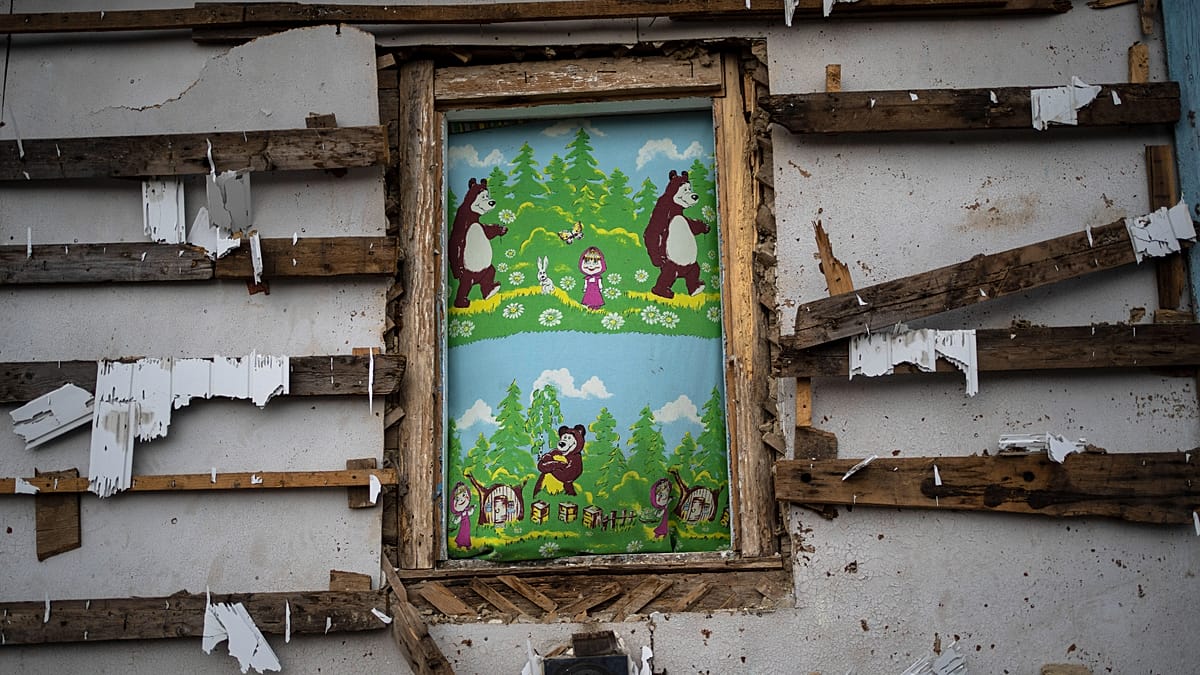
The cartoon nobody saw coming
Sanctions against cartoonists. Asset freezes for animators. This is the shape of Ukraine’s cultural war, and it is weirder than almost anyone expected.
On August 21, President Volodymyr Zelenskyy signed a new sanctions package that added five Russian citizens and four organizations tied to Masha and the Bear—Russia’s most-watched children’s animated series—to Kyiv’s blacklist. The studio behind it, Animaccord, its founder, and several principal creators are now barred from operating commercially in Ukraine. Their copyrighted material can be blocked on YouTube and other platforms. The justification, delivered with straight-faced gravity by Zelenskyy’s office: the show spreads pro-Russian narratives disguised as entertainment for children.
The headline reaction from the Kremlin was predictably visceral. Dmitry Peskov called the decision a reflection of the “ugliness” of the Kyiv regime. But beneath the diplomatic posturing lies a far more consequential question: what does it mean when a country at war decides that a preschool cartoon is a national security threat?
How a bear became a battleground
Masha and the Bear first appeared in 2009, loosely adapted from a Russian folk tale. It follows a mischievous little girl and a retired circus bear through whimsical forest adventures. It has since been translated into dozens of languages and accumulated billions of views across more than 100 countries. One episode alone—“Recipe for Disaster”—has racked up over 4.6 billion views on YouTube, making it one of the platform’s most-watched videos ever.
That kind of reach is precisely why it caught Kyiv’s attention.
Concerns about the show predate the full-scale invasion. In 2017, Ukraine’s State Film Agency considered a ban after complaints that the series contained Russian propaganda. The issue flared up again last year. By August 2025, Masha and the Bear was the most popular children’s YouTube channel among Ukrainian viewers. Two months later, Ukraine’s National Police formally called for sanctions.
The evidence Kyiv has assembled is specific, if unsettling in context. In one episode, Masha wears a hat associated with the NKVD—the Soviet secret police responsible for political terror and the gulag system under Stalin. In another, she appears in what looks like a tank-crew cap and a Soviet-era military uniform. Ukrainian authorities have argued for years that these images normalize Russian and Soviet military symbolism for preschool audiences who lack the historical framework to contextualize them.
Animaccord has rejected every accusation. The studio says the show is apolitical entertainment, not a propaganda vehicle. Its English-language social media accounts have used images of Masha in military-style clothing, which critics say reinforces the problem rather than distancing the brand from it.
Why this matters beyond Ukraine
The British backlash came first and may well come again. Earlier this summer, over 50 UK MPs wrote to Culture Secretary Lisa Nandy urging streaming platforms to remove the show, citing the same concerns about Soviet military iconography being normalized for young children. The lawmakers noted that Animaccord’s own English-language social media had amplified some of the contested imagery.
If Ukraine’s sanctions hold and gain international traction, they could reshape how platforms handle children’s content from sanctioned countries. YouTube, Netflix, and other streaming services already moderate content for local markets, but this represents something different: a government-level effort to export a cultural ban as a national security measure.
Kyiv has signaled it wants its partners to mirror the sanctions. Whether they will is another question. The UK government has not yet responded to the MPs’ letter. The EU has not commented. But the precedent is undeniable. If a cartoon can be sanctioned, what else is next?
Who wins, who loses
For Ukraine, the move is symbolic warfare with a concrete mechanism. It removes a cultural touchstone for Russian children and signals to allies that the information war extends into the nursery. It also gives Kyiv leverage to pressure international platforms into compliance.
For Animaccord and the creators on the list, the losses are immediate and personal. Asset freezes mean frozen bank accounts. Distribution bans mean lost revenue from a show that built a global empire. Their crime, by Kyiv’s standard, is existing at the intersection of Russian culture and children’s entertainment—a category the Kremlin has long treated as soft-power infrastructure.
For Russian children, the effect is invisible but real. The show disappears from Ukrainian screens. For Ukrainian children, it vanishes too—along with whatever familiarity they might have had with a cultural product that transcended the conflict.
For the Kremlin, the sanctions are an embarrassment wrapped in a propaganda opportunity. Peskov’s fury plays well at home. It reinforces the narrative that Ukraine is an irrational actor punishing innocent children’s content. But it also exposes a vulnerability: the Kremlin cannot easily defend a cartoon that features Soviet secret police imagery without looking like it has something to hide.
What happens next
The sanctions will likely face legal challenges. Animaccord and its creators have every incentive to contest the designations in Ukrainian courts or through international arbitration. The process could drag for years.
More immediately, the question of enforcement on digital platforms will determine whether the sanctions bite. YouTube operates globally and has its own policies on sanctions compliance. Whether it will deplatform a show with 4.6 billion views in a single market depends on how aggressively Kyiv pushes the case and whether the platform sees broader liability in refusing.
If Ukraine succeeds in getting the sanctions adopted elsewhere, the implications stretch far beyond animation. Countries under sanctions routinely face cultural boycotts—sports, music, film. But those targets are usually adults making adult choices. Sanctioning children’s content is qualitatively different. It reframes the conflict as one not just between governments and militaries, but between entire societies, including their youngest members.
The war in Ukraine is no longer confined to front lines and diplomatic corridors. It has entered bedrooms, schoolyards, and YouTube watch histories. The ban on Masha and the Bear is a small, strange chapter in a much larger story—one where even cartoons are weapons, and even preschoolers are considered part of the battlefield.