The U.S. Space Academy's Quiet Strategic Bet
Trump's new executive order creates a U.S. Space Academy modeled on the service academies. But the real story isn't the ceremony — it's what this signals about American ambitions in a space race now defined by Chinese acceleration.
The Institutional Bet Behind the Ceremony
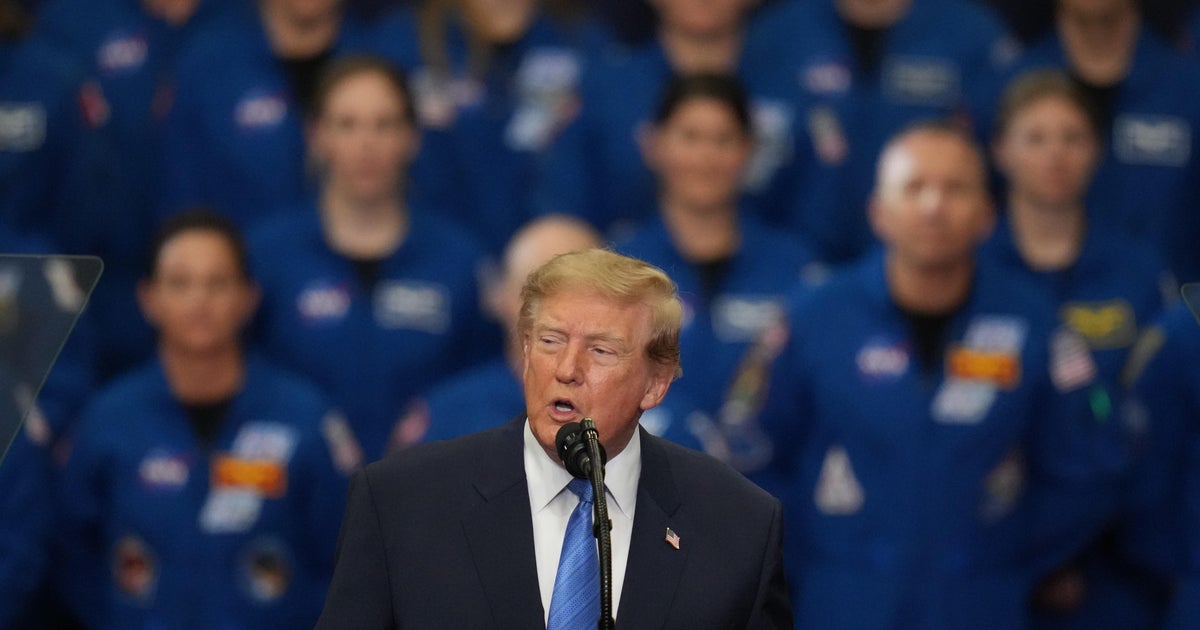
President Trump signed the executive order creating a U.S. Space Academy at NASA’s Johnson Space Center in Houston, right there on the heels of handing out the Congressional Space Medal of Honor to the Artemis II crew. The symbolism was deliberate: place the newborn institution at the altar of Apollo-era tradition and frame it as the latest thread in the same American tapestry.
But strip away the ceremony and what you get is an institutional bet that stretches well beyond ribbon cuttings. The academy, structured like West Point or Annapolis, is designed to produce a pipeline of officers trained specifically for the demands of space operations. That is a long game. Cadets enter at 17 or 18, spend four years in curriculum and military training, then commission as lieutenants. The first class won’t be entering orbit for well over a decade.
Yet the timing is telling. The order lands in a period where the United States is recalibrating its approach to a space domain that has shifted dramatically since the Space Force’s creation in 2019. China’s military-civil fusion strategy has produced a space program that treats dual-use technology, commercial launches, and strategic positioning as a single integrated effort. The U.S. response has tended toward reactive patching. A service academy is a proactive one.
The Open Question: Who Gets In
What remains conspicuously unclear is who actually walks through the academy doors once it opens. The executive order references the Space Force, NASA, and the civilian space flight industry, but an academy model that admits civilians alongside military cadets would be unprecedented among the existing service institutions. West Point, Annapolis, the Air Force Academy, and the Coast Guard Academy all produce commissioned officers. A mixed model would require legislative action, new funding structures, and a legal framework that does not yet exist.
That ambiguity is not accidental. It leaves room for negotiation. Industry groups lobbied hard for access during the Space Force’s early years, and a civilian track at the academy could satisfy some of that pressure without immediately altering the military character of the institution. But it also risks producing an academy that tries to serve two masters and satisfies neither. If the space industry wants a share of the pipeline, it will need to back its language with money and policy demands — and that conversation has not started publicly yet.
The Location Game
Senator Ted Cruz of Texas is openly lobbying for the academy to land in his state, a move that is as much about political branding as it is about anything substantive. Trump joked about it at the signing ceremony, which is the kind of theater that signals the decision is not yet made. Several other locations are likely in contention, and the choice will carry weight beyond real estate. An academy near the Space Force’s major installations — Schriever Space Force Base in Colorado, for instance — would create a natural ecosystem with the organizations it feeds. An academy in Texas, close to Johnson Space Center and a growing cluster of private space companies, would lean harder into the commercial angle.
Where it lands will shape the academy’s culture from day one. Proximity to defense contractors pulls one way. Proximity to commercial launch sites pulls another. The politics of the decision will matter more than the logistics for at least a few years.
China’s Shadow
No discussion of the academy’s strategic value avoids the question of China. Beijing has been building a parallel capability with less public ceremony and more consistent long-term funding. Its space station program, lunar exploration efforts, and anti-satellite testing have all proceeded on schedules that do not bend to election cycles. The U.S. Space Academy, if realized as envisioned, would close a gap in professional military education that existed before the Space Force was even created.
The competition is not only about who lands on the Moon first. It is about who controls the orbital infrastructure that underpins global communications, navigation, and intelligence. An academy that produces officers fluent in both the technical and operational demands of space environment management gives the U.S. a structural advantage that raw hardware cannot replicate on its own. Personnel training is slow. Hardware can be bought. That asymmetry is precisely why this matters now.
The Commercial Layer
The civilian industry dimension, still undefined, could be the most consequential. SpaceX, Blue Origin, and their competitors already dominate launch access. What they do not control is the human capital that designs, operates, and eventually manages the orbital systems of the next decade. An academy with a civilian track could begin to shift that balance, creating a professional class that understands both the regulatory and operational layers of commercial spaceflight — something currently scattered across engineering schools and on-the-job experience.
But without clear access provisions, the commercial sector may find itself on the outside looking in. And that has economic consequences. If the academy graduates become the default hires for government and defense contracts, the private sector loses a potential talent pipeline. If it opens to civilians, it risks diluting the military focus that gave the Space Force its institutional purpose in the first place.
What Comes Next
The executive order initiates a process, not a completion. A location must be selected. Funding must be appropriated. Curriculum must be designed. The legal architecture for any civilian participation has to be built from scratch. All of that takes years, and the current political enthusiasm for space as a strategic domain makes it likely that the academy will survive whatever administrative headwinds appear.
The real test will come when the first cadets graduate and the question of whether the institution served its stated purpose becomes measurable. Until then, the academy is a signal more than a substance — a declaration that the United States intends to treat space as a permanent domain of national power, not a frontier for occasional missions. That signal is already being heard in Beijing, in Geneva, and in the boardrooms of companies that build rockets for a living.
Whether the institution delivers on that signal is another matter entirely.