Venezuela's Dollarization Bet Could Reshape Latin American Finance
Steve Hanke sees 50-80 percent odds that Venezuela officially adopts the U.S. dollar, a move he calls the biggest currency switch since the euro. If it happens, the implications stretch far beyond Caracas — into regional payment systems, oil investment flows, and a growing list of emerging markets watching for proof that dollarization actually works.
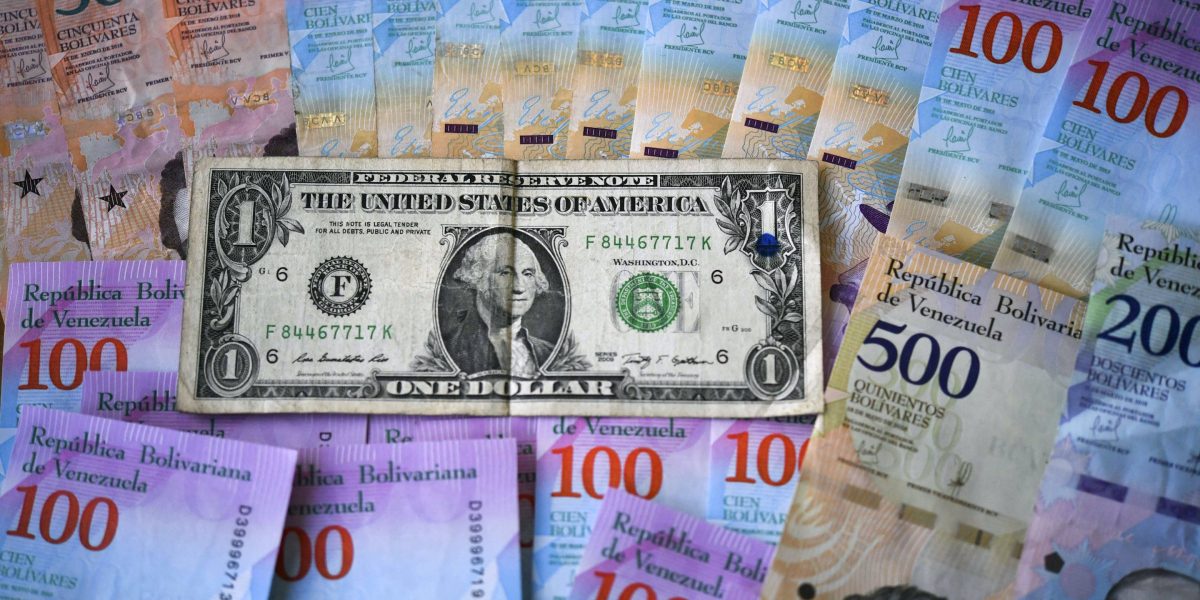
The Quiet Currency Revolution in Caracas
Steve Hanke is not trying to save one economy. He is testing whether a currency experiment can be exported.
The Johns Hopkins professor — known around the world as the “Money Doctor” — has advised governments on inflation crises from Zimbabwe to Ecuador. Now he is back in Latin America with a second chance at Venezuela, and this time he thinks the stars might actually align. He told Fortune that he sees 50 to 80 percent odds that Venezuela will officially adopt the U.S. dollar, abandoning the bolivar and its central bank entirely.
If he is right, it would be the single largest shift from a domestic currency to an alternative since the euro was introduced in 1999. That framing matters because it reframes what is happening in Caracas not as a desperate measure but as a structural realignment of global finance.
The bolivar has already lost 78 percent of its value against the dollar in the past year alone. Most Venezuelans — everyone outside the government payroll, aid distribution, and pensions — already transact in greenbacks. This “spontaneous dollarization” is the social proof Hanke needs. It means the population is already living the future he is proposing. The question is whether the state will catch up.
What Venezuela Stands to Lose — and Gain
The objections to dollarization are not theoretical. They are the same ones every emerging market faces when it considers surrendering monetary sovereignty. The central bank disappears as a lender of last resort. Monetary policy shifts from Caracas to Washington. There is no circuit breaker if a crisis hits and the Fed has no obligation to rescue a country that no longer has a monetary policy of its own.
Javier Milei learned this the hard way in Argentina. He campaigned on dollarization, then backed off once in office. His administration did slash subsidies and cut the budget deficit, which cooled inflation. But the peso remains under pressure, and Treasury Secretary Scott Bessent had to step in with a currency swap line after regional elections crushed Milei’s party and sent the peso into free fall. Argentina is a cautionary tale, not because dollarization failed — because Milei never fully committed to it.
Venezuela’s situation is different, though only in degree. The oil-dependent economy carries $250 billion in debt, roughly 150 percent of GDP. Hanke argues that dollarization would unlock foreign investment in the oil sector, boost production, and generate the dollar revenue needed to service that debt. Lower inflation would also compress interest rates, spurring consumer and business borrowing, reigniting the housing market, and pulling the economy out of negative growth into positive territory within a year.
None of this is guaranteed. The argument assumes that foreign investors will trust a dollarized Venezuela enough to pour capital into an economy that has spent decades under sanctions, expropriation, and political chaos. It assumes the oil sector can respond quickly enough to new investment. And it assumes that the Federal Reserve will not treat a dollarized Venezuela as just another poor country with a lot of debt and a lot of oil.
The Payment-Flow Implications
Here is where the story gets interesting for anyone tracking global finance. If Venezuela dollarizes, it effectively joins a dollar-denominated payment system. That means its oil exports, its imports, its remittances, and its debt servicing all flow through U.S. financial channels with greater transparency and fewer currency-risk premiums. For the United States, that is leverage. For Venezuela, it is a one-way door.
The regional implications are equally significant. Colombia, Ecuador, and El Salvador already operate with heavy dollar usage. Panama has used the dollar since 1904. If Venezuela follows, it becomes the largest economy yet to fully embrace the greenback in Latin America. That shifts the center of gravity in regional trade settlement toward dollar clearinghouses and away from local currency corridors that have existed precisely to avoid dependence on Washington.
It also sends a signal to every emerging market currently bargaining with inflation and debt: there is a path out that does not require gradual reform. Dollarization is binary. You either do it, or you do not. That clarity is both its appeal and its danger.
The Blueprint Question
Hanke’s track record is mixed. He successfully guided Montenegro to abandon the Yugoslav dinar for the Deutsche Mark in 1999 and oversaw Ecuador’s switch to the dollar in 2000. He also advised Zimbabwe during its dollarization phase in 2009 — a move that tamed hyperinflation, only for a new government to reverse it in 2013 and unleash inflation all over again.
The Zimbabwe reversal is the ghost at every dollarization table. It proves that currency regimes are only as durable as the political will behind them. A constitution can mandate the dollar. An assembly can vote it in. But without institutions that enforce fiscal discipline and independent governance, dollarization is just a costume. The underlying disease — budget deficits financed by money creation — can always return under a different name.
Still, the fact that Hanke believes he has a realistic shot in Venezuela suggests that the political dynamics have shifted. Whether that shift is durable is the question that will determine whether this becomes a blueprint or a footnote.
Who Wins, Who Loses
If dollarization succeeds, Venezuela’s oil sector wins first. Foreign operators who have been locked out or operating at a discount will finally have a currency they can forecast. Consumers who have lived with 400 percent inflation will see prices stabilize, at least in dollar terms. Credit markets will reopen. The housing sector, long frozen, could restart.
The losers are harder to name precisely because they are abstract. The central bank loses its most important function. The government loses the ability to print money to finance deficits — which is precisely the point, but also precisely what makes dollarization politically fragile. Anyone who benefits from monetary expansion loses. That includes patronage networks, subsidized industries, and any faction that sees the state as a source of easy liquidity.
Regionally, countries still clinging to their own currencies — particularly those with chronic inflation histories — will watch closely. A successful Venezuelan dollarization would make the argument for surrendering monetary sovereignty far more credible. A failure would reinforce the case for managed floats and capital controls for a generation.
The euro may have been the biggest currency switch in recent history. But its creation was a deliberate act of political integration among relatively stable economies. Venezuela’s potential dollarization would be something else entirely: a collapse-driven adoption by a fractured state. That distinction will determine whether the world watches this as a model or a warning.