Volkswagen Cuts 50,000 Jobs and Closes 4 Plants in European Auto Earthquake
Volkswagen's board has approved slashing 50,000 jobs and ending production at four German plants as the EU's last big volume automaker tries to survive low-cost Chinese competition and U.S. tariff headwinds. The restructuring signals how deeply Europe's auto industry is being upended.
The numbers on the table
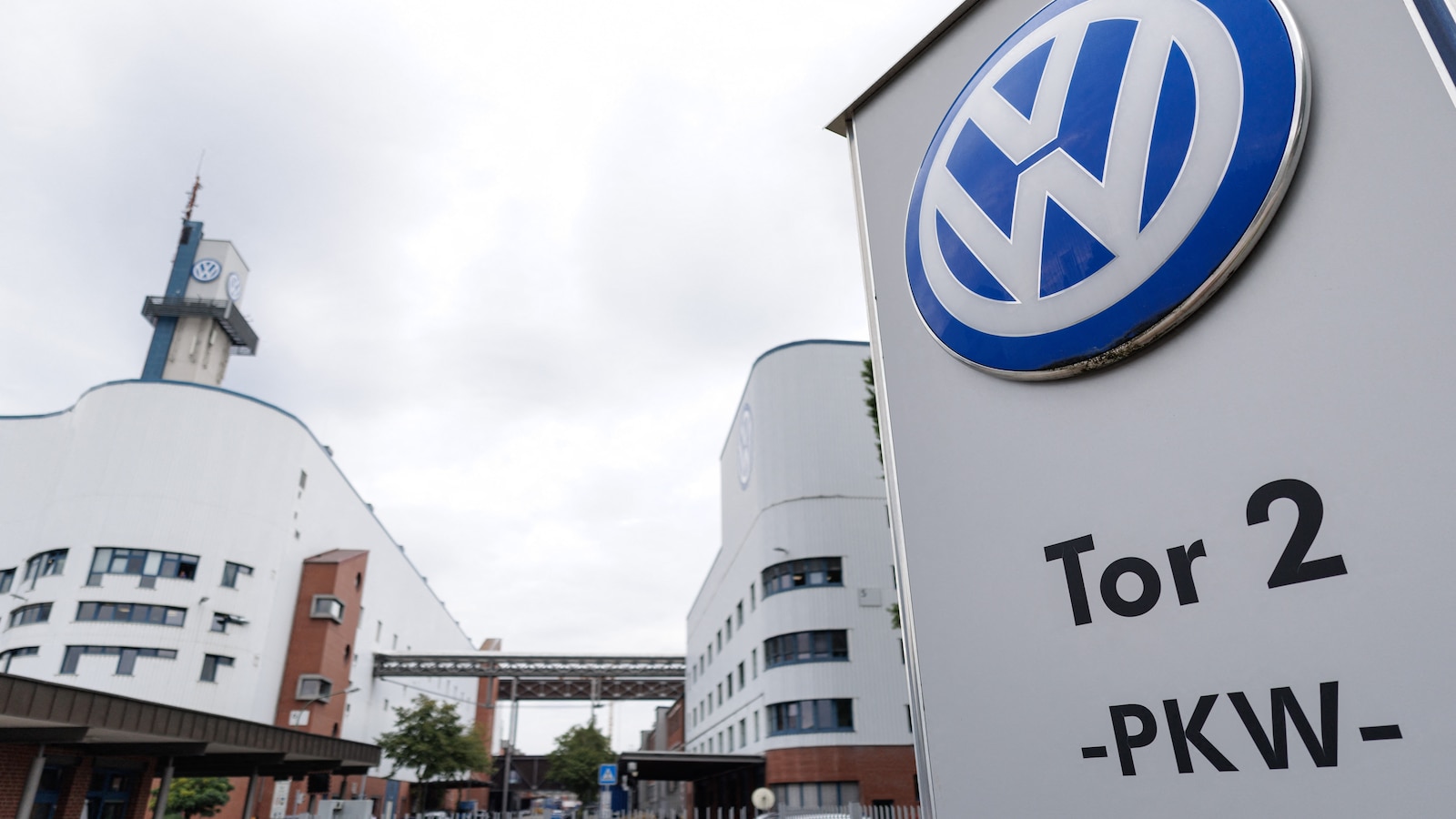
Volkswagen’s board on Thursday approved a cost-cutting plan that reads like a surrender of territory its competitors once thought impossible to threaten. Fifty thousand jobs are going. Production will end at four German plants — Emden, Zwickau, Hanover, and Neckarsulm. The model lineup will shrink by roughly half. The company cites 500,000 vehicles in excess production capacity across Europe as justification for the closures.
That last number is the one that tells the story. Five hundred thousand empty cars of capacity sitting idle is not a temporary dip. It is a structural overhang, the kind that appears when an industry built for one era collides with another.
How we got here
Volkswagen reported a 30 percent drop in after-tax earnings in the first half of the year. Sales in China — long the company’s most important growth engine and where it competes against fiercely aggressive domestic EV makers like BYD — took a sharp hit. Meanwhile, U.S. tariffs on European autos added another layer of uncertainty to a business already running thin on margins.
CEO Oliver Blume framed the plan as a forward-looking move. “This is a strong signal for the future of Volkswagen Group,” he said, adding that the restructuring would make the company’s brands “even more attractive, stronger and competitive.”
The language is deliberate. Blume is positioning these cuts not as panic but as strategy — a necessary pruning to keep the tree alive.
Who won and who lost
The resistance came exactly where you would expect. Worker representatives on VW’s board — they hold half the seats — pushed back hard. Daniela Cavallo, the chief employee representative, called the plan “a necessity” but only after previously being strongly critical when it was first presented over the summer. That shift suggests the boardroom negotiation had teeth and that employees absorbed some concessions along the way.
The government of Lower Saxony, where VW is headquartered and which holds two board seats, also voiced opposition before ultimately acquiescing. Governor Olaf Lies called the challenges “enormous” and agreed the plan represented “a shared path toward the necessary transformation.”
So the employees and the region got something — perhaps slower timelines, perhaps protections for some positions — but the structural direction is fixed. This is not a plan that can be watered down into irrelevance. The earnings pressure is too acute.
What the plant closures mean for Europe
Closing four plants in Germany is not a trivial event for the country’s industrial base. These are not marginal facilities. They are iconic Volkswagen sites, embedded in local economies and supply chains that stretch across the continent. Emden builds the ID.4 and ID.5 electric SUVs. Zwickau is one of VW’s primary electric vehicle production hubs. Hanover and Neckarsulm produce a range of models that feed both the core brand and premium offshoots like Audi.
The ripple effects will be immediate and painful for suppliers. A plant closure does not just eliminate assembly-line jobs — it removes demand from tier-one and tier-two suppliers who built their operations around VW’s order books. Those suppliers will face their own restructuring, and some will not survive.
This is the quiet tragedy of European auto restructuring that rarely makes headlines: the jobs lost at the plant are the tip of the iceberg. The supply chain shock runs deeper and wider, and it is harder to measure.
The model count matters more than you might think
Reducing VW’s model lineup by half is arguably the more significant part of this plan. Cars are now built on platforms — the MEB for EVs, the newer SSP architecture coming online — and the logic is straightforward: build fewer models, but in higher volumes per model, to drive down fixed costs per unit. It is the same logic that Toyota used to justify its TNGA platform strategy, and it is why the days of 15 variants of the same car are ending globally.
But for a company like Volkswagen, which has historically prided itself on breadth — sedans, SUVs, wagons, pickups, electric, hybrid, diesel, premium, volume — the narrowing is a cultural as well as financial decision. It means fewer choices for customers in Europe. It means some models that define brand identity will disappear. It means Porsche and Audi will likely face their own lineup rationalizations in coming years.
The China factor
The reference to China in VW’s announcement is understated but crucial. Chinese EV makers are producing vehicles at costs that European automakers simply cannot match. BYD, NIO, XPeng, and others are flooding the Chinese market with electric vehicles that are cheaper, better equipped, and increasingly good to drive. VW’s market share in China has been eroding.
This is not a China-only problem. If European automakers cannot compete on cost in the world’s largest auto market, they face a structural disadvantage everywhere. The tariff environment in the U.S. and potential tariffs in other markets only intensifies the pressure. European cars must become cheaper to build or they become uncompetitive — and that is what the 50,000-job cut is supposed to enable.
What happens next
The plan still needs to be implemented. There will be negotiations over severance, redeployment, and which positions stay and which go. Management jobs are explicitly mentioned as part of the 50,000-cut figure, which suggests Blume is serious about flattening the organization. But the hard part — actually closing four plants and moving hundreds of thousands of workers — lies ahead.
Lower Saxony’s government stake in VW gives the region a veto that no other European auto market has. That means Berlin and Brussels will watch closely. If VW struggles with these closures, it sets a precedent that could complicate restructuring at other European automakers facing the same pressures.
The broader question is whether this level of contraction is survivable. Volkswagen has always been too big for its own good — massive, diversified, politically exposed. This plan makes it smaller. Whether that makes it strong enough to compete with Chinese manufacturers and Tesla remains an open question. What is clear is that the old assumptions about European auto dominance are dead, and VW’s restructuring is the most visible symptom of a continent-wide industrial reckoning.