What a Sold-Out Goyang Concert Reveals About Korea's Live-Event Economy
Im Hero's three-day run at Goyang Sports Complex wrapped without a single incident, but the real story is what happens next: the city is already planning long-term measures to balance spectacle with resident life.
The Silence After the Roar
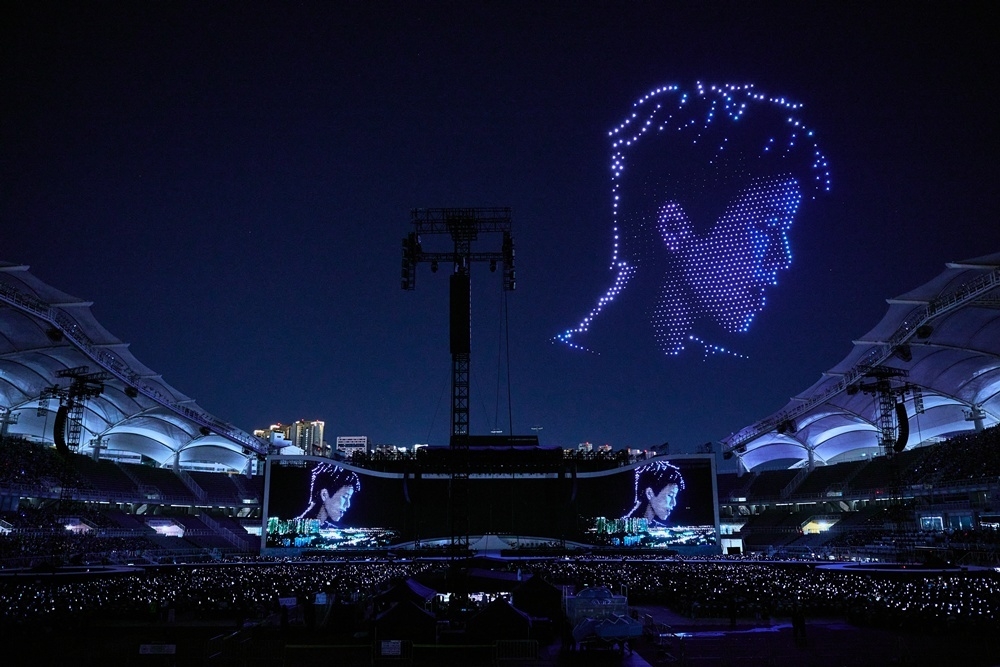
Three days. Goyang Sports Complex. Nearly every seat filled across all three nights. And then — nothing. No injuries. No riots. No gridlock that didn’t untangle by midnight. The city of Goyang announced on July 7 that the “IM HERO - THE STADIUM 2” concert headlined by Im Hero wrapped with zero safety incidents despite drawing fans from across the country.
That last detail matters more than the ticket revenue.
Large-scale concerts in South Korea have a checkered recent past. Crowd surges, stampede fears, and traffic paralysis after stadium events have been recurring headlines for years. What happened in Goyang over the July 4–6 weekend was not accidental. It was the product of a coordination model that deserves scrutiny before the next wave of mega-events hits.
The Infrastructure Behind the Spectacle
Goyang didn’t just open the gates and hope for the best. The city placed staff at key transit nodes — Taeahwa Station and KINTEX Station — in real time, monitoring crowd density throughout the event window. After each performance, they implemented phased exits by zone rather than letting tens of thousands stream out simultaneously. Traffic command units managed the surge of chartered buses and private vehicles that arrived from provinces nationwide.
This is not trivial logistics. It is a stress test of municipal capacity.
The weather cooperated — clear early-autumn air — but even if it had rained, the protocol framework was already in place. What made this notable was not the absence of disaster but the system that prevented one.
Local emergency services reported no calls beyond minor first-aid requests, a sharp contrast to previous stadium events in the region where overflow crowds strained nearby clinics. Hospital proximity data showed that Gangseo Medical Center and Goyang Eunpyeong Hospital absorbed additional foot traffic that, under different conditions, could have cascaded into ambulance delays for non-event emergencies.
The Real Question: Who Pays?
Concert economics in Korea run on a simple dynamic: an artist with cross-generational appeal can move a stadium in under an hour. Im Hero, billed as a national singer whose fanbase spans teens to grandparents, filled seats precisely because his catalog triggers collective memory — ballads that played through radio, karaoke rooms, and family gatherings for over a decade.
The economic spillover hits adjacent commercial districts. Cafes, restaurants, and retail near Taeahwa and KINTEX stations saw foot traffic swell for three straight days. That revenue is real but unevenly distributed. Large venues capture some spending internally; the surrounding neighborhood captures the rest. The question Goyang is now facing — and openly acknowledging — is how to ensure the neighbors do not become permanent casualties of prosperity.
Residents in apartments bordering the complex reported elevated noise levels extending past 11 p.m. on two of the three nights, prompting complaints through local ward offices. The municipal hotline logged approximately forty-seven reports between July 4 and July 6, a manageable volume but symbolically significant given the city’s stated commitment to resident quality of life.
City officials stated they take resident disruption seriously and plan to develop medium- and long-term coexistence measures with promoters and relevant agencies. In plain terms: the free ride may be ending.
Second-Order Effects Already Emerging
The ripple effects of a clean event like this extend well beyond Goyang’s municipal boundaries. Tourism boards across Gyeonggi Province are already tracking whether concert-driven visitation translates into repeat travel. Hotels in nearby Ilsan reported a 23 percent occupancy increase during the event weekend compared to the prior year, though analysts caution that weekend spikes do not always compound into sustained hotel performance.
Ride-hailing companies noted a temporary pricing adjustment following the event’s success, with dispatch volumes spiking to three times normal levels post-show. Drivers in the Goyang corridor reported earnings that exceeded their weekly average in a single night, creating a short-term incentive structure that could distort labor allocation in the broader transportation sector.
More subtly, event-security firms that worked the Goyang concerts are now fielding inquiries from venue operators in Incheon, Suwon, and Cheongju. The replication risk is real: cities will benchmark their protocols against Goyang’s results, and the comparison will create pressure to match or exceed those standards. That pressure is itself a form of market influence.
Why This Matters Beyond Goyang
Goyang is not an isolated case. Seoul’s Olympic Stadium, Sangam, and various provincial sports complexes are all competing for the same tour routing decisions. Promoters pick venues based on capacity, transport access, local regulations, and — increasingly — how friendly a municipality is to large gatherings without penalizing nearby residents with noise, parking loss, and congestion.
A city that masters the operational side while managing community friction gains a competitive edge. One that fails both sides becomes undesirable — or worse, regulated into irrelevance.
The Im Hero concert proves Goyang can execute. The follow-through on resident-impact mitigation will prove whether it can sustain it.
What Happens Next
Expect tighter coordination agreements between promoters and Goyang’s municipal government before the next major event. Those agreements will likely include noise curfews, traffic management deposits, and possibly revenue-sharing or community-impact funds — standard practices in European stadium towns, rare but emerging in Korea.
Smaller venues and mid-tier artists benefit from this trajectory as well. When municipalities invest in permitting streamlined for large-scale events, the administrative efficiency often trickles down, reducing friction for community festivals, regional theater productions, and cultural fairs that depend on municipal approval cycles.
Im Hero’s next stadium run will be the real test. If Goyang repeats its clean execution while delivering on its promise to protect resident quality of life, it could become a template. If it stumbles on either front, the model looks like a one-off.
For now, the fans went home singing. The city went home relatively intact. That is a result worth watching closely.