Why Murata and Samsung Are Letting China Take the MLCC Low End
Murata and Samsung are quietly ceding the commoditized MLCC market to Chinese makers as they pivot to AI-grade components. The move reshapes a supply chain most people don't think about — until their AI hardware doesn't ship.
The quiet retreat from the commodity floor
Murata Manufacturing announced in September 2026 that it will halt production of standard, commoditized MLCCs by 2028, with its last shipments processed through 2029. Two months earlier, Samsung Electro-Mechanics signed a multi-year supply agreement with a major unnamed global enterprise for AI server-grade MLCCs. Both moves are framed as strategic pivots toward high-value applications — data center infrastructure, AI servers, and automotive power systems. The consequence, quietly acknowledged by market research firm TrendForce, is that Chinese and Taiwanese manufacturers are about to inherit a vacuum.
This is not a panic. It is a deliberate structural realignment. And the global hardware supply chain is already reordering itself around it.
What MLCCs actually are — and why nobody talks about them
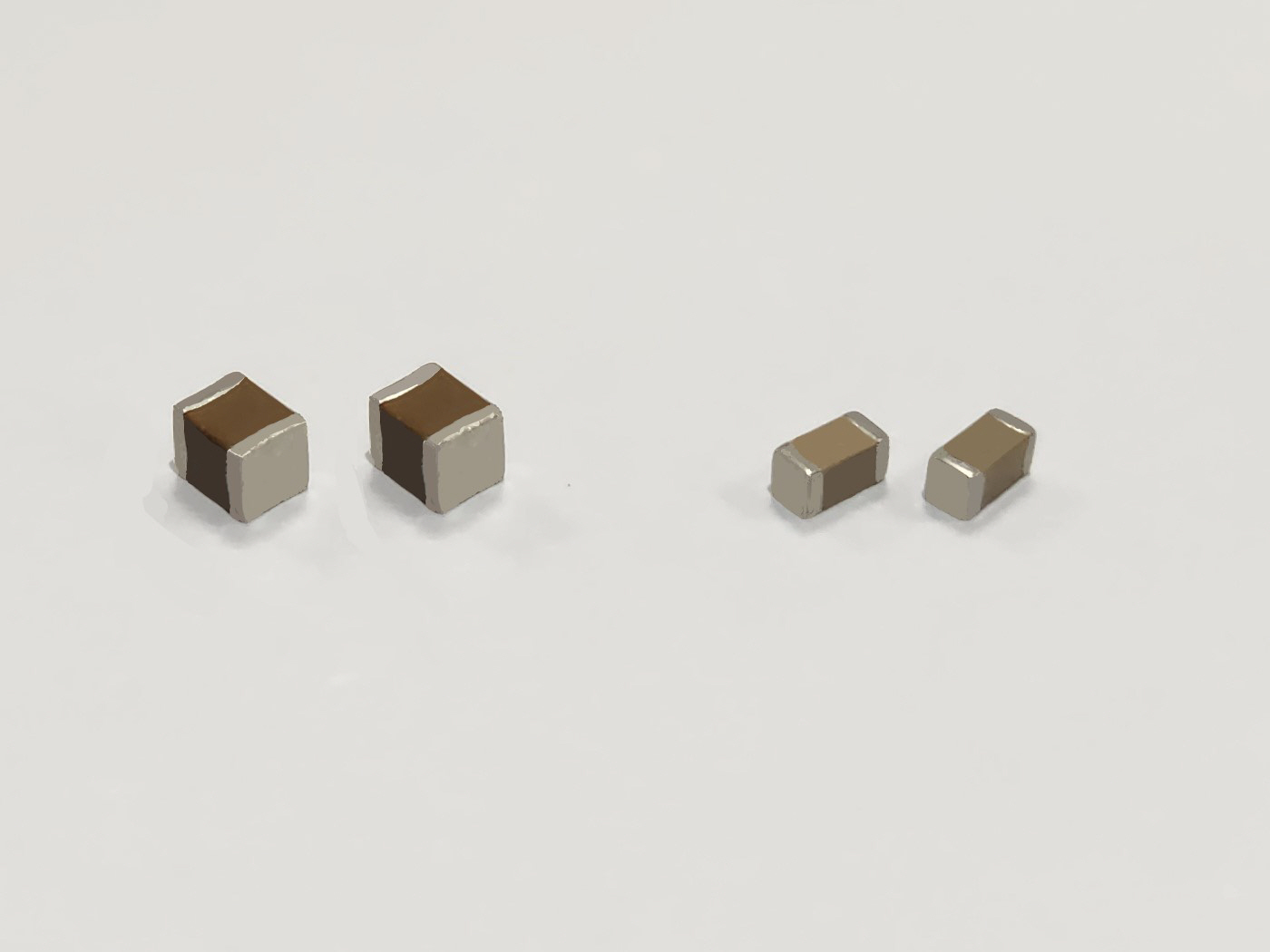
MLCCs, or multilayer ceramic capacitors, are the unsung workhorses of every electronic device. They store and release electrical charge at the component level, smoothing power delivery across circuits. You will not find an MLCC called out in any product spec sheet. You will find one in roughly every smartphone, every laptop, every AI training server, and every electric vehicle. The AI server is the new pressure point: a single high-end GPU board can require tens of thousands of MLCCs, many of them in specialized high-capacity, high-reliability formats that command significantly higher margins than the run-of-the-mill parts used in consumer appliances.
For decades, Murata held the top position globally and Samsung Electro-Mechanics sat in second. The rest of the market — especially the high-volume, low-margin commodity segment — was contested by dozens of smaller Japanese, Korean, and increasingly Chinese manufacturers. The business model was volume: make cheap parts at massive scale and survive on thin per-unit profit.
That model is now being abandoned by the two largest players.
The economics behind the exit
Murata’s decision is best understood as a margin decision. Commodity MLCCs are a race to the bottom. Chinese manufacturers, backed by domestic policy support and rapidly improving production capabilities, have been compressing prices across the low-end segment for years. By stepping away from that market, Murata is choosing to stop fighting a price war it cannot win without sacrificing its ability to invest in the higher-margin AI and automotive segments where demand is accelerating.
Samsung is playing the same game on the other side of the market. Its July 2026 contract with a large unnamed global company for AI server MLCCs signals a deliberate concentration of capacity on products where margins are meaningful and supply is constrained. The constraint is real — producing high-performance MLCCs at scale requires process control and yield rates that even Samsung cannot expand overnight. When capacity is finite, you allocate it to the highest-return customers first.
TrendForce’s read is straightforward: Korean and Japanese producers are narrowing their focus by design, and the open territory is the commodity segment. Chinese manufacturers will fill it. The question is how deep that foothold goes, and what it means for global supply chain resilience.
Who wins, who loses, and what happens next
Chinese MLCC producers are the immediate beneficiaries. TrendForce reports that Dell, ASUS, Acer, and other major PC and server manufacturers have already completed qualification cycles with Chinese memory suppliers. MLCC certification is now underway along the same path. This is not a speculative pipeline — these are live validation processes for products that will ship.
The winners, then, are clear. Chinese MLCC manufacturers gain volume, revenue, and — critically — a foothold in the supply chains of Western technology companies that have long relied on Japanese and Korean sourcing. Every new qualification relationship is a relationship that is harder to unwind later. Supply chain inertia is real, and once Chinese MLCCs are baked into a Dell or ASUS reference design, they tend to stay there.
The losers are the smaller Japanese and Korean MLCC producers who specialized in the commodity tier. Their former customers are now sourcing from China. Their products are being discontinued. Some may find niches in specialty applications, but the broad commoditized market is leaving them.
The most interesting dynamic, though, is what does not happen immediately. TrendForce explicitly notes that Chinese manufacturers are unlikely to break into the high-performance AI MLCC segment in the near term. Yield rates and production capability remain significant barriers. Japanese and Korean dominance in the premium tier is likely to persist for the foreseeable future. The realignment is geographic and categorical, not total: China takes the low end, Japan and Korea keep the high end, and the AI hardware supply chain becomes a two-track system.
Why this matters beyond the component aisle
MLCCs are a proxy for a broader pattern in semiconductors and electronic components. As demand concentrates on AI-adjacent applications, the leading manufacturers in every sub-segment — whether capacitors, passives, memory, or discrete semiconductors — are facing the same strategic choice: compete on price in a commoditized market, or invest in the capabilities that serve the high-growth segment.
The companies that choose the latter are effectively conceding the low end. That concession is not weakness. It is a calculation that the marginal profit from commodity volume is inferior to the strategic value of securing supply relationships in the growth market. But it also means that the commodity floor — the vast segment of electronics that is not AI-driven — becomes an open field, and whoever fills it gains leverage over an enormous volume of global hardware production.
For AI hardware manufacturers, the implication is that supply chain diversification now has a new dimension. High-performance MLCCs will continue to come from Japan and Korea, but the commodity-grade parts that power the supporting infrastructure — cooling systems, power distribution units, peripheral boards — will increasingly carry Chinese origin labels. That shift is happening quietly, without fanfare, and without most buyers realizing they are making a sourcing decision that could have long-term strategic consequences.
The next time you see a new AI server announcement or a refreshed workstation lineup, look past the GPU. The MLCCs on that board tell a different story — one about where the industry is heading, and who is getting left behind.