Why Samsung's Exynos Comeback Matters More Than You Think
Samsung's in-house Exynos chip just hit its highest global market share since 2024, driven by the Galaxy S26 and mid-range A-series. With the upcoming S27 expected to carry Exynos more broadly, the implications for Qualcomm, Apple, and the entire smartphone chip landscape are significant.
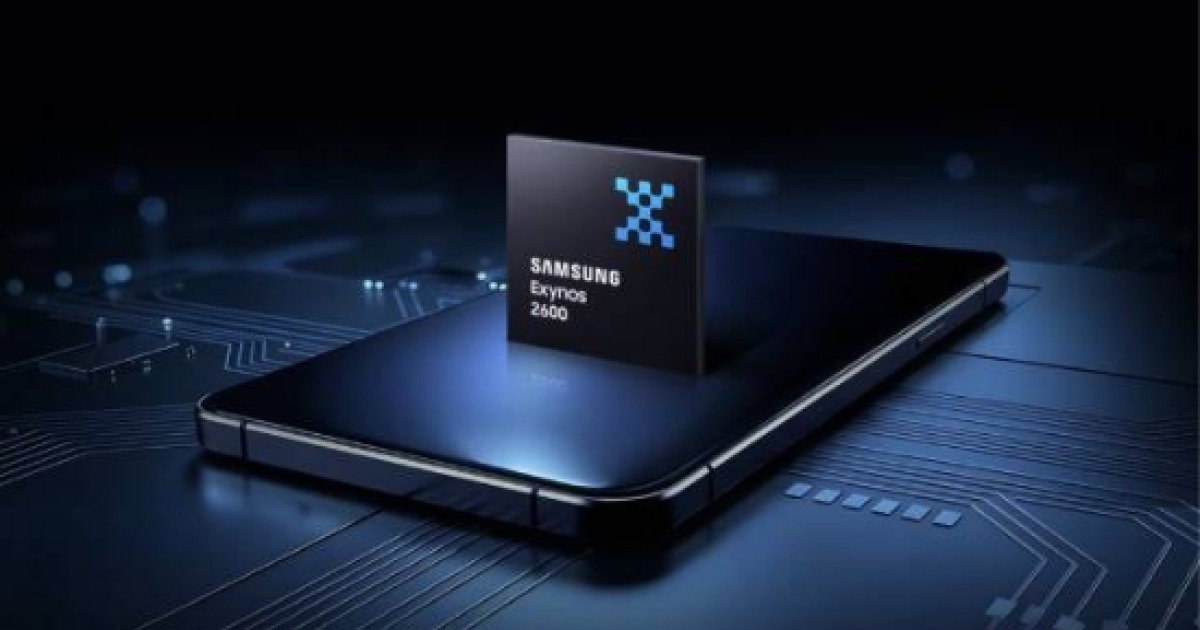
Samsung Just Made a Quiet Bet Against Qualcomm — and It Could Shift Everything
Samsung Electronics’ in-house Exynos chip has returned from near-silence to become a genuine factor in the global smartphone processor market. According to Counterpoint Research data released on September 18, Exynos accounted for 9% of global smartphone application processor (AP) shipments in the second quarter of 2026, up from 7% in Q1 and 3 percentage points higher year over year. It is the highest share Samsung has recorded since 2024.
The number itself is modest, but the trajectory tells a different story. Samsung is no longer quietly outsourcing the majority of its flagship chip needs to Qualcomm. It is building them in-house again, and the market is beginning to respond.
What Drove the Share Gain
Two product lines did the heavy lifting. The Exynos 2600, which powers the base and Plus models of the Galaxy S26, showed enough performance parity with Qualcomm’s offerings to win buyer confidence outside regions where the Snapdragon variant still dominates. Meanwhile, the Exynos 1680 and 1480 chips inside the Galaxy A57 and A37 mid-range phones expanded volume in price-sensitive markets where Samsung previously relied more heavily on MediaTek and UNISOC.
Counterpoint noted that overall global smartphone AP shipments fell 21% year over year in Q2, a reflection of a broader market contraction rather than a Samsung-specific weakness. Yet Exynos still gained share while competitors lost ground. That is not an accident.
Who Is Losing
Qualcomm, the market leader at 23% in Q2, saw its shipment volume decline compared to the same period last year. The reasons are telling: the partial shift of certain Galaxy S26 regions to Exynos reduced Qualcomm’s customer base for Samsung handsets, and a memory shortage compounded the pressure.
MediaTek, which still commands the largest share at 31%, also contracted. Premium smartphone sales slowed across the board, and demand for budget devices weakened, squeezing MediaTek on both ends.
Apple held steady at 19%, buoyed by strong iPhone 17 Pro sales. HiSilicon rose to 5% as Huawei expanded its self-supplied chip program. UNISOC stayed flat at 13%.
The competitive dynamics are shifting in Samsung’s favor precisely because the two biggest rivals — Qualcomm and MediaTek — are each vulnerable in different ways. Qualcomm depends on Samsung as a major customer, and Samsung now has a credible alternative. MediaTek depends on volume in the budget segment, where demand is softening globally.
The Real Story Is What Comes Next
Samsung is reportedly building the Exynos 2700, and internal performance evaluations suggest it outperforms Qualcomm’s Snapdragon 8 Elite 6th Gen across CPU, GPU, artificial intelligence workloads, and power efficiency. If that assessment holds in real-world testing, Samsung’s next flagship line — the Galaxy S27 — could deploy Exynos across a wider range of models than the S26 did.
The financial incentive is enormous. In the first half of 2026 alone, Samsung spent 7.43 trillion won (approximately $5.4 billion at current rates) purchasing mobile APs from Qualcomm, MediaTek, and other external suppliers. That figure represented 17.9% of the total raw material costs for Samsung’s Device eXperience (DX) division, which handles its smartphones and related consumer products.
Every Exynos chip that replaces an externally sourced one improves margins, reduces dependency on a supplier that is also a competitor, and strengthens Samsung’s positioning as a vertically integrated hardware company. That strategy was dormant during the Galaxy S23 cycle, when Samsung exclusively used Snapdragon chips across all models after years of Exynos struggles. It is actively returning now.
Why the West Hasn’t Fully Grasped This
American and European tech coverage tends to frame the smartphone chip war as a duel between Qualcomm and MediaTek, with Apple’s custom silicon treated as a separate category because it only powers its own devices. Samsung’s Exynos revival falls into a blind spot: it is large enough to matter but not large enough to dominate headlines.
The Exynos 2600’s presence in the Galaxy S26 and the foldable Z Flip8 demonstrates that Samsung’s chip design capabilities have improved substantially since the controversies surrounding the Exynos 2100 in the Galaxy S21 era. The Exynos 2200 and 2300 cycles were mixed at best. But the 2600, and more importantly the developing 2700, suggest Samsung has solved at least some of the thermal and efficiency problems that once made Qualcomm the safer choice.
What Happens Next
If Samsung expands Exynos deployment to the Galaxy S27, several things become likely. Qualcomm will lose its guaranteed volume from Samsung’s most important product line and will need to find replacement customers or adjust pricing. MediaTek will face increased pressure in the mid-range segment where both Exynos and MediaTek compete. Apple’s custom silicon remains isolated in its own ecosystem, but Samsung’s vertical integration model mirrors Apple’s strategy in a way that could accelerate industry-wide consolidation of chip design capabilities.
The broader implication is that the smartphone chip market is moving toward a structure where the largest handset makers increasingly design their own silicon. Samsung, Apple, and Huawei are all heading in that direction. The companies that supply chips to multiple phone brands — Qualcomm and MediaTek — will face rising margin pressure and growing competition from their own customers.
Exynos at 9% is still a small number. But it is the right number at the right time, coming from a company that controls design, fabrication, and device integration under one roof. The comeback is not yet complete, but the direction is clear.