Why South Korea Is Hosting Chinese Robotaxis While Waiting for Hyundai to Wake Up
Pony.ai's 200-vehicle rollout in Seoul marks a pivot no one saw coming: South Korea is betting on Chinese autonomous-driving tech while its own auto giants play catch-up. The implications for Hyundai, Kia, and the global robotaxi race are huge.
The Unlikely Ally on Seoul’s Streets
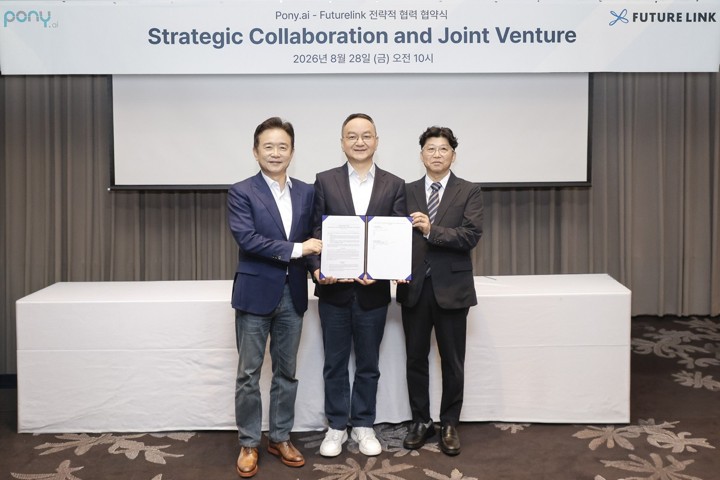
Pony.ai, a Chinese autonomous-driving company that has already been running fully driverless robotaxis in Beijing, Guangzhou, and Shenzhen since 2024, is about to roll out 200 of those same vehicles in Seoul’s Gangnam district. The partnership was formalized on August 28 at the Conrad Seoul with Future Link, a South Korean firm that has been quietly testing Pony.ai’s technology on local roads for over a year.
This should unsettle anyone who assumed the global robotaxi race was a simple story of American versus Chinese companies fighting for dominance. South Korea is not an afterthought in this race—it is home to Hyundai Motor Group, the world’s fourth-largest automaker by volume and a company that has spent billions on its own autonomous-driving ambitions. And yet, Seoul is inviting Chinese firms to test and eventually operate robotaxis on its streets while its domestic champions lag behind.
What Actually Happened
The deal is straightforward on paper. Future Link, the autonomous-driving subsidiary of Pony Link, will import Pony.ai’s seventh-generation robotaxi, obtain South Korean certification, and run commercial services starting around 2028. Pony.ai supplies the technology and operational support. The vehicles themselves are produced by Beijing Automotive, Hyundai’s smaller domestic rival, not by Hyundai or Kia.
Future Link has been accumulating data since last year, running modified Kia Kona Electric vehicles equipped with Pony.ai’s autonomous-driving kits through the Gangnam demonstration zone. The mileage is modest—roughly 80,000 kilometers—and accident-free, which is less impressive than it sounds because these are still supervised test runs with safety drivers. The real test comes when the ban on human operators lifts, something South Korea has yet to fully permit for any company.
The target is 200 vehicles at launch, focused initially on Gangnam before expanding to other major cities. If the timeline holds, the Korean government would have certified fully driverless robotaxi operations by 2028—the same year Pony.ai aims to begin commercial service without safety staff.
Why Seoul Chose China
South Korea’s hesitation around fully driverless robotaxi operations is well documented. The government has been cautious, granting only limited trial permits and insisting on safety drivers for most public-road tests. This stands in sharp contrast to China, where cities like Beijing and Guangzhou have already cleared the regulatory hurdle for unsupervised commercial runs. Pony.ai’s Nasdaq listing in 2024 came partly because of that operational advantage.
By partnering with Pony.ai, South Korea is importing competence it has not yet built domestically. Future Link’s role is essentially that of a local operator and certifier, not a technology developer. The seven generations of Pony.ai’s system—refined through years of operation in some of the most traffic-congested cities on Earth—arrive fully formed.
There is also a timing calculation. South Korea’s automotive industry is under pressure from Chinese electric-vehicle makers who have overtaken Hyundai in several key markets. Letting a Chinese robotaxi company operate on Korean soil could be read as a strategic concession: if China is going to win the software layer of mobility anyway, better to host the competition than to be left behind.
Who Wins and Who Loses
Pony.ai wins immediately. It gains access to a wealthy, technologically literate market with excellent road infrastructure and a population that is already accustomed to smartphone-based services. More importantly, it gains credibility. A successful Seoul launch makes Pony.ai’s technology demonstrably viable outside China, which matters when competing against Waymo in the United States and Baidu’s Apollo Go in Asia.
Future Link wins by association. It becomes the face of autonomous driving in South Korea without having built the core technology itself—a risky play, but one that pays off if the service runs smoothly.
Hyundai and Kia lose in the short term. Their existing autonomous-driving programs, including Hyundai’s Motional joint venture and Kia’s separate development efforts, look slower and less ambitious by comparison. Motional has struggled with delays and financial uncertainty. Kia’s self-driving initiatives have not produced a commercially viable product. Meanwhile, a Chinese company is preparing to run 200 robotaxis in Seoul’s most prestigious district within two years.
Waymo loses attention. The American company has been the global benchmark for robotaxi safety and scale, but it does not operate in South Korea. Pony.ai’s expansion into Seoul shifts the narrative away from Mountain View and toward Beijing.
What Comes Next
The 2028 target is ambitious. South Korea has not yet granted full driverless certification to any company, domestic or foreign. Pony.ai’s seventh-generation vehicle will need to pass rigorous local safety reviews before it can operate without a safety driver. If certification slips to 2029 or later, the strategic impact changes significantly—South Korea’s delay becomes the story rather than Pony.ai’s speed.
Hyundai and Kia cannot afford to wait. The company’s market value has long been built on manufacturing scale, not software. But the robotaxi business is a software business with wheels attached, and the companies that control the stack control the revenue. If Pony.ai and its Chinese peers establish a foothold in Korea, they will have a reference market that competitors like Waymo cannot easily replicate in the region.
The 200-vehicle figure is also a signal. It is large enough to matter economically but small enough to manage risk. If incidents occur, the response will be measured. If the service runs cleanly for months, the expansion will follow quickly.
What this episode reveals is that the autonomous-driving race is no longer a binary contest between Silicon Valley and Shenzhen. It is a layered competition where countries import capabilities they lack, and the first mover advantage belongs to whoever can deploy fastest, not whoever builds the deepest technology stack at home. South Korea’s bet on Pony.ai is a bet on speed over sovereignty—and that choice will define whether Hyundai and Kia remain automobile companies or become something else entirely.