The Yen Squeeze Is Just Getting Started
A 5-yen collapse in two days triggered a short squeeze that Western traders may be underestimating. Korean investors already know how brutal yen carry unwinds can be.
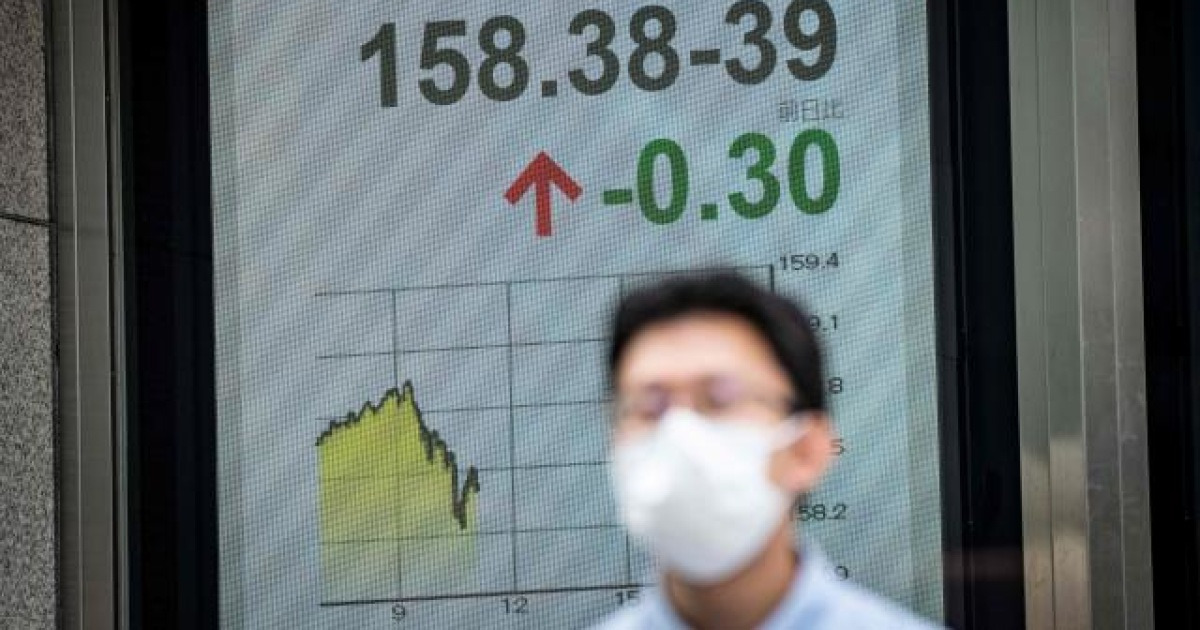
The 158 Level Broke, and Something Unwind Started
The yen-dollar fell from roughly 160 to 155 in two days. On the surface that looks like routine intervention drama—the kind of sharp reversal that spooks retail traders and fades within a week. But the mechanics behind this move were different, and the people who understood the mechanics were already panicking in Seoul.
It started with a rumor. Japanese banks conducted a rate check—asking financial institutions where they thought the yen-dollar would land—on a Tuesday morning in New York time. Word spread. Traders who lost money in the July 31 US-Japan coordinated intervention sold dollars preemptively. The yen stepped up to 158 almost instantly.
Then it crossed the 200-day moving average at 158.44. That number is meaningless to most retail commentary, but it is exactly where leveraged funds that had bet on continued yen weakness were forced to defend their positions. Once the line broke, a cascade began. This is what Bloomberg calls a short squeeze. Korean traders who lived through August 2024 call it by a different name: Tuesday.
Who Is Short the Yen and How Big Is It
According to CFTC data released on August 25, leveraged funds held yen net-short positions more than double the 2020 average. The positions rebuilt themselves in the two weeks after July’s intervention. That means thousands of hedge funds, pension sleeves, and discretionary accounts entered the market assuming the BOJ would not tighten aggressively and the dollar would stay firm.
They were wrong on timing, not necessarily on direction. But timing is everything in a carry trade.
The carry trade borrows cheap yen and buys higher-yielding assets—Australian dollars, Brazilian reais, US Treasuries, emerging-market equities. When the yen strengthens, the currency loss erodes the interest differential. The borrower must buy back yen to close the position. If everyone does it at once, the yen moves faster than the underlying assets can be sold. That is the moment risk assets stumble.
Michael Ashley Schulman of Ceriti Partners noted that many FX traders were already underwater from the July intervention experience. The preemptive dollar selling did not stop the yen from falling further—it accelerated it. Each round of covering made the next round more painful.
The BOJ and the Fed Are Moving in Opposite Directions
What makes this episode different from every yen intervention before it is the policy backdrop. For years, the BOJ sat at negative rates while the Fed hiked. The yen was always weak because the spread demanded it. Now the spread is closing.
BOJ Policy Board member Hajime Takata said on September 2 that the “regime has changed” and explicitly rejected the idea that rate hikes must stay at half-year intervals with 0.25 percentage-point increments. Back-to-back hikes are now “possible under general principles.” Bloomberg reported that the market expects a 0.25-point increase to 1.25 percent at the September 17–18 meeting.
On the US side, Fed Governor Christopher Waller told a conference on September 3 that inflation slowdown signals are only now appearing. If the trend holds, he would support holding rates steady at the September 15–16 FOMC meeting. September rate-hike odds dropped from roughly 63 percent to 50 percent within hours.
Narrowing spreads mean the math behind the carry trade changes. The incentive to borrow yen weakens. The penalty for holding yen-strong positions grows. This is not intervention theater. This is structural.
The American Pressure Campaign That Changed Tokyo’s Mind
There is a third force at work that Western reporters rarely connect: US Treasury Secretary Scott Bessent told BOJ Governor Kazuo Ueda on August 30 that he “strongly supports” Japan taking decisive market and financial policy measures against what he called the yen’s “significant undervaluation.” The New York Times reported that Bessent spent two hours in May complaining to Finance Minister Satsuki Katayama and Prime Minister Sanae Takaichi about her fiscal expansion and the BOJ’s refusal to raise rates.
That pressure is not abstract. It showed up in Ueda’s subsequent public comments. It showed up in theBOJ’s willingness to signal flexibility on timing and pace. It showed up in the yen’s movement.
The intervention fear that triggered Tuesday’s selloff was partly self-fulfilling prophecy—a market betting on action rather than action itself. But the policy direction was real even before the rumor mill got involved.
What Korean Investors Already Know
Korean retail investors did not need a Bloomberg terminal to understand what was happening. They learned this lesson in August 2024 when the yen surged from 160 to 141 in a single week and Korean carry-position portfolios evaporated. The follow-up stories ran in outlets like Aju Economic News with headlines that translated to “fear of strong yen” and references to Korean semiconductor and battery suppliers facing direct profit pressure from an appreciated yen.
The second-order consequences for Korea are already visible. Toyota and other Japanese automakers have warned that strong yen will increase promotional spending and compress margins. Korean suppliers in the TKO cluster—semiconductors, batteries, displays—are caught between a yen that helps their export competitiveness and a Japanese market that is simultaneously their largest customer base.
But the bigger danger for Korean investors is portfolio exposure. Many Korean funds hold Japanese equities and yen-denominated bonds as part of broader Asia allocations. When the yen reverses sharply, those positions reprice together. The unwind does not discriminate between Tokyo and Seoul.
Where This Goes From Here
Schroders’ Hugo Montruchio, who maintains a yen-short position, argued that recent interventions only slowed the yen-depreciation trend temporarily and that carry-trade appeal remains intact. Societe Generale’s Kit Juckes offered a sharper view: the yen-appreciation phase could mark a multi-year turning point toward 140, possibly lower.
The next inflection is Friday night’s US August non-farm payrolls report. Weak employment data will weaken the case for a September Fed hike and add fuel to yen buying. Strong data could slow the unraveling. Nikkei reported that Japanese bank FX dealers are watching the psychological 155 level closely—noting that two previous interventions failed to hold it, and this time the market may slide below it before stabilization returns.
The 5-yen drop over two days is not a flash. It is a signal that the yen’s depreciation regime, which structured global capital flows for a decade, is fracturing. The carry trade unwind has not finished. It has simply found its first trigger. Investors who treat this as another intervention spike are repeating the same mistake that cost them in July.
Korean markets are listening. The question is whether Wall Street is.