Zelensky Sees a Putin Gift for Trump Before November
Kyiv is reading the Russian winter offensive through a new lens — not just as military strategy, but as leverage Trump may want Putin to dial back before November's midterm elections.
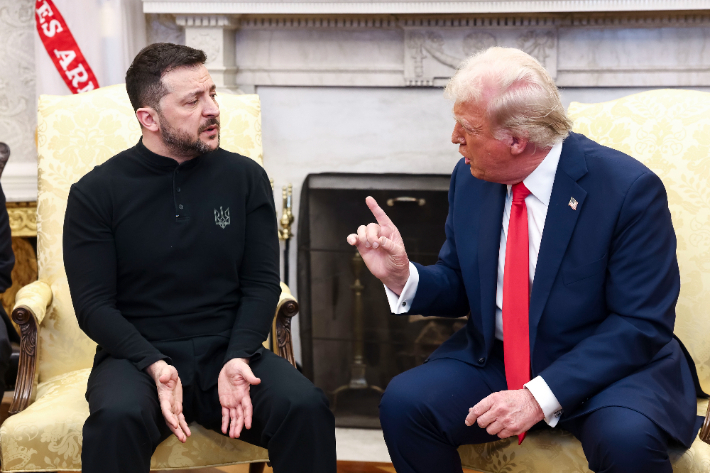
The Gift Before the Ballot
Volodymyr Zelensky is playing a longer game than the daily drone strikes suggest. In a recent interview with Axios, when asked whether Vladimir Putin might offer a conciliatory gesture to Donald Trump before the November midterms, Zelensky didn’t hedge. He said yes.
The answer sounds naive from the outside. Why would a Russian president who has spent four and a half years grinding Ukraine into winter shelter blocks suddenly decide to ease up for the sake of an American electoral calendar? But Zelensky’s optimism isn’t naive — it’s strategic framing. Kyiv is signaling to Washington that it understands the transactional logic driving Trump diplomacy, and it wants to position itself as a beneficiary of that logic rather than its collateral. The subtext is clear: if Putin can be read as accommodating Trump’s political timeline, then Ukraine can be read as the prize worth fighting for — not the bargaining chip worth trading away.
The Winter Offensive as Pressure, Not Just Power
Russia has resumed its systematic bombing campaign against Ukraine’s energy infrastructure as the cold sets in. This is familiar territory: Moscow has weaponized winter before, targeting power stations to create humanitarian pressure that forces Kyiv toward concessions. What’s new in this cycle is the explicit link between those strikes and the political timeline in Washington.
Trump needs a diplomatic win. The Iran conflict has dragged on without resolution, leaving him on the back foot domestically. A de-escalation agreement with Russia — even a modest one, involving winter truce provisions or prisoner swaps — would give him a tangible achievement to point to as election season approaches. That’s the calculus Zelensky is operating from, and it’s not wrong.
But there’s a critical gap between what Trump wants and what Putin is willing to give. Russia’s military campaign is still advancing. The energy strikes are working — Ukraine’s grid is strained, and civilian suffering is mounting. Putin has every incentive to keep pressing while offering just enough flexibility to let Trump claim a breakthrough. The Kremlin has proven adept at this kind of calibrated ambiguity in the past: enough movement to satisfy a deal-hungry counterpart, enough stalling to preserve real gains. A prisoner exchange announcement, for instance, could serve double duty — Trump gets the photo opportunity, Putin buys time for his forces to consolidate positions in the Donbas before winter fully closes logistics.
The Envoy Circuit
The mechanisms are already in motion. Trump’s special envoys Steve Witkoff and Jared Kushner flew to Moscow to meet Putin, then headed to Kyiv. Witkoff reported returning with “new ideas” from Moscow. That phrasing is deliberately opaque — it could mean nothing more than a restatement of positions both sides have already taken, or it could signal a genuine shift in Russian posture.
What we know for certain is that the three-way dynamic has changed. Trump’s envoys are now shuttling between capitals with a mandate to find space for agreement. The question is whether they’re looking for a deal that serves American interests, Ukrainian interests, or both. The answer likely depends on which interest happens to be easiest to package into a headline.
Zelensky has made clear he wants to meet with American officials at the UN General Assembly in New York later this month. That’s not just diplomatic theater — it’s an attempt to insert Ukraine directly into the negotiating architecture rather than being negotiated over. Kyiv is acutely aware that the Turkey-style talks of 2022, where Russian and Ukrainian delegations met without sustained American oversight, ended in stalemate and territorial loss. The lesson Zelensky is drawing is that presence matters. Being in the room doesn’t guarantee favorable terms, but being excluded from it guarantees them anyway.
Who Wins, Who Loses
If Putin does offer a concession before November, the immediate winner is Trump, who gains a foreign policy success without spending political capital. The secondary winner is whoever in Kyiv can claim credit for extracting that concession through persistence and alignment with American electoral timing.
The loser is less obvious but more consequential: Ukraine’s long-term negotiating position. Every concession wrung from Putin on the back of American political calculations comes at the cost of Ukrainian territorial integrity. A winter truce that freezes the front lines now means those lines become the basis for any future peace deal — and Kyiv has spent years insisting that any settlement must be based on international law, not battlefield convenience. The moral and legal architecture Ukraine has built around its position — recognition of sovereignty, the Helsinki principles, the Charter of the United Nations — risks being treated as negotiable if the primary framework shifts from rules-based order to transactional realism.
There’s also the question of credibility. If Trump appears to reward Russian aggression with diplomatic engagement simply because it serves his electoral calendar, it weakens the broader principle that aggression shouldn’t pay — a principle that underpins Western support for Ukraine and extends to other flashpoints from the South China Sea to the Sahel. Allies begin asking whether the umbrella is conditional on American domestic politics, and that uncertainty is precisely what adversaries like Beijing and Tehran are counting on.
Second-Order Effects
The implications extend well beyond the battlefield. European defense industries, which have been ramping up production only to face uncertainty about long-term American commitment, could see orders slow if Washington signals that great-power accommodation is achievable through back-channel deals. The German and French governments are already wrestling with whether to accelerate their own rearmament timelines or wait for clarity from Washington. A perception that the US is prioritizing electoral gains over strategic consistency creates a vacuum that Europe has either rushed to fill or been too slow to occupy — and neither outcome serves Ukrainian interests.
Within Ukraine, the political dynamics are equally fraught. Zelensky’s approval ratings have held despite the grinding nature of the war, but a perceived abandonment by Washington could fracture that cohesion. Military units on the front lines are already facing shortages in ammunition and air defense interceptors. If Kyiv senses that America is preparing to pivot toward a negotiated settlement that doesn’t reflect Ukrainian territorial claims, morale and discipline become political liabilities as much as military ones.
What Happens Next
The window is narrow. September and October are when Zelensky wants to push for resumption of formal negotiations. The UN General Assembly in New York provides a potential meeting point. If Witkoff and Kushner return from Moscow with something concrete, Kyiv will be forced to decide whether to engage on terms that may not fully reflect Ukrainian interests.
The harder truth is that Putin may not need to offer anything at all. Russia’s military position has improved. Its economy has adapted to sanctions. It can afford to wait out the American electoral cycle regardless of what happens. Zelensky’s reading of the situation may be more hopeful than the evidence supports. The Russian president has spent years demonstrating patience as a weapon — why would he abandon that advantage now simply because an American election is approaching?
But hope is a diplomatic tool. By publicly expressing belief that Putin might accommodate Trump’s electoral needs, Kyiv is doing two things: keeping the United States engaged, and reminding Washington that Ukraine is watching and will hold leaders accountable to whatever promises are made behind closed doors. The strategy is risky. It asks a weaker party to bet that the stronger party’s domestic incentives will align with its survival. History offers mixed guidance on whether that bet pays off.
What’s clear is that the next six weeks will define the architecture of whatever comes next — whether that’s a negotiated settlement, a frozen conflict, or a resumption of full-scale warfare. Zelensky’s gamble is that by aligning Ukrainian timing with American political cycles, Kyiv can convert American electoral geometry into Ukrainian security gains. If he’s right, November becomes a inflection point. If he’s wrong, Ukraine faces the oldest and most humiliating prospect in statecraft: being carved up by powers that signed papers about its sovereignty while it was still bleeding.