The Broker Behind South Korea's Prosecutor Scandal
A woman who calls Justice Minister nominee Kim Seung-won 'oppa' sits at the center of a lobbying scandal that could upend the balance of power between the Blue House and South Korea's prosecution service.
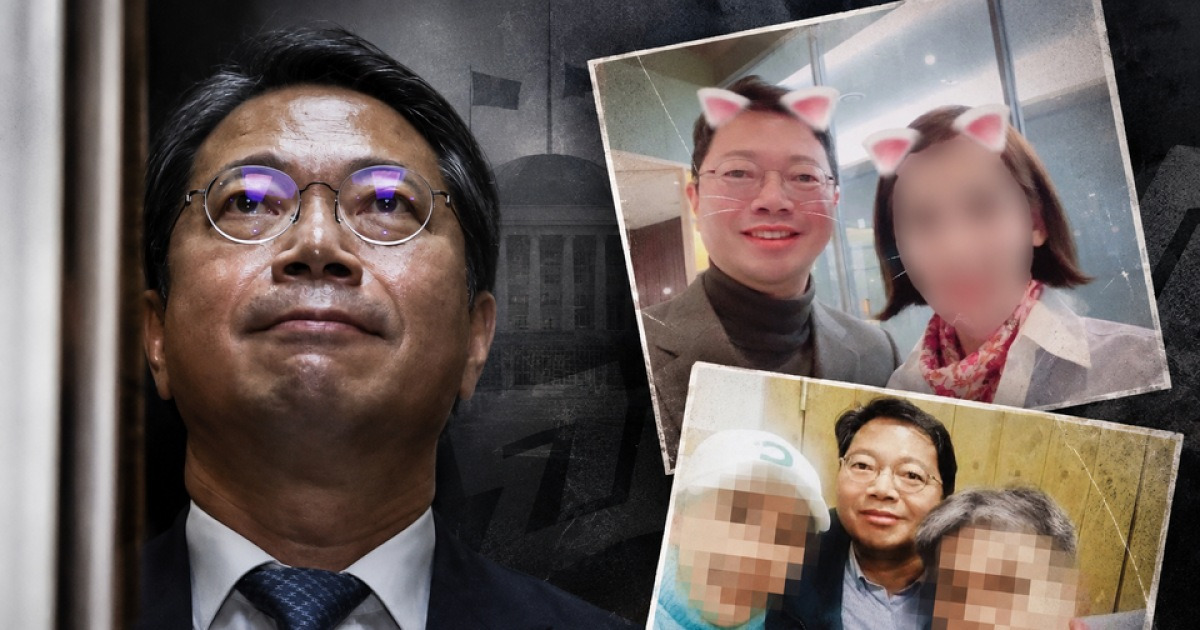
The Woman Who Holds the Keys
In the intercepted recordings, she is known only as “Ms. Yang.” But in one exchange, her relationship to a powerful figure is unmistakable: she addresses Kim Seung-won, South Korea’s justice minister nominee, as “oppa” — an intimate, informal term for an older male friend or confidant. She tells him she knows everyone who matters, from the presidential chief of staff to the party floor leader. She promises to get things done.
This is not a character from a crime thriller. This is the central figure in a lobbying scandal that is already reshaping South Korea’s political landscape and threatening to redraw the boundaries between the executive branch and the prosecution service.
What We Know So Far
The scandal centers on GeneNcell, a biotechnology company that was developing a COVID-19 treatment. In 2021, during a period when the pandemic still dominated Korean policy, GeneNcell sought expedited clinical trial approval from the Ministry of Food and Drug Safety. According to recordings obtained by lawmaker Han Dong-hoon, Yang brokered a connection between the company and Kim, then a member of parliament.
The timeline is consequential. In September 2021, Yang told GeneNcell’s founder that she needed the IND — an Investigational New Drug — approval by the 24th to secure government funding. She boasted: “What I’m good at is things like this.” When pressed on how, she referenced her network: “From the chief of staff on down, I know a lot of people.” She specifically named Choi Jae-sung, a senior aide to the Democratic Party leadership, and described him as someone who could “steer the government.”
By October 2021, Kim contacted the MFDS director directly, asking for swift processing of GeneNcell’s application. The agency approved the clinical trial phases shortly after.
Yang’s credentials — if that is the right word — include seven government commendations between 2019 and 2023, all bestowed by officials from the Democratic Party. Her background is equally hybrid: she ran restaurants and nightlife venues in the mid-2000s, where she first crossed paths with Kim in 2004, when he was a judge. In 2013, Kim represented her in a labor standards violation case at one of her establishments. By the mid-2010s, she had rebranded as a businesswoman.
There is also a judicial thread. A judge who appears in a 2022 photo with both Kim and Yang worked alongside Kim at the Jeonju District Court in 2002. That same judge later reviewed an arrest warrant application against GeneNcell’s CEO — and denied it.
Why “Oppa” Matters
The nickname alone reveals the texture of the relationship. This is not a formal lobbying arrangement with registered firms and disclosure filings. It is personal. It is informal. It is exactly the kind of connection that thrives in systems where institutional guardrails are thin and personal networks carry more weight than procedure.
Kim’s defense has been consistency in its denial: he says he met Yang by chance at a social gathering in February 2022 and has had no contact since. Yet photographs from an April 2023 event in Suwon — a disability awareness day hosted by the local government — show the two together again. His office has since characterized that appearance as official duty, but the image persists in public memory.
The more pressing question is not whether they have met. It is whether the outcome of the GeneNcell approval was influenced by a relationship that predates formal politics and survived its conversion.
Who Wins, Who Loses
If the recordings and photographs hold up under scrutiny, several people lose immediately. Kim Seung-won’s confirmation as justice minister faces an existential threat. His nomination is already under review in a legislative hearing, and the “oppa” recordings give opponents a narrative that is both specific and visceral — easier to grasp than any abstract corruption allegation.
The Democratic Party loses credibility. Multiple named associates — Choi Jae-sung, Song Young-gil, Han Byeong-do — have denied any improper relationship. But denial is not exculpation, and the mere fact that Yang invoked their names suggests a network that may be wider than any single individual’s recollection can accommodate.
The prosecution service gains an opportunity. Han Dong-hoon, a former prosecutor general turned opposition figure, has turned the recordings into a weapon. The scandal echoes the 2020 Lee Jeong-geun and Myung Tae-gyun affair, when a self-proclaimed political broker and a former intelligence official were exposed for trading influence across party lines. That scandal toppled governments. This one may not be as large, but it targets the justice minister — the person responsible for overseeing the very institution that would investigate it.
The Structural Question
The most dangerous implication of this scandal is not about one approval, one drug, or one relationship. It is about the architecture of influence in South Korea.
A woman with a nightlife past and a portfolio of government commendations calls the justice minister nominee “oppa” and arranges regulatory favors for a biotech company. A judge who once worked with that minister denies an arrest warrant for the company’s CEO. All of this happens through informal channels that leave no paper trail except what someone chose to record.
This is not unusual in South Korean politics. Personal networks have always been the hidden operating system. But when the person at the center of those networks has a direct line to the justice minister — the official tasked with investigating corruption — the system loses its self-correcting mechanism.
Kim’s confirmation hearing is the immediate battleground. But the deeper fight is about who gets to define the boundaries between personal loyalty and public duty in a country where those lines have never been sharp.
The recordings will not disappear. The photographs will not be forgotten. And in a political culture where one scandal does not erase another, this story may already be adding weight to a larger reckoning.
What Happens Next
Kim’s team has moved to contain the damage with a two-part explanation: the 2022 encounter was accidental, and the 2023 appearance was official duty. Neither satisfies the broader question of what the relationship actually was between 2004 and 2022 — nearly two decades of proximity, legal representation, social photographs, and now recorded requests.
The Democratic Party faces an internal test. Choi Jae-sung and Song Young-gil have denied knowledge of Yang’s claims, but their denials raise the question of whether they are genuinely unaware or merely unwilling to be associated. Either answer damages the party’s credibility on anti-corruption.
The prosecution service will watch closely. If Kim is confirmed, he becomes the minister responsible for directing prosecutorial investigations — including, potentially, any investigation into the GeneNcell approval. If he is not confirmed, the scandal becomes a symbol of how informal networks continue to operate inside formal institutions.
Han Dong-hoon has positioned himself as the investigator-in-chief of this affair, even though he holds no official prosecutorial authority. That imbalance — a political actor wielding investigative leverage over a judicial appointment — is itself a symptom of the problem.
The story is far from over. But the shape of it is clear: a broker with a phone book and a record of recordings, a minister nominee who cannot explain a decade of friendship, and a system that has never been strong enough to keep the two apart.