Canada's Last Ice-Dammed Lake Vanished in Months — What It Means for Arctic Water Security
A millennia-old epishelf lake in northern Canada has disappeared following the collapse of its ice shelf in 2020. Scientists warn this signals a broader shift in Arctic freshwater systems with implications for communities relying on stable water sources.
The Lake That Was Never Meant to Vanish
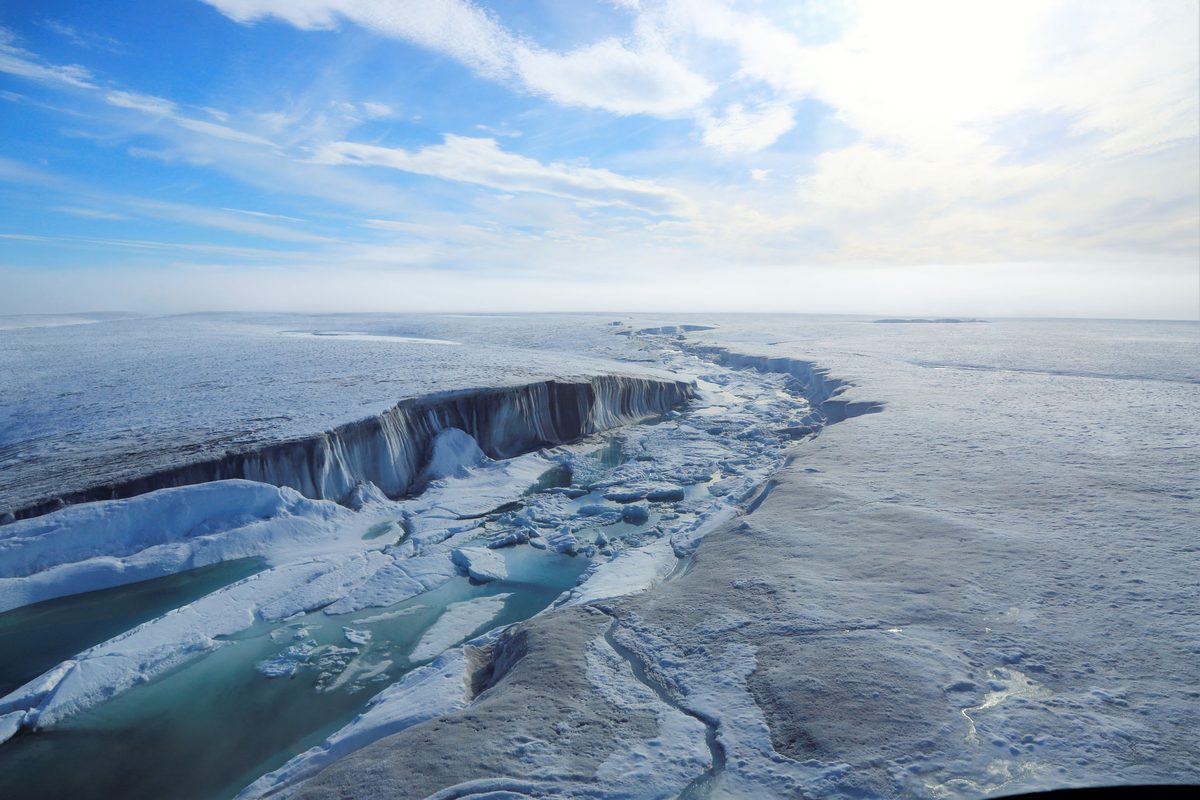
A lake in northern Canada has disappeared. Not gradually over decades, but within months. The Milne Fiord epishelf lake, one of only a handful of its kind on Earth and Canada’s last remaining example, began draining immediately after the ice shelf that dammed it fractured in July 2020. By autumn, most of the freshwater was gone. Two years later, annual monitoring shows no recovery. The lake, which took thousands of years to form, is gone for good.
What makes this disappearance significant is not just the scale of loss but the speed. Epishelf lakes are rare ecosystems — freshwater floating above seawater, held in place by ice shelves that act as natural dams. They create layered habitats where freshwater and marine species coexist in the same water column. The Milne Fiord system was the last of its kind in Canada, located in the Tuvaijuittuq region of northern Ellesmere Island, an area whose name in Inuktitut translates to “the place where ice never melts.” The ice, as it turns out, does melt.
How an Ice Shelf Becomes a Dam — and Then Nothing
An epishelf lake forms when melting snow and ice accumulate behind an ice shelf, creating a freshwater layer that sits atop denser seawater. The ice shelf holds everything in place, much like a barrier. When that barrier breaks, the trapped freshwater has nowhere to go but out.
The Milne Fiord case illustrates this perfectly. Satellite imagery captured the breakup in July 2020. Sensors deployed before the fracture — left in place due to COVID-19 lockdowns that prevented retrieval for two years — recorded the aftermath when researchers finally returned. The data showed brackish water replacing the distinct freshwater layer by July 2022. Freshwater entering the fiord is now flushing directly into the ocean. Without the ice shelf to hold it back, the system cannot re-establish itself.
“These systems took thousands of years to form and were lost in months,” said lead author Jérémie Bonneau, who conducted part of his research during his PhD at the University of British Columbia. “On any human timescale, they are not coming back.”
A Signal of Stress Beyond the Local Scale
The researchers warn that epishelf lakes can serve as early indicators of ice shelf instability. The Milne Fiord case is not isolated — it reflects a pattern of Arctic systems approaching tipping points. The ice shelf had been thinning for decades before the 2020 breakup. Once the ice failed, the ecosystem collapsed with it.
This is relevant beyond the Arctic. Ice dams and glacial systems worldwide regulate freshwater flow into oceans and affect coastal communities. When those systems destabilize, the consequences extend far beyond wildlife habitats. Freshwater loss from glaciers and ice sheets contributes to sea-level rise, alters ocean circulation patterns, and disrupts the water cycles that billions depend on.
The Canadian Arctic is warming faster than most other regions. Temperature increases in Nunavut and surrounding areas have already forced shifts in hunting routes, damaged infrastructure, and threatened food security for Indigenous communities. The disappearance of the epishelf lake is one symptom of a broader pattern — a landscape where once-permanent features are becoming transient.
Who Loses When the Ice Goes
For the Inuit communities of northern Ellesmere Island and the broader Nunavut region, the loss of stable freshwater systems carries direct consequences. These communities rely on predictable water sources for drinking, fishing, and cultural practices. Melting permafrost, shifting ice conditions, and disappearing surface water features all contribute to a growing crisis in water access.
The Milne Fiord study does not directly address community impact — it focuses on ecosystem loss — but the implications are clear. Arctic communities are on the front lines of climate change. When ice dams fail and freshwater systems drain away, the people who depend on those systems feel it first.
Indigenous knowledge holders have long tracked changes in ice conditions and water flow. What satellite imagery and sensors now confirm, local communities have observed firsthand. The translation of Tuvaijuittuq as “the place where ice never melts” no longer matches reality. That shift matters culturally, spiritually, and practically.
The Second-Order Effects: Salinity, Sediment, and Silence
When the Milne Fiord lake emptied, the downstream effects rippled through the fjord system faster than anyone expected. The sudden influx of freshwater mixed with seawater created a brackish transition zone that altered salinity levels throughout the water column. Marine organisms adapted to stable salinity ranges — certain plankton species, fish eggs, and invertebrate larvae — experienced stress in the new conditions. Some populations shifted their ranges deeper into the fiord or moved entirely out of the system.
Sediment dynamics also changed. The freshwater layer had previously acted as a cap, trapping fine particles and organic matter that accumulated over centuries. With the ice barrier gone, those sediments began moving — some settling in new configurations along the fiord floor, others being carried further into the Arctic Ocean. This sediment redistribution affects benthic organisms that build homes in the seafloor substrate and filter-feeders that depend on specific particle sizes.
The silence in Milne Fiord is perhaps the most unsettling indicator. Where researchers once documented active biological productivity in the lake’s layered waters — zooplankton grazing in the freshwater zone, bacterial communities at the interface between fresh and salt water — those zones are now compromised. The stratification that sustained this biological complexity has dissolved into a more homogenous, less productive system.
What Happens Next for Arctic Water Systems
The researchers stress that the ice shelf would need to recover for the lake to return — something they consider impossible given current climate trajectories. The Arctic is not returning to a stable state anytime soon. If epishelf lakes are among the first casualties of warming, others may follow.
There are broader lessons for water security. The Milne Fiord case shows how quickly a system can destabilize once a critical threshold is crossed. Ice shelves that have persisted for millennia can fail in months. The water that was once stored and slowly released is now flushed into the ocean, altering salinity levels and affecting marine ecosystems downstream.
For communities that rely on glacial melt and ice-stored freshwater, this is a warning. The Arctic is changing faster than models predicted. Systems that were once thought permanent are proving fragile.
Scientists are now looking at other potential epishelf systems across the Canadian Arctic Archipelago to assess their vulnerability. Early surveys suggest several locations where ice dams show similar signs of weakening — thinning, crevassing, and reduced connectivity to stable ice sheets. None are certain to fail soon, but the Milne Fiord precedent means researchers cannot dismiss any of them.
The Memory of Ice
The vanishing of the Milne Fiord lake represents more than an ecological loss. It represents the erasure of a system that held freshwater in suspension for centuries, a system that shaped local geography, supported specialized life forms, and existed as a fixture in the Arctic landscape long before modern climate records existed.
For the Inuit communities of the region, the loss carries a different weight. The land and water are not separate entities — they are part of a continuous system that has sustained people for generations. When a lake disappears, it changes the character of the place. It changes what is available to harvest, what routes make sense, what stories can be told.
The name Tuvaijuittuq — “the place where ice never melts” — persists in maps and documents, but it no longer describes what people experience walking the landscape. That disconnection between language and reality is its own kind of loss, one that accumulates as more features change and names become historical references rather than living descriptions.
The vanished lake is a small part of a vast northern landscape, but it tells a story about what happens when ice goes. Freshwater disappears. Ecosystems collapse. And the people who depend on those systems face a new, less predictable reality.