China Just Overtook Japan in European Car Sales — And It Changes Everything
Chinese New Energy Vehicles topped European monthly registrations for the first time in May 2025, dethroning Japan after decades of dominance. The shift signals a tectonic realignment of global auto power and raises urgent questions about trade policy, supply chains, and what happens next.
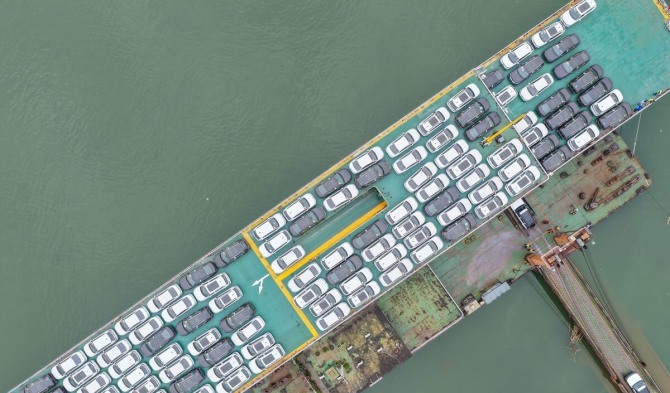
The Moment Japan Lost Europe
In May 2025, something quietly irreversible happened at a registration desk somewhere in the EU. Chinese New Energy Vehicles recorded 138,000 monthly registrations across 31 European countries — a 64% jump from the year before — and for the first time in recorded history, that number exceeded whatever the Japanese brands managed in the same period.
Japan held the top spot in European car registrations for roughly four decades. It was one of those unremarkable constants of global industry, the way Germany led in exports or Saudi Arabia led in oil. Then one month in 2025, it simply wasn’t number one anymore.
The significance is not in a single month. It is in what the month represents: Chinese automakers have crossed the psychological and practical threshold in Europe’s most sophisticated automotive market. They are no longer niche players offering cheap alternatives. They are volume leaders, and they got there through a combination of price, product, and strategy that Japanese firms are still struggling to comprehend.
How China Built This
The numbers behind the headline are stark. China’s total auto exports hit nearly 7.1 million units in 2025 — more than six times the 977,000 exported in 2013. From 2021 through 2025, exports grew by over a million units every single year. In July alone, China shipped 1.04 million vehicles, and for the first time, New Energy Vehicles accounted for more than half — 553,000 units.
NEV exports have multiplied more than thirtyfold since 2020. That is not incremental growth. That is a structural break.
BYD, Chery, and SAIC opened the door. Geely, Changan, and Great Wall walked through it. A second wave of newer brands — NIO, XPeng, Li Auto — is now aiming at the premium segment, using smart technology and connected features as their differentiator rather than raw price.
The pricing dynamic itself is telling. BYD’s Atto 3 sells for roughly 120,000 yuan domestically — about 24,000 euros — but lists for over 30,000 euros in Europe. XPeng’s new Monarch M03, launched simultaneously in Munich and Shanghai, follows the same pattern. Chinese automakers are pricing above their domestic rates abroad, signaling confidence rather than desperation. That is a brand-positioning move that Japanese firms only began making in the 1980s — and by then, they had already spent decades building reputation.
Local Ecosystems, Not Just Export Deals
What distinguishes this wave from Japan’s postwar emergence is the speed and depth of localization. Chinese manufacturers are not simply shipping cars and walking away. They are building ecosystems.
BYD’sBrazilian facility — encompassing R&D, lithium iron phosphate battery material processing, and electric bus and truck chassis manufacturing — produced its 100,000th vehicle in July 2025. SAIC is establishing local R&D and after-sales organizations. CATL has partnered with UK energy company Octopus Energy to build a battery-swap network across Europe. Geely acquired a stake in Malaysia’s Proton, importing supply chain capabilities and engineering know-how into a new market.
Changan has publicly committed to opening more than 1,000 sales and service locations across Europe by 2030. BYD plans 6,000 ultra-fast charging stations overseas by March 2027. These are not marketing gestures. They are infrastructure bets designed to solve the single biggest obstacle to EV adoption: range anxiety and charging access.
Wang Chuanfu, BYD’s chairman, stated at a June shareholders meeting that he intends to make BYD the world’s top-selling automaker within five years. The statement was bold, perhaps brash, but the company already dominates the global NEV volume ranking. The question is whether it can sustain that position when the lowest-hanging fruit has been picked.
The Tariff Wall Is Real — And It Is Rising
The path forward is not clear. Every major market is putting up barriers.
Turkey imposed an additional 40% tariff on Chinese EVs in 2023. The EU responded to Chinese subsidies with countervailing duties of up to 35.3% in 2024. The United States has levied 100% tariffs. Mexico introduced duties of up to 50% on passenger vehicles from countries without a free trade agreement — a measure that effectively targets China.
These tariffs change the math. They raise costs. They slow volume. But they also accelerate the very strategy Chinese companies have been pursuing: local production.
A car shipped from China faces a tariff. A car assembled in Hungary, Brazil, or Thailand may not. The tariff wall is pushing Chinese automakers from exporters into industrial players — the same trajectory Japan followed in the 1980s and early 1990s, when rising trade friction forced Toyota, Honda, and Nissan to build factories in North America and Europe.
The difference this time is speed. Chinese firms are compressing into localization what took Japanese firms a decade. BYD went from zero to 100,000 units in a Brazilian plant in roughly two years. That timeline would have been unthinkable for a Japanese automaker in the 1980s.
Who Wins, Who Loses
Japanese automakers are the obvious losers in this shift, at least in the European market. Their volumes are declining. Their EV strategies have been cautious and late. Their brand loyalty — once the moat that protected them against Korean and American challengers — is eroding as Chinese EVs offer more technology per euro.
European legacy automakers are losing too, but for different reasons. Volkswagen, Stellantis, and Renault are trying to transition their own lineups while competing against imported Chinese EVs that are cheaper, more technologically advanced, and offered under brands with stronger EV narratives. The EU tariffs are meant to buy time, but time for what remains unclear.
Chinese suppliers and battery makers win disproportionately. CATL, BYD’s battery division, and their partners are exporting not just vehicles but the entire electrification stack — batteries, charging infrastructure, software platforms. The value capture is moving up the chain.
Consumers in emerging markets win. Latin America, Southeast Asia, and the Middle East are receiving Chinese EVs at prices that local manufacturers cannot match. The infrastructure play — charging networks, battery swap stations — means these markets are getting a complete mobility ecosystem, not just a product.
What Comes Next
The May 2025 milestone will look like a turning point in retrospect. In the months ahead, expect three developments.
First, the tariff arms race will intensify. The EU is likely to expand its investigation scope beyond direct subsidies to include broader industrial policy measures. The US will maintain its prohibitive rates. New markets — India, Indonesia, South Africa — will consider their own barriers.
Second, Chinese localization will accelerate beyond Europe. Brazil, Thailand, Hungary, and possibly Turkey will see more Chinese-owned manufacturing and battery facilities come online. The companies that bet on local production over pure export will have a structural advantage.
Third, the Japanese response — whatever form it takes — will determine whether this is a permanent shift or a cyclical dip. If Japanese firms can match Chinese EVs on price and technology within three to five years, they may recover European market share. If they cannot, the dethronement becomes institutional.
For now, the data is clear: China built the fastest automotive export engine in history, and Europe just became its latest proving ground. The Japanese era did not end with a crisis or a scandal. It ended because someone else offered a better product at a better price, faster.
That is how industries change. It is just usually slower.