How China's State Banks Are Building a Parallel Financial Order
An ICIJ investigation into ICBC reveals how Beijing's largest bank systematically finances sanctioned regimes and autocrats — not as rogue behavior, but as explicit policy. The implications reach far beyond one institution.
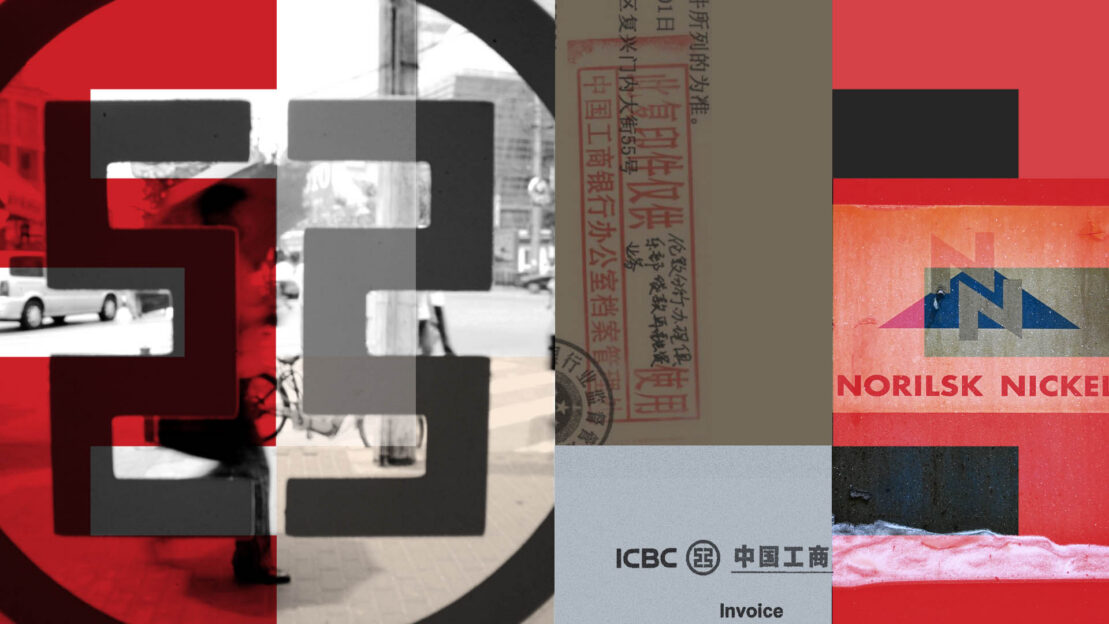
The bank that answers to two masters
ICBC, the Industrial and Commercial Bank of China, sits at the center of a quiet revolution in global finance. With over $8 trillion in assets, it is the largest bank on earth. But unlike JPMorgan Chase or HSBC, its primary loyalty is not to shareholders alone. It answers to the Chinese Communist Party.
This dual mandate creates a bank that simultaneously pursues profit and geopolitical objectives. According to James Stent, a former banker who served on the boards of Chinese lenders, ICBC must “please two masters.” The government guides banks into priority sectors — Made in China 2025, the Belt and Road Initiative — while also scoring management competence on bottom-line returns.
The result is an institution that can undercut Western banks on price, ignore their compliance standards, and still claim profitability. And according to a remarkable new investigation by the International Consortium of Investigative Journalists, it is doing exactly that on a global scale.
What the records reveal
ICIJ examined 4.8 million confidential ICBC records spanning two decades, produced in collaboration with 23 media partners. The files come from ICBC’s London branch and a subsidiary operating at the same address on King William Street — the financial district’s nerve center, near the Bank of England.
The documents include internal emails, suspicious transaction logs, meeting minutes, reports marked as trade secrets, and directives from the bank’s Communist Party committee. They paint a picture of a bank that routinely finances companies shunned by Western lenders: Russian firms sustaining Moscow’s war economy, companies linked to Belarusian oligarchs, and autocrats publicly accused of corruption.
Crucially, these were not rogue decisions by individual bankers. The records show Beijing headquarters directing overseas officers to pursue explicitly political objectives. When compliance concerns arose, they were often overridden by strategic considerations.
“SOCAR is a strategically important client for ICBC in view of supporting China’s 2013 One-Belt One-Road policy,” one banker wrote in 2021, dismissing warnings about the transparency of Azerbaijan’s state oil company.
The Russia case study
Norilsk Nickel, or Nornickel, illustrates the pattern. The Russian mining giant is controlled by Vladimir Potanin, a Putin ally who has been held up by the Kremlin as a symbol of resistance to Western sanctions. In 2024, as the U.K. and U.S. moved to ban Russian nickel imports, ICBC London and other overseas branches considered providing loans in Chinese currency and additional financial services to the company.
Other international banks wavered. ICBC did not.
The bank’s exposure to Russia more than doubled between 2022 and 2023, its first full year after Moscow’s invasion of Ukraine. By 2024, ICBC had earned approximately $370 million from its Russian operations. Nornickel’s minerals are vital to China’s electric vehicle and battery industries — creating a direct link between Western sanctions and Chinese industrial policy.
This is not偶然 behavior. It is structural. ICBC’s mandate includes securing resource access for China’s economy. When Western banks retreat from sanctioned jurisdictions, ICBC steps in — often at terms that undercut compliance-heavy competitors.
Financing autocrats
The Aliyev family of Azerbaijan provides another example. In 2016, daughters of President Ilham Aliyev approached ICBC London to open an account for Pasha Bank. The sisters listed media industry jobs as their source of wealth, but their résumés carried a detail that should have triggered alarms: their father had ruled Azerbaijan since 2003 and faced repeated corruption allegations.
ICBC analysts understood the risk. An internal memo noted that scrutiny of the sisters’ bank was unlikely because Azerbaijan’s judiciary and law enforcement were under presidential control. The memo concluded: “The entity and the ultimate beneficial owners are not likely to be investigated.”
In 2017, ICBC London accepted Pasha Bank as a client. It was not until 2021, after British authorities investigated an Aliyev associate, that the bank expressed concern about potentially contaminated funds. Even then, senior managers pushed back against immediate offboarding. They waited months for Pasha Bank’s $24 million in deposits to mature before ending the relationship.
Meanwhile, ICBC continued lending to Socar, Azerbaijan’s state oil company. In 2021, it agreed to a $90 million refinancing loan despite compliance warnings. The bank’s reasoning was explicit: Socar was strategically important for Beijing’s Belt and Road strategy.
A similar pattern emerged in Sierra Leone. In late 2017, ICBC approved a $659 million loan for port expansion in Freetown, despite the country’s corruption problems. The bank committed funds before obtaining all necessary documents. When ICBC officers finally reviewed the borrower, National Port Development, they discovered public reports of bribery allegations. The bank chose not to disburse — but kept the cancellation quiet, fearing diplomatic fallout.
Why this matters beyond one bank
The conventional narrative frames these cases as instances of Chinese corruption or lax oversight. That framing misses the point. What ICBC is doing is systematic, not aberrational.
Beijing has built a financial architecture that operates by different rules. State-owned banks like ICBC are tools of industrial and geopolitical policy. They are expected to take risks that Western commercial banks cannot — financing sanctioned regimes, lending to opaque state enterprises, accepting lower returns in exchange for strategic access.
The consequences extend far beyond individual transactions. When ICBC finances Russian energy companies, it undercuts the sanctions regime that Washington and its allies spent years constructing. When it lends to autocrats, it creates dependencies that translate into political support at the United Nations and in regional organizations.
Christopher Walker, vice president at the Center for European Policy Analysis, described what he calls “authoritarian capital” — financing that comes wrapped in censorship, surveillance, secrecy, and elite capture. “What is typically missing is both the information about what can accompany those resources,” Walker said, “and often forms of elite capture, certainly in more vulnerable settings.”
The response from Beijing
The Chinese government has rejected the investigation’s findings. A spokesperson called the reporting a “false narrative” of opaque lending. An embassy representative stated that China’s overseas financing “strictly follows market rules and international norms” and “never seeks political interests.”
ICBC did not respond to repeated requests for comment.
But the records tell a different story. They show a bank that treats compliance failures as acceptable costs of doing business. They show internal officers expressing misgivings that were routinely overridden. They show a culture where strategic importance trumped due diligence.
The broader architectural challenge
What makes this investigation significant is not just what ICBC has done, but what it represents. China has constructed an alternative financial system — not through coercion, but through competition. Its banks offer capital to borrowers that Western institutions have abandoned: sanctioned states, autocratic governments, resource-rich but governance-poor countries.
This system does not require force. It requires patience and deep pockets. ICBC’s $8 trillion in assets give it capacity that no Western bank can match. Its state backing means it can absorb losses that would threaten private institutions. Its political mandate means it is willing to take those losses.
The result is a gradual erosion of the post-Cold War financial order. Sanctions lose teeth when there is always another bank willing to lend. Corporate governance standards weaken when investors have no alternative to Chinese capital. Democratic accountability falters when autocrats can bypass Western financial systems entirely.
This is not a conspiracy. It is a strategy — patient, systemic, and increasingly effective. The question for Western policymakers is whether they understand what they are facing, and whether they have a response that goes beyond condemnation.