IAEA Votes to Deny North Korea Nuclear Status — But Pyongyang Isn't Listening
A 103-6 IAEA vote rejects North Korea's nuclear claims, but the resolution's real significance lies in what it exposes: a widening gap between diplomatic language and Pyongyang's irreversible nuclear entrenchment.
The Vote That Proves Nothing and Everything
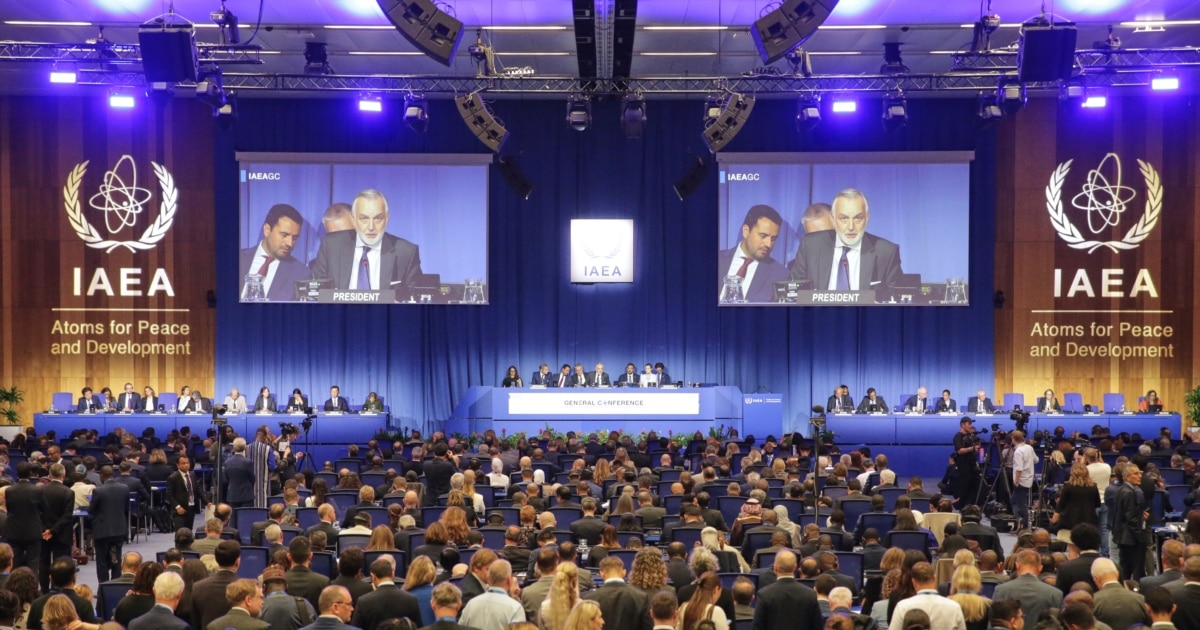
The IAEA’s 70th General Conference in Vienna produced a resolution that was certain to pass. One hundred and three countries voted in favor. Six voted against. Fourteen abstained. The language was firm: North Korea cannot claim nuclear weapon status under the Non-Proliferation Treaty. Pyongyang must dismantle everything — the six nuclear tests conducted between 2006 and 2017, the enrichment activities at Kangsong, the construction work at Yongbyon, the open pit at Pongsan uranium mine, the still-operational Punggye-ri test site.
The precision of the facility-level detail in the resolution is itself a signal. This is not generic diplomatic language. Someone at the IAEA has been watching very closely, and they have been taking notes. The enumeration of specific reactors, laboratories, and construction zones suggests an intelligence apparatus that has mapped North Korea’s nuclear infrastructure in real time. Satellite imagery analysis, defector testimony, and open-source research have converged into a granular picture that would have been impossible to achieve even a decade ago. That knowledge is power — but only if someone is willing to act on it.
What makes this vote particularly stark is the speed with which North Korea has moved beyond the very categories the IAEA is trying to enforce. The agency’s mandate rests on the assumption that a state can be brought back into compliance, that verification is possible if political will exists. Pyongyang has spent the better part of a decade making that assumption irrelevant.
What North Korea Already Decided
The resolution’s central premise — that North Korea cannot be a nuclear weapons state — has been rendered obsolete by Pyongyang’s own constitutional changes. North Korea formally amended its constitution in 2023 to enshrine its status as a nuclear weapons state. It has repeatedly declared that its nuclear arsenal is non-negotiable and irreversible. The IAEA’s vote, however morally clear, cannot un-write those decisions.
This is the central paradox of the moment. The international community is casting votes to deny reality, while North Korea is spending resources to make that reality permanent. Every resolution like this one pushes Pyongyang further into the conviction that deterrence is the only guarantee of regime survival — and that the only way to guarantee deterrence is to make nuclear weapons utterly inseparable from the state itself.
There is also a secondary effect worth noting: each vote of this kind reinforces the hardliners inside North Korea’s power structure. Officials who argue that engagement is a trap and that the only language the outside world respects is force find their case strengthened every time the IAEA issues another declaration of principle. The resolution, intended to isolate Pyongyang, may instead consolidate the very worldview it seeks to counter.
The Countries That Spoke
Australia, New Zealand, Norway, and Slovenia took the floor before the vote. Their arguments followed an identical template: condemnation of North Korea’s illegal nuclear and missile programs, rejection of any normalization of its weapons status, and a call for IAEA inspectors to return. Norway went further, explicitly condemning the military cooperation between Pyongyang and Moscow — a reference to the intelligence-sharing and potential weapons transfers that have surfaced since Russia’s invasion of Ukraine.
The unanimity among these speakers is notable. It suggests that middle-income democracies in the Indo-Pacific and Europe are converging on a harder line toward North Korea, possibly reflecting broader concerns about the erosion of the non-proliferation regime. But convergence among vocal states is not the same as coordinated action. None of these countries has the leverage to unilaterally alter Pyongyang’s calculus, and their shared rhetoric has yet to translate into a unified strategy for enforcement.
India and South Africa, both members of the Non-Aligned Movement, abstained — a reminder that the global South has not fully embraced the framing of this resolution. Their hesitation may reflect skepticism toward institution-heavy approaches that lack enforcement teeth, or it may signal discomfort with a vote that singles out one state while silent nuclear possessors elsewhere face no comparable scrutiny. The abstentions were not opposition, but they were not support either.
The Six-Party Talks Question
The resolution invokes the 2005 September 19 Joint Statement and calls on North Korea to return to the six-party framework. This invocation carries weight precisely because the framework has been dead for years. North Korea walked away from the talks in 2009 after the freezing of its bank accounts. It has not participated meaningfully since.
The resolution’s language about the IAEA returning “when a political agreement is reached between relevant parties” is careful diplomacy. It leaves open the possibility of a negotiated path without committing to one. But the sequencing matters: the resolution requires North Korea to first reach a political agreement, then request IAEA assistance, then get board approval. That is a tall order when Pyongyang has already declared its nuclear status final.
More problematically, the six-party framework was always fragile. It depended on China’s willingness to pressure Pyongyang and on the United States’ willingness to offer security guarantees in return. Neither condition holds with anything approaching its original strength. China’s priorities have shifted toward strategic competition with the United States, and Washington’s attention is increasingly diverted to Ukraine and the Indo-Pacific. A framework that required near-perfect alignment among six major powers is unlikely to revive on its own.
Who Wins. Who Loses.
The winners are the NPT institution itself and the coalition of states that want to keep it intact. The vote reinforces the treaty’s authority even as its most determined violator moves further beyond its reach. For states that have restrained their own nuclear ambitions in exchange for a functioning non-proliferation regime, this resolution is a reaffirmation that the rules still matter — even if their enforcement is selective.
The losers are the diplomatic process. Each resolution that North Korea ignores makes the next one less consequential. There is a diminishing-returns curve to these statements, and the IAEA is approaching the inflection point. At some threshold, the vote becomes purely ceremonial, a ritual performance that costs nothing and achieves nothing. The agency risks becoming a talking shop rather than a gatekeeper.
There is also a regional loser in waiting. Japan and South Korea are watching the gap between verbal condemnation and tangible action with increasing impatience. If the United States and its allies cannot deliver denuclearization through diplomacy, and cannot deter North Korea through threats alone, the question of extended deterrence — whether Washington’s nuclear umbrella extends to Tokyo and Seoul — will face fresh pressure. That pressure could accelerate nuclear debates in Seoul or deepen Japan’s conventional capabilities. Both outcomes would reshape East Asia’s strategic architecture regardless of what the IAEA decides.
The Russia Factor
Norway’s explicit reference to the Moscow-Pyongyang axis introduces a complication that the resolution does not fully address. North Korea’s deepening military cooperation with Russia — including what appears to be artillery shell and missile component transfers in exchange for satellite and possibly nuclear-related technology — creates a feedback loop that strengthens both regimes. Every sanction that tightens around Moscow loosens its grip on North Korea, and vice versa.
This connection also dilutes the resolution’s potential impact. China, Russia’s primary economic partner in the region, faces a dilemma: enforcing sanctions against North Korea risks angering Moscow, while shielding Pyongyang risks isolation from Western powers. The current trajectory suggests Beijing will continue its preference for managed pressure — enough to signal disapproval without precipitating regime instability. That calculation aligns conveniently with Pyongyang’s interests.
What Comes Next
The resolution places this issue on next year’s 71st General Conference agenda. That means the cycle repeats. Another vote. Another set of speeches. Another round of North Korean defiance — likely including another nuclear test or a major missile demonstration designed to make the next vote look even more ceremonial.
The real question is whether the 103 voting countries move beyond statements. The resolution calls on all member states to fully implement UN Security Council sanctions. Enforcement is where the gap between words and consequences lives. China’s posture on sanctions enforcement remains the critical variable. Beijing has signaled willingness to discuss North Korea’s nuclear program but has consistently resisted measures that could destabilize the regime or restrict its economic lifelines.
A clearer close would acknowledge that the resolution is not an endpoint but a marker — a signpost showing how far the gap has already grown. The IAEA still has relevance, but its relevance is shifting from prevention to documentation. It can no longer stop North Korea from becoming a nuclear state. It can only record the fact, maintain the legal framework that future generations may one day use to reverse course, and signal to allies and partners that the rules-based order has not yet surrendered — even as its enforcement mechanisms grow increasingly abstract.
The resolution is a snapshot of a world that still believes in institutions. North Korea is a snapshot of a world that no longer does. The two snapshots do not yet overlap — but the distance between them is narrowing, and each vote that goes unanswered makes the next one harder to justify.