Korean Batteries Pivot to US Storage as EV Slowdown Forces Rethink
South Korea's top three battery makers are redirecting surplus EV production capacity toward American energy-storage projects, betting that Trump-era supply-chain restrictions will reward domestic manufacturing and open the door to a faster-growing market.
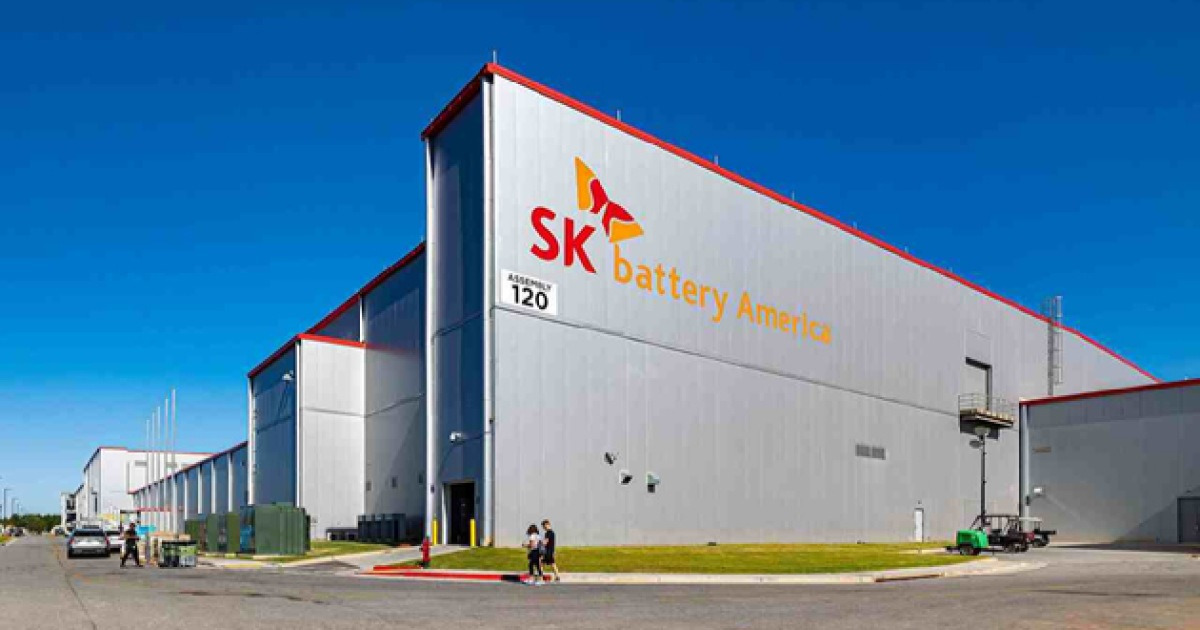
The Quiet Pivot
South Korea’s three largest battery makers — SK On, LG Energy Solution, and Samsung SDI — are doing something unusual for companies that spent the past decade building sprawling American factories for electric vehicles: they are quietly converting some of those facilities to produce batteries for energy storage instead.
The shift is not dramatic on its own. But together it signals a second-order industrial repositioning that could matter for the speed of the global energy transition and for how aggressively Washington and Beijing fight over who controls the supply chain.
Electric vehicle demand has cooled across much of the developed world. Korean battery plants built to serve that demand now face idle capacity. Rather than let those factories sit, the three companies are turning to the US energy-storage market, which is growing far faster than anyone expected and is being reshaped by new American rules that disadvantage Chinese-made cells.
The result is an opportunity that did not exist two years ago, and a set of risks that most analysts are still underestimating.
How the Numbers Look
The data from the US Energy Information Administration makes the scale clear. Utility-scale battery storage capacity in America grew at a compound annual rate of 70 percent over the past three years. It stood at roughly 43.6 gigawatt-hours at the end of last year, jumped by 8.3 GWh in the first half of this year, and is expected to add another 54 GWh over the next two and a half years if planned projects come online on schedule.
That is a market that is doubling every couple of years, not a slow-moving utility side project. For Korean battery makers, it is large enough to absorb a meaningful portion of the excess capacity they now carry in North America.
SK On has already signed a deal with NeoVolt Power to supply 9 GWh of lithium-iron-phosphate cells from its Georgia plant between 2027 and 2031. The company says it is negotiating an additional 9 GWh, which would bring the total to 18 GWh. LG Energy Solution plans to push its Michigan Lansing facility to more than 50 GWh of LFP cell capacity by year end, and has secured contracts with Excelsior Energy Capital for 7.5 GWh and with Hanwha Q CELLS USA for 5 GWh. Samsung SDI is converting part of its Indiana EV battery line to ESS production and expects LFP mass output there by the fourth quarter. It has also signed contracts worth more than 2 trillion won and another worth roughly 1.5 trillion won in the past six months.
None of this replaces EV sales. But it does turn what looked like stranded capital into usable revenue.
Why LFP Matters
The chemistry behind this pivot is worth noting. All three companies are moving toward lithium-iron-phosphate, or LFP, cells for storage. LFP is less energy-dense than nickel-manganese-cobalt chemistries used in most EVs, which is why it has historically been considered inferior for cars. But for stationary storage, where weight and range are irrelevant, LFP is cheaper, longer lasting, and safer.
That cost advantage is exactly why Chinese manufacturers have dominated the global LFP market. CATL, BYD, and a handful of smaller firms have built LFP capacity at scales that make it difficult for anyone outside China to compete on price. Until now.
The Korean companies are not trying to undercut Chinese LFP on cost alone. They are trying to win by locating production inside the United States, where new policy barriers make imported Chinese cells progressively harder to use in American projects.
The Policy Lever
In late August, Donald Trump signed an executive order giving the Department of Energy authority to block the acquisition, import, transfer, or installation of foreign energy equipment it deems a national-security risk. The order specifically names battery energy storage systems. It does not ban Chinese batteries outright. The final scope will depend on implementing regulations that are still being drafted.
But the direction is unmistakable. Washington is moving from a stance of containing Chinese influence to one of actively excluding it from critical energy infrastructure.
Other rules are already in effect. The Inflation Reduction Act prohibits the 48E investment tax credit for storage projects that receive material support from foreign entities of concern, which the Treasury Department has interpreted to include Chinese suppliers. And starting in January, the additional tariff on Chinese non-EV lithium-ion batteries rose from 7.5 percent to 25 percent, part of the broader Section 301 actions taken in 2024.
Taken together, these measures raise the cost and reduce the availability of Chinese LFP in the US market. For Korean producers with factories already running in Georgia, Michigan, and Indiana, they create a protective moat.
Who Wins, Who Loses
The winners are straightforward. SK On, LG Energy Solution, and Samsung SDI gain a growing addressable market in a region where they already have supply chains, skilled workforces, and relationships with American utilities and project developers. Their existing plants can be repurposed faster and cheaper than building new ones from scratch, which gives them a timing advantage over competitors who would need to construct greenfield capacity.
American utilities and grid operators benefit too, because domestic production reduces the geopolitical risk of relying on Chinese-made storage cells for infrastructure that underpins the power grid. An AI-driven expansion of data centers is already pushing US electricity demand higher, and storage is essential to balancing that load, especially as renewable generation grows.
The losers are more complicated. Chinese battery makers lose access to the fastest-growing segment of the American market. That is a significant revenue stream they cannot easily replace elsewhere, because Europe and other regions are also tightening their supply-chain rules. Some American project developers who counted on cheaper Chinese cells will face higher costs, at least in the near term, until Korean or other non-Chinese capacity ramps up sufficiently.
There is also a risk that the policy window does not stay open long enough. If the final implementation of Trump’s executive order is narrower than expected, or if trade negotiations produce exemptions for Chinese cells, the protection that Korean producers are counting on could erode.
What Happens Next
The next six to twelve months will be decisive. The key variables are the shape of the implementing regulations for the energy-equipment executive order and the pace at which US data-center and renewable demand continues to grow. If both trend in the same direction, the Korean companies’ storage bets look like the right call at the right time. If either reverses, the excess capacity problem returns in full.
One thing is clear: the Korean battery industry has recognized that the EV slowdown is not temporary. It has adapted by redirecting capital and production toward storage, where policy and demand are both moving in its favor. That adaptation may not save every factory or every project, but it does signal a broader restructuring of who builds the batteries that power the next phase of the energy transition — and where those batteries are made.