Kusama's dots sold for millions while autistic artists fought for access
Yayoi Kusama died at 97, leaving behind a legacy that the art world now celebrates as proof of its commitment to neurodiversity. But the machinery that made her a billionaire — and the one that still excludes artists like Nnena Kalu — tells a different story.
The dots that built an empire
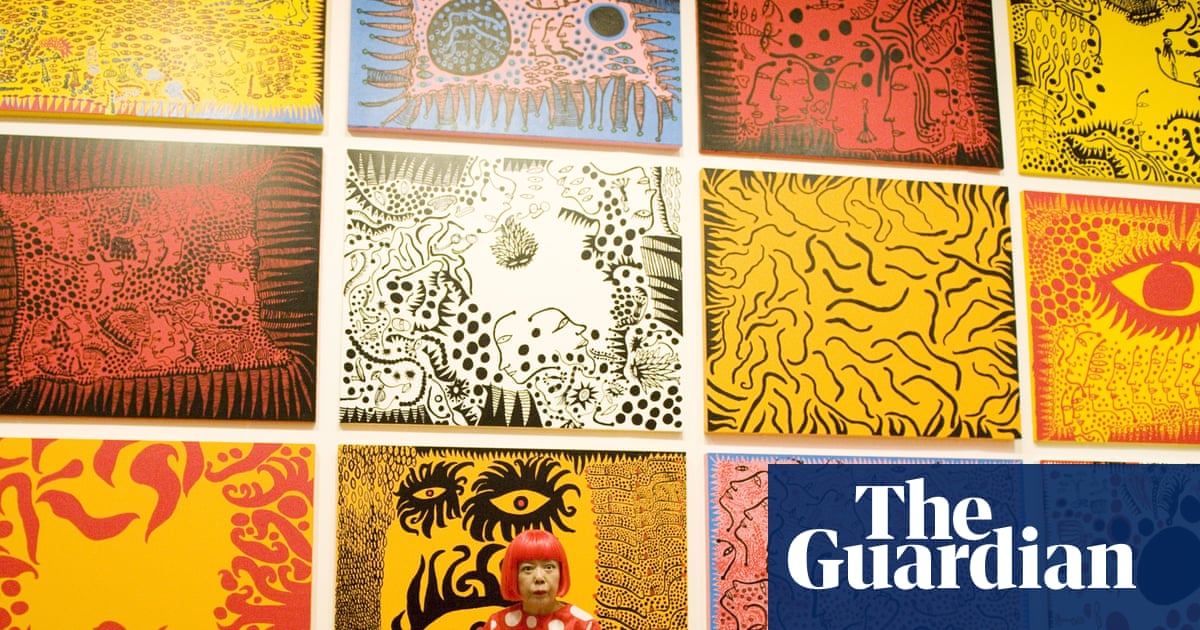
Yayoi Kusama died on August 27, 2026, at 97. She left behind an archive of work that the art market has treated, quite literally, like currency. Her Infinity Mirror Rooms — those enclosed spaces of lights and reflections that simulate the hallucinatory “self-obliteration” she described from childhood—have become the most ticketed installations in major museums worldwide. Tate Modern kept hers running for an extra year past the original closing date, right through 2024, because the queue was that long. Her marks sell for tens of millions at auction.
This is the part of the story that usually gets told first. The survival narrative. “I fight pain, anxiety, and fear every day,” she said in 2012, “and the only method I have found that relieved my illness is to keep creating art.” That sentence reads differently now. It reads like someone who turned a lifetime of neurological suffering into a brand that the global art market bought wholesale.
The art world’s belated enlightenment
There is a genuine shift underway. Nnena Kalu, an autistic artist with a learning disability, won the Turner Prize in 2025. Louis Wain, once dismissed as a eccentric cartoonist, is now studied through the lens of schizophrenia. Andy Warhol’s documented obsessive behaviors are re-examined as likely autistic traits. Institutions are building sensory rooms. Galleries are adding neurodiversity to their diversity statements.
ActionSpace, the London organization that supports learning disabled artists, put it plainly: “The art world is richer for it.”
Richer, perhaps. But the word that hangs in the air is not equality—it’s curation. The art world does not naturally embrace neurodivergence. It adopts it when the adoption is safe, when the neurodivergent artist is already validated by the market, when their difference can be packaged as aesthetic experience rather than structural demand. Kusama’s hallucinations became installable. They became Instagrammable. They became tickets.
Who benefits, who doesn’t
The distinction matters because Kusama’s trajectory was extraordinary in ways that had nothing to do with talent alone. She arrived in New York in 1958 as a Japanese woman in a white male-dominated avant-garde scene. She staged happenings, influenced pop art, and survived a culture that would have erased most artists like her. Her mental health struggles—which she never hid—became part of the biography that collectors and curators found legible. A schizophrenic 19th-century English cat painter is a curiosity. A living woman who institutionalized herself voluntarily and turned her symptoms into mirrors and dots is a cultural phenomenon.
Not every neurodivergent artist gets that path. Kate Adams of Project Art Works, whose collective was nominated for the Turner Prize in 2021, noted that Kusama’s practice “channeled the intrinsic auditory, repetitive and hallucinatory compulsions that she experienced.” That channeling required infrastructure: a studio near a psychiatric facility in Tokyo where she chose to live and work from the 1970s onward, a dealer ecosystem, a market hungry for the sensational. Most disabled artists do not have that infrastructure. They have waiting lists, inaccessible galleries, and institutions that celebrate their work only after the artist is dead or famous enough to demand accommodation.
The commodification gap
Kusama often said that art saved her life. “If it were not for art, I would have killed myself a long time ago,” she said. Those words carry weight. But they also reveal the brutal bargain: her neurology produced work that the market could commodify, and the market rewarded her accordingly. The same neurology that produced her breakthroughs also produced decades of institutionalization, of poverty in New York, of a career that was nearly buried by the very mental health crisis she was managing.
The art world now claims that neurodiversity strengthens it. That is true, but only if the institutions doing the claiming are willing to fund the infrastructure that makes neurodivergent art possible—not just the marketing that sells it. Kalu’s Turner Prize win is real. But the prize money and platform it brings are a far cry from the steady, structural support that disabled artists need to produce work without depending on sudden bursts of institutional favor.
Kusama’s infinity rooms offer visitors a controlled dose of what she experienced: sensory intensity, pattern repetition, the dissolution of boundaries. For many, it is transformative. For others, it is overwhelming. The rooms are carefully managed—lighting, duration, crowd flow—to make the experience accessible within museum norms. That curation is itself a form of filtering: the rawness of her condition has been smoothed into a visitor experience. The art world likes neurodivergence when it is framed, timed, and ticketed.
What comes next
The immediate aftermath of Kusama’s death will bring retrospectives, price spikes, and more museum exhibitions. That is the market doing what it does. The question is whether the institutional embrace of neurodiversity outlasts the headline cycle.
Kalu’s win, Adams’ nomination, the sensory rooms in schools and airports—these are not accidents. They are the result of pressure from disabled artists, advocates, and organizations that refused to accept the old definition of artistic legitimacy. But pressure requires maintenance. The art world has a habit of treating inclusion as a moment rather than a structure.
Kusama herself understood this tension. She did not retreat from her diagnosis; she made it the center of her work. “I fight pain, anxiety, and fear every day,” she said. The fighting is what produced the dots, the flowers, the mirrors. The fighting is also what the market learned to sell. Whether the institutions that now invoke her name will fight for the artists who have not yet reached their level of fame is the measure that will define whether this moment is genuine or merely another curatorial gesture.
The answer will not come from exhibition catalogues. It will come from funding allocations, accessibility budgets, and the question of who gets to make art before the market decides they are worth buying.