Lee's diplomatic wins mean little if he can't fix the courts at home
President Lee returns from a productive US-Mexico tour with trade deals and a surprise White House meeting. But the constitutional standoff over judicial appointments awaits — and the clock is ticking on his political leverage.
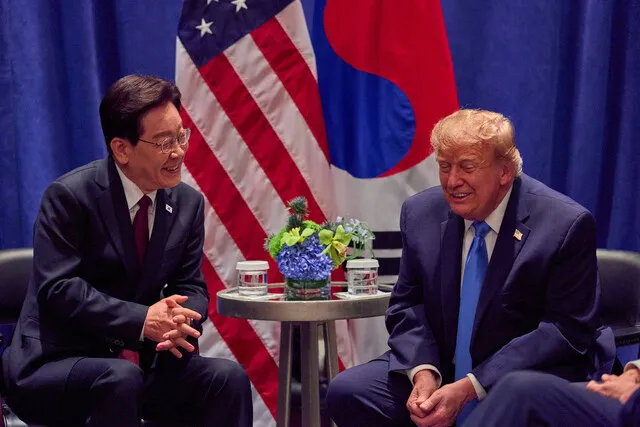
The trip was a triumph. The homefront isn’t ready to celebrate.
President Lee Jae-myung touched down in Seoul on Sunday after five days that would look impressive from any angle. A surprise bilateral summit with Donald Trump at the UN General Assembly. A trade agreement finally wrung loose from Mexico after seven years of stalled negotiations. A speech at the UN outlining a three-part peace framework for the Korean Peninsula that positioned him as a regional architect rather than just another coalition manager.
The Blue House called it comprehensive diplomacy. Satellite imagery of the trip would confirm it: the president moved from New York to Mexico City with the ease of someone who has been in power long enough to know how to use his invitation list.
But Lee will find no celebration waiting in Seoul. Instead, he will walk into a constitutional standoff that threatens to hollow out the very institutions his foreign policy achievements depend on.
The Supreme Court is now the opposition’s strongest ally
At the center of the crisis is Cho Hee-dae, the chief justice of the Supreme Court, who has refused to reappoint three judicial nominees chosen by the president. The controversy began earlier this year when the executive branch submitted new candidates for vacant seats on the high court — a routine exercise in most democracies. Cho rejected them. The reasons were not made explicit, but the message was unmistakable: the judiciary will not be managed from the executive wing of the Blue House.
For a president who has built his career on institutional reform — reorganizing agencies, consolidating power through special prosecutors, reshaping the administrative state — the refusal is a direct rebuke. More damaging, it is happening while Lee is abroad, which makes the confrontation feel staged and opportune, whether or not it actually is.
The Blue House has floated creating a special prosecution team for the rebellion case as a response. Opposition lawmakers are already calling it intimidation. If Lee follows through, he risks looking like a president who punishes judicial independence by threatening prosecutors. If he backs down, he looks weak on reform.
Either way, the constitutional question remains unresolved: who controls the appointment process when both branches claim the authority?
Mexico wasn’t supposed to be this easy
The trade deal with Mexico is the kind of agreement that should matter to Korean voters more than it probably will. The Comprehensive Economic Partnership Agreement — what officials are already calling CEPA — covers trade, investment, industrial cooperation, and supply chain alignment. It also opens doors into Latin America, a region South Korea has treated as a secondary market for too long.
The deal was brokered by Claudia Sheinbaum, Mexico’s president, who invited Lee for a state visit sixteen years after the last South Korean leader made the trip. That timing is significant. Mexico is the tenth-largest economy in the world and the gateway to a region where Chinese investment has been expanding steadily. Locking in a bilateral framework before Beijing fills the vacuum is strategically sound.
Lee mentioned a trade agreement during a joint press conference. His staff clarified that he meant a full economic partnership, not just tariff reductions. The distinction matters because tariff cuts alone would not have justified seven years of negotiation.
But CEPA is still an agreement in principle. Ratification requires congressional approval in both countries. That process can take months, even years. The diplomatic win is real; the economic payoff is hypothetical.
The peace framework sounds like a platform, not a policy
Lee’s UN speech outlined three dimensions of peaceful coexistence on the Korean Peninsula: inclusive peace, stable peace, and responsible peace. The language was polished and purposeful. It was also abstract enough to satisfy every audience from Washington to Pyongyang.
That is the problem with peace frameworks presented at the UN: they are meant to be heard, not implemented. The real test will come when Lee tries to translate the vision into concrete measures — confidence-building steps, military liaison channels, economic cooperation zones. None of that happens in a hotel ballroom in Manhattan.
Still, the framing deserves credit for moving past the usual binary of confrontation versus détente. The three-pillar structure suggests Lee is thinking about the post-reunification architecture rather than just managing the status quo. Whether he can deliver on that ambition depends on North Korea’s next move, not on anything he said at the UN.
The clock is ticking on midterm politics
Lee’s approval rating will not survive a prolonged standoff with the judiciary. That is the unspoken pressure behind every decision he will make once he lands. The opposition is already framing the dispute as executive overreach. Every day without resolution adds fuel to the narrative that Lee treats institutions as personal projects rather than constitutional fixtures.
Midterm elections in South Korea are typically held two years into a president’s term. Lee is approaching that inflection point. A constitutional crisis that drags on will become campaign material for whoever wants to paint him as authoritarian-leaning. A quick resolution — even a compromise that looks like defeat — would close the story before it gains traction.
The alternative is letting the confrontation fester and hoping the diplomacy wins compensate. History suggests that rarely works. Voters remember foreign policy headlines less vividly than they remember institutional conflict at home.
What happens next
The Blue House is expected to announce decisions on the special prosecution team and replacement judicial nominees within days of Lee’s return. Cho’s refusal creates a narrow path forward: the president can submit new candidates, wait for the court to respond, and escalate only if the deadlock becomes permanent. Rushing to create a special prosecutor now would look reactive. Waiting too long would look defeated.
The Mexican deal needs immediate follow-through. Lee should announce a high-level trade mission to Mexico City within weeks, preferably before the next round of UN negotiations gives him another global stage.
And the peace framework needs a concrete next step — perhaps a working group on the three pillars, chaired by the National Security Office, that produces a report within six months. Abstract declarations are only useful if they lead somewhere.
Lee has spent his political life fighting institutional resistance. The question now is whether he can win without becoming the kind of president the resistance feared in the first place.