What the NAZA Film Reveals About Gaza's Killing Machinery
A new documentary from Israel's Oscar-winning directors exposes the AI-powered targeting systems and secret intelligence units behind Gaza's civilian death toll. The testimonies change the accountability debate.
The architecture of a killing system
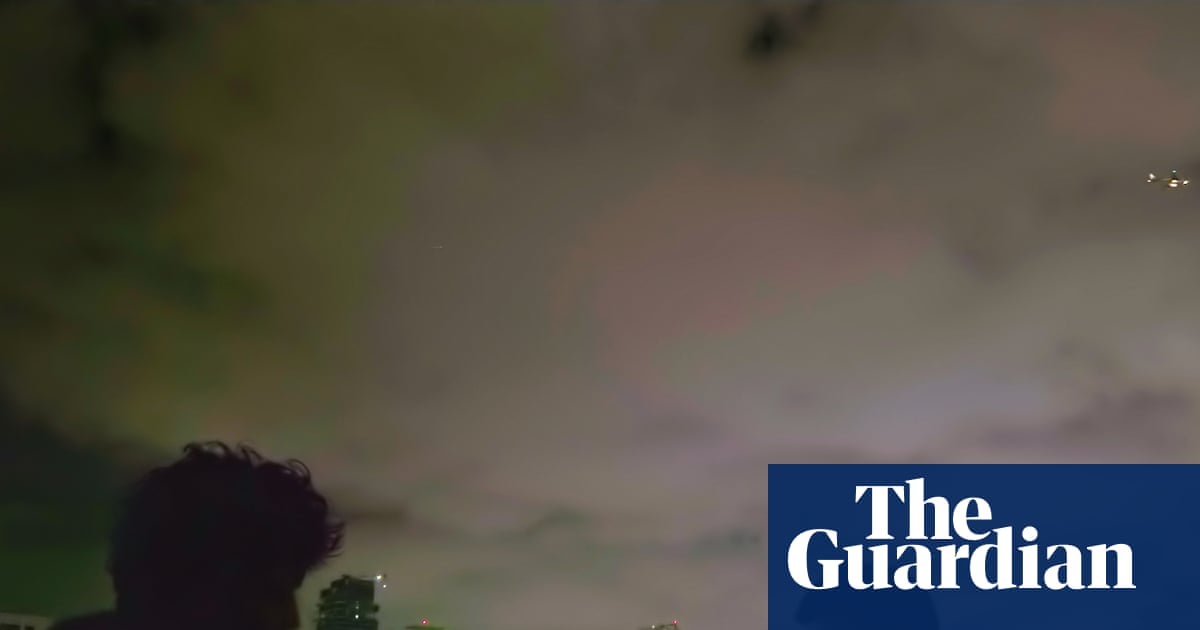
The most unsettling detail in the new documentary NAZA is not the violence described — it is the administrative banality behind it. Twenty-four Israeli military and intelligence insiders, speaking anonymously from Tel Aviv rooftops at night with digitally altered faces and voices, described a targeting apparatus that treats Palestinian civilian death as a calculable output rather than a tragedy.
The film, directed by Yuval Abraham and Rachel Szor — the Israeli documentary makers who won the 2025 Oscar for No Other Land — premiered at Venice as the only competing documentary for the Golden Lion. It was produced in close collaboration with the Guardian’s investigations team, with executive production by Jonathan Glazer, who won the same Oscar for The Zone of Interest. The pedigree matters because the film is not an emotional appeal. It is a structural autopsy.
How the system works
At the centre of NAZA is an Israeli military acronym — Nazifying “neutral” civilians in targeting jargon, a euphemism that appears to have been designed to distance operators from the people they were ordered to eliminate. The documentary does not linger on the word. It lets the testimony do the work.
Interviewees described AI-based systems built to identify large numbers of potential low-ranking Hamas operatives. Once identified, those targets were struck with guided munitions — often at night, in residential buildings, with full knowledge that entire families would be killed alongside the named individual. The system did not attempt precision strikes that minimised collateral damage. It accepted mass civilian death as an operational parameter.
One detail, repeated across multiple accounts, is the method of identification: Israeli forces hacked into the phones of suspected operatives. They listened to conversations between the target and their wives and children moments before those same people were killed in the resulting strike. This is not speculation. It is the first-hand account of soldiers and intelligence officers who performed these tasks and are now, for the first time, describing how.
The film also documents the destruction of neighbourhoods where the Israeli military estimated up to 25 per cent of residents were still sheltering in their homes. Soldiers described systematically burning civilian residences. One account covers the killing of civilians at a food distribution site. None of these events are presented as the actions of rogue individuals. The directors are explicit about this. They are showing the orders, the policies, the language, and the people who carry them out — what they call “the system and its cogs.”
The Netanyahu connection
Perhaps the most politically explosive revelation is the existence of a secret intelligence unit that reports directly to the office of Prime Minister Benjamin Netanyahu. One interviewee stated that the unit’s mission was to “thwart peace.” The phrasing is exact and unrevealing in a way that carries its own weight — it suggests a deliberate political strategy embedded within military operations, one that treats negotiated settlement as an objective to be actively undermined.
This is the kind of claim that will be contested. No documentary of this scale escapes vigorous pushback, particularly one originating from Israeli sources who have broken decades of silence. The filmmakers have made clear that the testimony was gathered over three years and that security protocols were strict. Alberto Barbera, the Venice film festival’s artistic director, called the film “truly groundbreaking” and said the testimonies were “shocking” — noting it took three years simply to convince the interviewees to speak on camera.
Paul Lewis, the Guardian’s head of investigations and an executive producer, described NAZA as the culmination of “years of painstaking work to uncover and verify the systems used by Israeli military intelligence in Gaza.” Before the Venice premiere, the film’s contents remained a closely guarded secret.
Who wins, who loses
The immediate stakes are legal. NAZA arrives at a moment when the International Court of Justice is already hearing South Africa’s genocide case against Israel, and when the International Criminal Court has sought arrest warrants for Israeli and Hamas leadership. Evidence of systematic targeting processes — as opposed to isolated war crimes — strengthens the argument that what is happening in Gaza is not a series of unfortunate mistakes but an operational doctrine.
The film explicitly draws on reporting first published between 2023 and 2025 by +972 Magazine, the Hebrew-language outlet Local Call, and the Guardian. It does not introduce new verified facts in every category. What it does is assemble them into a coherent picture, witnessed by the people who built and operated the system. That assembled testimony is different from any single leaked document or investigative report.
The secondary stakes are commercial. European governments have faced mounting pressure to restrict arms exports to Israel since the war began. The United States continues to supply munitions. NAZA will not change Washington’s position overnight. But it gives policymakers and parliaments in Europe a more concrete evidential basis for argument. When a defence minister is asked whether to suspend sales of precision-guided munitions, a film featuring twenty-four sworn accounts from the soldiers who use those munitions is not a trivial counterweight.
What happens next
The documentary community will argue about NAZA’s cinematic merits. The political world will argue about its factual claims. Both debates are already underway. What is less certain is whether the film reaches the audience most likely to act on its evidence.
Israeli officials are expected to challenge the testimonies aggressively. The anonymity protections — digital alteration of faces and voices — will be scrutinised. Some of the interviewees reportedly expressed indifference or even pride at their work, according to Abraham. Others expressed remorse. The film captures that range, which may undermine easy dismissals but also complicates any simple moral narrative.
The humanitarian situation in Gaza continues to deteriorate independently of the film’s release. More than 73,000 Palestinians have been killed since October 2023, the majority civilians, with over 174,000 injured — representing more than 10 per cent of Gaza’s prewar population. Israeli restrictions on food shipments created a man-made famine last summer. More than three-quarters of homes have been razed or damaged. Survivors are crowded into tent camps with minimal access to clean water or sanitation.
Abraham and Szor have connected NAZA to their earlier work, No Other Land, which documented the destruction of Palestinian homes in the West Bank over five years. In that film, they worked alongside Palestinian co-directors Basel Adra and Hamdan Ballal. In NAZA, they turned the camera inward — toward the Israeli military machinery itself. Both films, in their own ways, are about the same system: one showing its outward violence, the other revealing the instructions written inside it.
The directors said they made the film out of a sense of obligation. Whether that obligation translates into political consequence is the question NAZA leaves audiences to answer.