Patriot Starvation: How the Iran War Left NATO's Air Shield Bare
The U.S. has fired roughly 65% of its Patriot interceptors at Iran, leaving European stocks 'beyond critical.' Europe now faces a years-long gap before production catches up — and its own alternatives remain unproven.
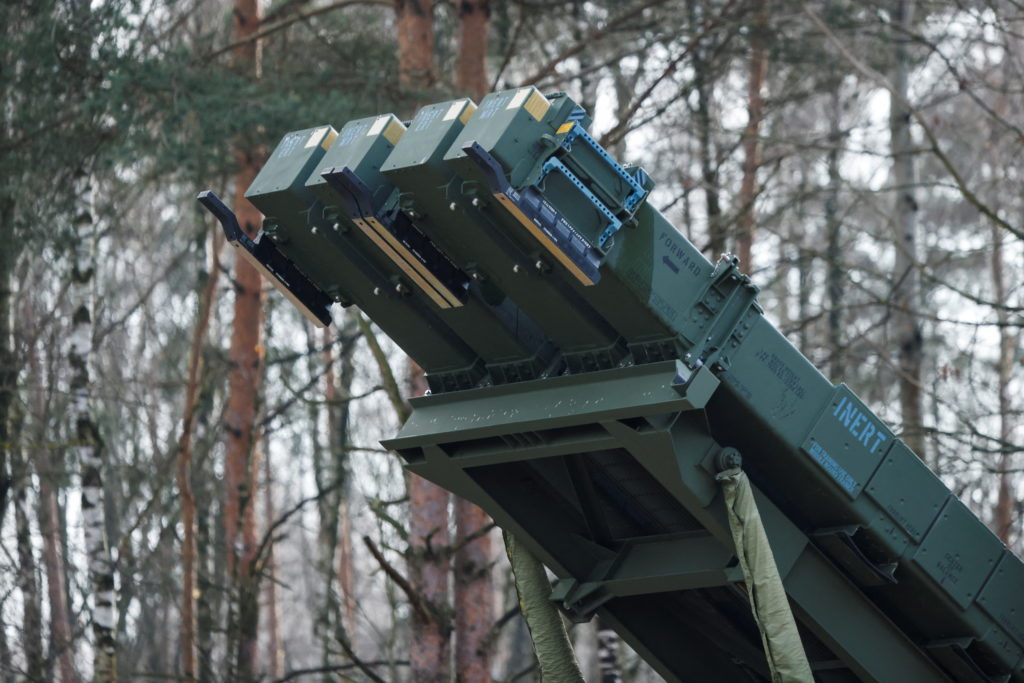
The interceptors are gone. The factories aren’t ready.
When the numbers are set aside, the picture is almost too simple to grasp. The United States entered a war with Iran roughly six months ago. By the time it was over — or paused — 1,500 Patriot missile interceptors had left the shelf. That is 65 percent of the total American stockpile of 2,330. A significant portion of that firing came from European-based batteries, pulled from garrisons in Germany, Romania, and the Netherlands to reinforce Middle Eastern air defense lines.
The result, according to two U.S. defense and NATO officials speaking on condition of anonymity, is a shortfall in Europe they describe as “beyond critical.” The Pentagon and NATO publicly dispute the characterization. But the arithmetic does not care about press releases.
What Europe is left without
A Patriot battery does not blanket a country. It covers a small military base, an airfield, a command center. Russia’s Iskander and other high-speed ballistic missiles — those capable of diving at more than five times the speed of sound — leave defenders with minutes, sometimes seconds, to track, predict trajectory, and launch an interceptor. One missile for one incoming target. That is the math both sides have built their deterrence around.
Europe no longer has enough missiles to make that math work for more than a handful of sites. The U.S. official put it bluntly: NATO could not stop a sustained Russian ballistic missile attack and would have “very limited” capability even against a single strike or a stray missile that went off course. The analogy to Ukraine was not offered lightly. European officials described the scenario as being forced to “take punch after punch in the mouth.”
That is the immediate consequence. The longer-term consequence is far more expensive and politically complicated.
The production gap stretches to 2030
According to CSIS analyst Mark Cancian, about 600 Patriot interceptors are expected to be produced this year. The Department of Defense has set a production goal of 2,000 per year by 2030. That timeline assumes nothing else breaks, no new conflict emerges, and factory floors ramp up at a pace American defense manufacturing has historically struggled to sustain.
NATO says Europe’s first Patriot production facility will open in Germany in September, with deliveries starting early next year. The first batches will go to countries that have already placed orders — Germany, the Netherlands, Romania, and Spain. Germany is among those that has purchased Patriot battery systems but, as Ed Arnold of the Royal United Services Institute put it, finds itself in the “ridiculous” position of owning weapons it cannot fire because there are no interceptors available.
The gap between ordering hardware and fielding munitions is where European strategic autonomy goes to die. Buying the launcher is political theater. Buying the ammunition is a supply-chain problem with no quick solution.
Alternatives exist, but they are not ready
France and Italy are developing the SAMP/T NG, an upgraded version of the SAMP/T system currently in service. France has promised to accelerate deliveries to Ukraine. The manufacturer says the new iteration is better suited to countering ballistic missiles. It has not been battle-tested. The current SAMP/T has a smaller range than Patriot. NATO ships equipped with air-defense capabilities exist but may be positioned too far from targets to provide meaningful coverage — and risk being sunk if they get close.
There are no obvious replacements. Europe’s offensive missile stocks face a different kind of shortage — the Army Tactical Missile System, or ATACMS, is also critically low — but that is a secondary problem. At least some European militaries possess long-range air-launched missiles like the Taurus and Storm Shadow. Air defense, however, is uniquely dependent on systems the United States designs, builds, and controls.
The Iran war changed everything
Ukraine has received roughly 600 Patriot interceptors from the United States since the 2022 invasion. That drawdown was planned and measured. The Iran conflict was not. U.S. and Gulf allies have been firing interceptors at Iranian drones and missiles at a rate Washington did not anticipate and could not quickly replenish. Some of those attacks have killed and wounded American troops. The munitions poured out faster than any contingency plan accounted for.
The disconnect between official statements and ground truth is striking. NATO’s senior military spokesperson, Col. Martin O’Donnell, said it is “simply not the case” that Patriot stocks in Europe are beyond critical. Pentagon spokesman Sean Parnell called claims of U.S. munition shortages “false,” insisting the military maintains “a deep, ready arsenal.” Both are answering a different question than the one being asked. The arsenal is deep by peacetime standards. It is shallow by the standards of a war that has consumed two-thirds of a specialized interceptor inventory in six months.
The Russia problem, deferred but not solved
Russia likely cannot mount a sustained air assault on NATO while it is fighting Ukraine, analysts say. Moscow’s own air defenses have been exposed by Ukrainian strikes into Russian territory, which may give Putin pause about opening a second front. “The uncomfortable truth is possibly the best air defense that we have is Russian constraints,” Arnold said.
That is a strategy built on an adversary’s limitations, not on one’s own capabilities. It is defensible for now. It is not defensible through 2030, when NATO’s own projections suggest Patriot stocks might begin to rebound — and when Russia’s military-industrial base is likely to have adapted to prolonged warfare.
European leaders have spent years talking about strategic autonomy. The Patriot shortage makes the abstract concrete. Until Europe can produce its own interceptors at scale, or convince the United States to reserve a share of its output exclusively for continental defense, the alliance’s northern flank remains a promise with no ammunition behind it.
The Iran war did not create this vulnerability. It exposed it.