Saudi Arabia's $200 Billion Shield Against Houthis Has Failed
Saudi Arabia's armed forces face their gravest crisis since the kingdom's founding, as Houthi strikes reach the holy city of Mecca. The country's staggering military spending has not produced a credible defense force — only a fragmented, undertrained army that has outsourced its own survival to foreign mercenaries.
Mecca Under Threat
Saudi Arabia has never faced an enemy at its doorstep before.
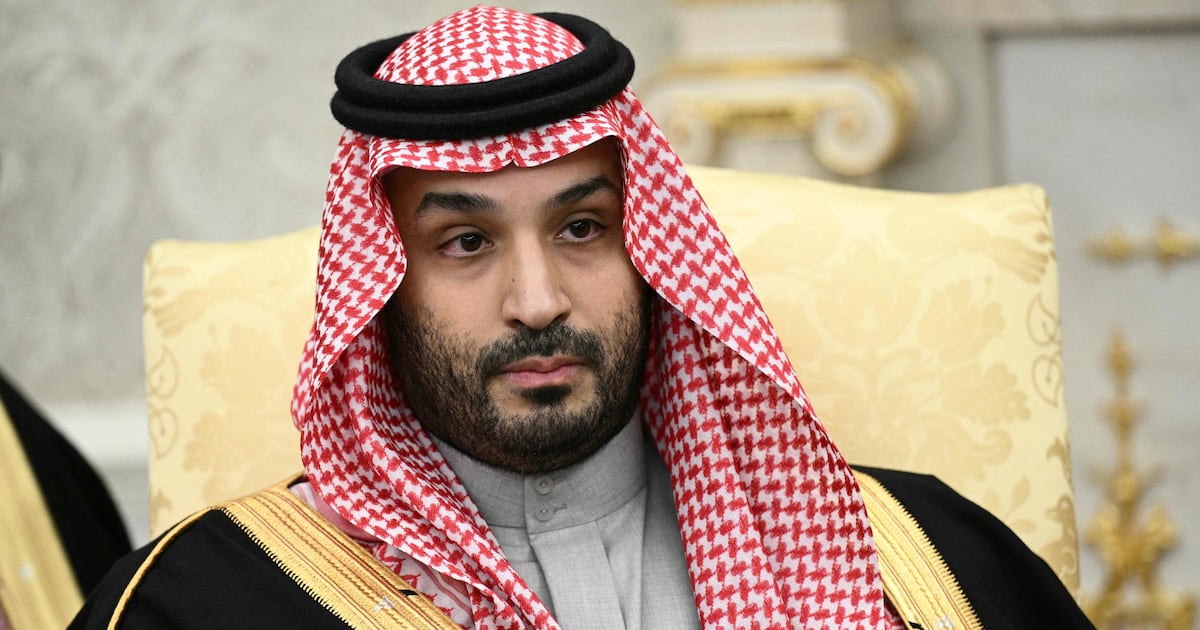
On September 15, 2026, the kingdom’s ruler, Crown Prince Mohammed bin Salman, ordered emergency alerts across three cities: the holy city of Mecca, the major port of Jeddah, and the resort city of Taif. Residents were told to flee. It was the first time since Saudi forces began intervening in Yemen on behalf of the Yemeni government that the Islamic heartland itself has been directly threatened.
The adversary is not a conventional army. It is the Houthi movement — a Yemeni militia backed by Iran that Saudi Arabia has been fighting, often through proxies, for more than a decade. And the fact that a kingdom which spent $83.2 billion on its military in 2024 — nearly double South Korea’s defense budget — cannot secure its own territory is a geopolitical signal more alarming than the strikes themselves.
A Cracks in the Wall
The timing matters. In February 2025, the outbreak of a US-Iran war led to the closure of the Strait of Hormuz, the chokepoint through which much of the world’s oil flows. Saudi Arabia pivoted to its Red Sea route — through the Bab el-Mandeb strait. The Houthis now control that corridor as well. They have struck oil pipelines running east to west across Saudi territory and damaged key refining facilities.
The kingdom’s economy, whose budget still depends overwhelmingly on oil revenue, is being squeezed on two fronts. Both critical maritime routes are compromised. Infrastructure that should be untouchable is under fire.
MBS reportedly requested US air strikes against the Houthis twice, according to the report. Both times, Donald Trump refused. Michael Ratney, the former US ambassador to Saudi Arabia, told the Chosun Ilbo that “the worst-case scenario has become reality” and that the Saudi royal family is experiencing “tremendous frustration.”
The Paper Tiger Problem
Saudi Arabia’s military spending is extraordinary by any standard. The kingdom agreed to a $142 billion defense cooperation package with the United States last year. It operates F-15SA fighter jets, THAAD and Patriot missile defense systems, M1A2S Abrams tanks, and MH-60R Seahawk maritime helicopters. In theory, this is one of the most technologically advanced armies in the region.
In practice, it has struggled for over a decade against a militia with no air force and no navy.
There are now openly circulated images of Saudi tanks being disabled during engagements with Houthi forces, their crews fleeing before a fight could even begin. The Houthis reportedly seized vehicles, ammunition, supplies, and cash left behind. Simon Henderson of the Washington Institute for Near East Policy described the situation bluntly: “On paper, the best-equipped military in the world. In reality, a paper tiger. The air force’s combat record is poor, and the ground defense is lamentable.”
A US military commander told reporters that despite decades of American training, Saudi forces still need to be taught from scratch — patrols, marksmanship, communications, land navigation, physical fitness. Basic tactics. The kind of fundamentals that every modern army assumes its soldiers know.
Why Money Doesn’t Buy an Army
The root problem is structural, not just logistical. Saudi Arabia is an absolute monarchy where the military’s primary function, historically, has been regime protection — not national defense.
The kingdom maintains multiple parallel military structures: the regular army, navy, and air force under the Ministry of Defense; the National Guard, which answers directly to the royal family and protects key installations and the monarchy itself; the Royal Guard; and border police under the Interior Ministry. This fragmentation was designed to prevent any single commander from gaining enough power to stage a coup. It has the opposite effect against an external threat: there is no unified command, no clear chain of authority, and no mechanism for rapid decision-making in a crisis.
Promotions and assignments favor royal bloodlines over merit. Key military positions are held by princes with little operational experience. The command system is unclear, which makes effective responses nearly impossible in fast-moving combat situations.
And then there is corruption. Defense contracts worth billions pass through hands that include royals and their associates. The line between national security procurement and personal enrichment is thin at best.
Fighting With Other People’s Soldiers
Perhaps the most revealing detail is Saudi Arabia’s reliance on foreign mercenaries to fight its ground wars. The kingdom has largely avoided deploying its own troops in Yemen, fearing that large-scale casualties among Saudi nationals would create domestic political pressure. Instead, it has paid Yemeni and Sudanese fighters enormous bonuses to do the fighting.
This year alone, Riyadh spent an estimated $3 billion on Yemeni mercenaries. Reuters noted that Saudi Arabia has long bought loyalty and stability with oil money — but questioned whether that model can hold under these conditions.
Mercenaries fight for pay, not ideology. Their loyalty is conditional. When the pay slows or the odds worsen, they leave. Or defect. Or negotiate with the other side. There is no substitute for a fighting force that believes in what it is defending — and Saudi Arabia has deliberately constructed a military system that discourages exactly that kind of commitment.
What Comes Next
The immediate concern is oil. The Bab el-Mandeb strait is a critical artery for global energy supply. If Houthi attacks on Saudi refining infrastructure intensify, the kingdom’s ability to export crude will be directly impaired. Global oil markets are already pricing in risk from the Hormuz closure. A sustained disruption through the Red Sea would compound the shock.
The longer-term question is whether Saudi Arabia can reform its military without reforming the political system that produced it. The same mechanisms that keep the royal family in power — fragmenting military authority, prioritizing loyalty over competence, keeping the populace armed but unorganized — are the same mechanisms that make the kingdom vulnerable to an enemy it cannot defeat through conventional means.
MBS has bet his vision for a post-oil Saudi Arabia — Vision 2030 — on the assumption that the kingdom can be secure enough to attract investment, tourism, and technology. The Houthis are testing whether that assumption holds. So far, the answer looks like no.
The kingdom’s crisis is not just about one militia on its southern border. It is about what happens when the most expensive military in the Middle East cannot protect its own cities.