The 9/11 Trial That Won't Be Quick or Clean
A military judge has set June 2028 as the start date for Khalid Sheikh Mohammed's trial. The delay, the collapsed plea deal, and the ghost of CIA torture make this case far more consequential than a single courtroom drama.
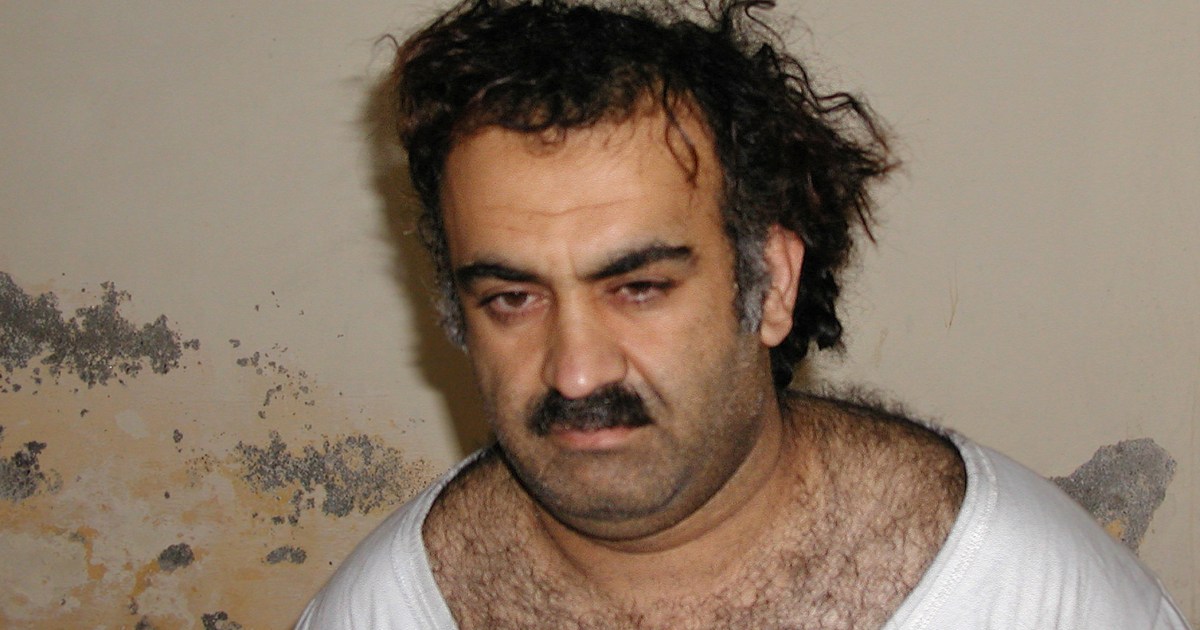
June 2028 and the Long Road to a courtroom that should have opened almost two decades ago
A military judge on Wednesday set June 2028 as the start date for the trial of Khalid Sheikh Mohammed, the man accused of orchestrating the September 11 attacks that killed nearly 3,000 people. Prosecutors had wanted the case to begin in January 2027. The judge rejected that timeline and gave the government roughly 18 more months to prepare.
The delay matters. Not every late start is a story. This one is.
Mohammed has been held at the U.S. naval base at Guantánamo Bay, Cuba, since 2006. He was charged and arraigned in 2008. The prosecution of him and three co-conspirators — Walid bin Attash, Ali Abdul Aziz Ali, and Mustafa Ahmed al-Hawsawi — has consumed more than two presidencies, multiple rounds of litigation, and an extraordinary amount of institutional patience that may now be running thin.
The procedural history reads like a textbook of everything that went wrong with post-9/11 justice.
The plea deal that fell apart
Last summer, a split federal appeals court threw out a potential agreement that would have allowed Mohammed to plead guilty in exchange for sparing him the risk of execution. The rejection was significant not because of what it changed immediately — no plea was entered — but because of what it revealed about the legal architecture surrounding this case.
The government had been trying to close a chapter. The courts had other ideas. The split decision underscored how deeply divided the judiciary remains on the legitimacy of military commissions as a forum for terrorism cases, and how fragile any settlement built on that forum is.
With the plea off the table, the case heads to trial. And June 2028 is now the date on the calendar.
Who wins, who loses, and what gets exposed
The most consequential battle in this trial will not be about whether Mohammed planned the attacks. Evidence of his role is extensive. The real fight will be over what the U.S. government did to him before he ever set foot in Guantánamo.
A Senate intelligence committee report in 2014 found that the CIA subjected Mohammed to what it termed “enhanced interrogation techniques” — including waterboarding him 183 times in a series of near-drownings. The interrogation took place at secret CIA prisons before his transfer to Guantánamo in 2006.
Defense lawyers have argued for years that the government has attempted to hide details of the torture from the commissions process. That argument will not go away. It will move to the center of the trial.
This is where the case branches into territory that matters far beyond the courtroom. If the prosecution is forced to disclose the full scope of what happened to Mohammed — and the defense will demand it — the trial becomes a public reckoning with policies that were authorized at the highest levels of the Bush administration and continued, in various forms, under subsequent administrations.
The government will resist. The defense will insist. A judge will have to decide what gets disclosed, what stays sealed, and whether evidence obtained through torture can — or should — play any role in the proceedings.
There is no clean answer to any of those questions. That is the point.
The geopolitical cost of dragging this out
Setting a trial date in 2028 carries consequences that extend well beyond the docket.
For allies, the prolonged uncertainty about how the U.S. intends to prosecute 9/11 defendants has been a recurring diplomatic irritant. European governments have expressed concern about the use of military commissions, which fall outside the normal federal court system and raise questions about due process protections. Every year the case drags, that concern hardens into criticism.
For adversaries, the case has become a symbol. It demonstrates — unfairly to some, accurately to others — that the U.S. has struggled to create a coherent legal framework for dealing with the individuals it captured in the early years of the war on terror. The image of a man held for nearly two decades without a trial sends a message, regardless of the legal justifications offered.
And for Guantánamo itself, the Mohammed trial is both an anchor and a mirror. The facility was built to hold suspects like him. Its continued existence is justified in part by the need to bring cases like this to resolution. If the trial proceeds — however messily — it validates the institution in a way that releases and closures never could.
What happens next
The road from June 2028 to a verdict will be long. Military commissions move slowly by design and by litigation habit. Motions to suppress evidence, disputes over classified information, competency evaluations, and appeals are all but guaranteed.
There is also the political dimension. An election cycle sits between now and the trial. A change in administration could shift prosecution strategy, disclosure posture, and even the willingness to pursue the death penalty — which was on the table before the collapsed plea deal.
The Obama administration explored a transfer of Mohammed to federal court in New York. That effort stalled. The Trump administration revived the military commissions approach. Whatever comes next, the case will reflect the priorities of whoever is in power when the gavel finally falls.
The deeper story
The setting of a trial date is a procedural moment. But the case of Khalid Sheikh Mohammed has never been merely procedural.
It is about what kind of legal system the United States chooses to build in the aftermath of 9/11 — one that treats captured terrorists as criminals subject to due process, or as enemies subject to a separate and darker order. It is about whether the government can bury the truth about torture, or whether the courtroom becomes the place where that truth is forced into the open.
And it is about a country that has spent nearly 25 years trying to answer the question: what do we do with the people who hurt us?
June 2028 will not provide a clean answer. But it may finally force the question into the light.