Underground Hydrogen's Geologic Gamble
A geological surprise in Western Australia could reshape global energy strategy — if the deposits exist at all. Nearly $500 million is now chasing underground hydrogen, but the science is still catching up to the hype.
The Gas Everyone Said Wasn’t There
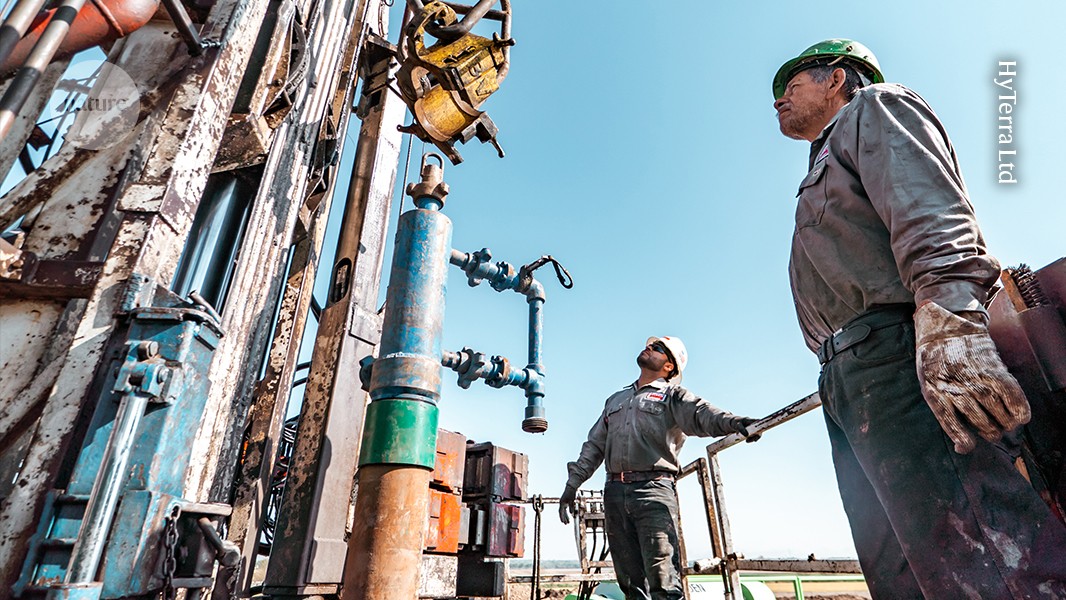
Five years ago, you would have been hard-pressed to find a textbook that even mentioned natural hydrogen. Today, nearly 30 countries have prospectors drilling into the Earth in search of a resource that was presumed impossible. The question now is whether this is the most important energy discovery of the decade — or the most expensive fool’s gold.
Since 2023, venture capitalists have poured almost US$500 million into the hunt for geologic hydrogen: gas trapped in underground reservoirs, waiting to be tapped. The promise is staggering. Earth’s subsurface probably holds tens of trillions of tonnes of the stuff, according to a 2024 analysis. Recover even a fraction profitably, and geological hydrogen could satisfy global clean-energy demand for two hundred years — potentially cheaper than fossil fuels.
The problem is simpler: nobody knows whether those reservoirs actually exist at scale. “At the moment, we still don’t know if it’s almost nothing or completely everywhere,” said David Waltham, a geophysicist at Royal Holloway, University of London.
That uncertainty is what makes this moment significant. The race to drill is not just a scientific exercise — it’s a bet on whether an entire clean-energy strategy can be rewired around a resource that was invisible to geologists until recently.
How the Science Caught Up to the Hype
The basic chemistry of underground hydrogen production has been understood for decades. When iron-rich rocks like olivine react with water, hydrogen is released. Radioactive decay of uranium and thorium also generates hydrogen when its alpha particles split water molecules. For a long time, geologists assumed this gas simply escaped into the atmosphere — too light to trap, too quickly consumed by microbes or geochemical reactions.
The turning point came in 2018, when researchers published findings on a substantial hydrogen deposit in Mali. Chris Ballentine, a geologist at the University of Oxford, remembers the moment clearly: “The first time it hit the scientific literature, it caught our attention.”
More evidence followed. Deep mines around the world are already encountering natural hydrogen flows that need to be pumped out to prevent explosions. In 2024, researchers documented that a chromite mine in Albania releases at least 200 tonnes of hydrogen annually — one of the largest natural flow rates ever recorded. The gas was there. It just wasn’t being looked for.
Eric Gaucher, who co-leads the International Energy Agency’s natural-hydrogen task force, puts it bluntly: “The Earth is a machine that produces huge volumes of hydrogen — but it is also a machine that destroys huge volumes of hydrogen.” The challenge is finding the places where production outstrips destruction and the gas accumulates.
The Western Australia Signal
The current wave of exploration has been catalysed by what many see as the most promising lead yet: signals from Western Australia suggesting substantial underground hydrogen deposits. The region has the right geology — ancient cratons with iron-rich formations and fault systems that could act as traps — but drilling results have yet to confirm commercial-scale reservoirs.
Companies are already expanding fast. H2Au, a UK-headquartered exploration firm, began drilling in Kansas in August, joining operations from northern Canada to eastern Africa to South Australia. Results from some of these wells could emerge within months, providing the first hard data on whether the hype is grounded.
This matters beyond geology. If the Western Australian deposits prove viable, they could reshape Asia’s energy imports — Japan and South Korea, which have staked their hydrogen economies on expensive imported green hydrogen, might pivot toward a cheaper, locally extractable source. Europe, currently debating whether to overhaul its green-hydrogen regulatory framework, faces the same strategic recalibration. The IEA’s Gaucher has already warned that EU leaders should not rush to rewrite rules before the science settles.
Who Wins If the Gas Is Real
n
The implications for energy markets are enormous. Currently, most so-called green hydrogen is produced by splitting water with renewable electricity — an expensive process that has struggled to compete with grey hydrogen made from natural gas. Geological hydrogen, if found in commercial quantities, would bypass that cost entirely. It would be extracted, not manufactured.
Countries with the right geology — Australia, Canada, parts of Africa, possibly the western United States — could emerge as hydrogen exporters overnight, shifting geopolitical dynamics similar to those that followed the discovery of oil. Nations that bet on electrolytic hydrogen as the future could find themselves stranded if the economics flip.
The investors are already positioning. The $500 million in venture funding is just the beginning. Major energy companies, long dismissed hydrogen exploration as a gimmick, are beginning to take it seriously. The race to file claims and secure drilling rights is underway in multiple jurisdictions, some of which have no legal framework for subsurface hydrogen ownership.
Who Loses If It Isn’t
The counter-scenario is equally consequential. If drilling confirms that hydrogen deposits are sparse, small, or economically unviable, the entire hydrogen economy faces a credibility crisis. Billions in infrastructure investment — fuel-cell vehicles, hydrogen pipelines, industrial feedstock plants — were built on the assumption that hydrogen would be cheap and abundant. A geologic letdown would force painful revisions to decarbonisation pathways, particularly for hard-to-abate sectors like steel and shipping.
There is also the risk of over-extraction. Hydrogen generation is slow — geological timescales, in fact. Even if deposits exist, they are not renewable in any human sense. Drilling them faster than they form would repeat the same mistake made with fossil fuels, only with a cleaner combustion profile.
The Waiting Game
The next few months are critical. Multiple exploration wells are being evaluated, and peer-reviewed results from some of the earliest sites should become available soon. Until then, the field sits in an unusual limbo: a resource that exists in measurable quantities but has never been proven at commercial scale.
What is clear is that the scientific community is playing catch-up. “Natural hydrogen didn’t exist on Wikipedia five years ago,” noted Owain Jackson, head of H2Au. That single sentence captures the velocity of a shift that few geologists saw coming.
Whether underground hydrogen becomes a cornerstone of the energy transition or a cautionary tale about chasing geological miracles, one thing is certain: the Earth has been producing this gas all along, and humanity is only now learning how to look for it.