Yayoi Kusama's Death Is a Market Event, Not Just an Art Story
Kusama dies at 97, leaving behind the most commercially successful contemporary art brand of her generation. Her passing doesn't just close a chapter — it shifts billions in auction prices, rewrites museum attendance strategies, and crystallizes Japanese art's global ascent.
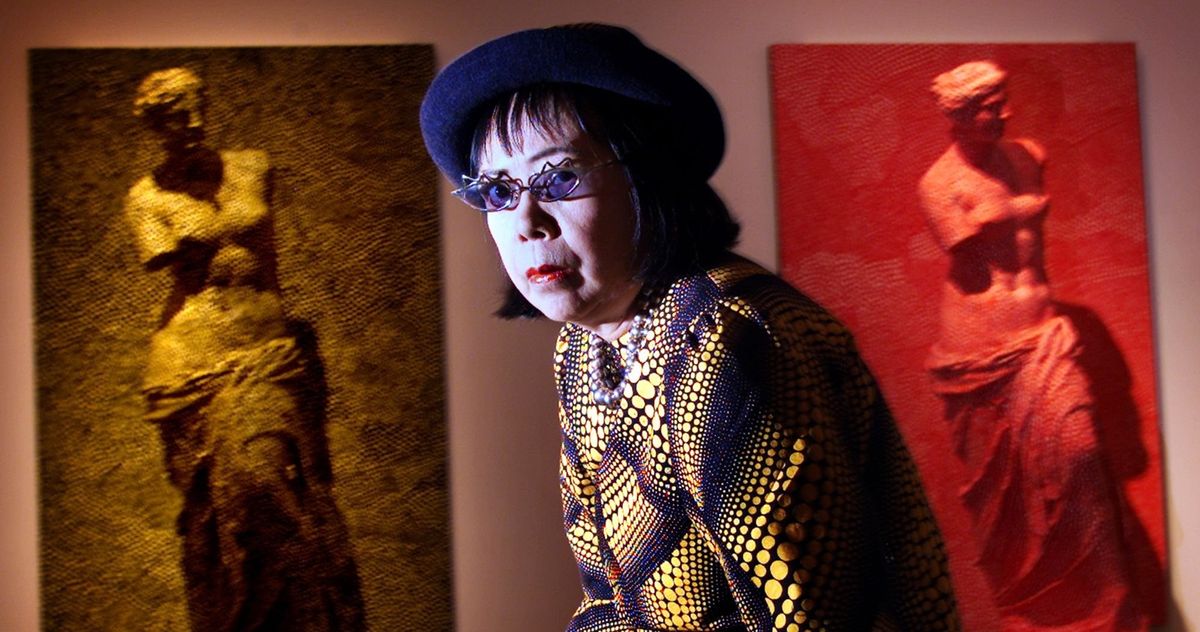
The Death of the World’s Most Famous Living Artist
David Zwirner confirmed it on August 26: Yayoi Kusama died at 97 in a Tokyo hospital from multiple organ failure on August 14. At the time of her passing, she was, by most measurable accounts, the most famous artist alive on Earth. The artist who pioneered infinity rooms, polka-dot obliteratio, and soft-sculpture provocation now leaves behind an estate that will rewrite auction records, reshape museum programming globally, and cement Japanese contemporary art’s place at the center of the international market.
But the news matters more than the headline. Kusama’s death is not a retrospective moment — it is a market inflection point. The questions now are who benefits, who pays, and what happens when a living genius becomes forever fixed in the canon.
The Auction Shock Is Already Underway
Kusama works have been climbing steadily at auction for years. Before her death, a single Infinity Net painting routinely fetched seven figures. A major polka-dot sculpture from the 2000s routinely exceeded $5 million. With her death, those numbers will not just rise — they will detach from anything a living artist can command.
This is the art market’s oldest pattern, but it plays out most dramatically with artists who are both critically legible and commercially magnetic. Think of what happened after David Hockney, Gerhard Richter, or Takashi Murakami — no, wait: think of what happened after Jean-Michel Basquiat died, or when Lucian Freud’s work became untouchable. Kusama now joins that rare tier of artists whose posthumous value is driven not by rarity alone but by cultural inevitability.
Her estate has an enormous body of work. Kusama produced continuously through her 90s. The sheer volume will keep her present at auction for decades, which should moderate speculative spikes for lower-tier pieces while sending premium works into stratospheric territory. Expect a polarized market: top-tier Infinity Mirror Room installations or major Net canvases from the 1950s–60s will command new records, while smaller works, prints, and decorative objects will find their way into middle-class collections that previously could not touch her work.
Who Wins and Who Loses
The winners are clear. Collectors who acquired early Kusama works during the 2010s boom are sitting on assets that will appreciate significantly. Galleries with primary-market contracts — particularly David Zwirner, who has represented her internationally — will control the flow of new inventory and benefit from heightened demand. Museums that already hold Kusama works will see their holdings more valuable on paper, which strengthens endowment portfolios and borrowing leverage.
The losers are more subtle. Younger Japanese artists who might have benefited from a Kusama-coattail era of institutional interest in Japanese contemporary art may find the spotlight now permanently fixed on one name. The market tends to consolidate around a single flagbearer after a titan dies. For a moment, that is Kusama alone. Artists like Yayoi Kusama’s contemporaries — Chiharu Shiota, Mariko Mori — will be measured against her shadow.
Galleries that do not represent Kusama will feel the absence more acutely. Her exhibitions were crowd-drawing machines. The Hirshhorn Museum recorded 475,000 visitors for Infinity Mirrors (2017–2019). The National Gallery of Victoria in Melbourne drew 570,000 for its 2024–25 retrospective, the highest-attended ticketed exhibit in that museum’s history. Those numbers funded operations, attracted donors, and created cultural momentums that other artists’ exhibitions rarely match. Museums that built programming around experiential, Instagram-era blockbusters will now recalibrate.
The Museum Playbook Changes
For decades, museums chased immersive, experience-driven exhibitions because they drove ticket sales and social media engagement. Kusama perfected that model. Her infinity rooms were designed for participation — visitors stepped inside, photographed themselves, and shared the image globally. This was experiential art before the term had corporate branding attached to it.
Now that Kusama is gone, museums face a strategic decision. Do they continue investing in similar immersive experiences made by other artists? Or do they recognize that the Kusama phenomenon was partly a product of her singular biography — a woman who lived through the Tokyo bombing, fled to a hostile New York art scene, survived suicide attempts, and returned to Japan to create with relentless discipline?
The risk is that museums chase the form without the substance. The payoff would be if institutions use this moment to deepen their commitment to Japanese art collections, recognizing that Kusama opened a door that should now accommodate many more artists from the region.
Japanese Contemporary Art Goes Global — Permanently
Kusama’s death will accelerate a trend already underway: the normalization of Japanese contemporary art in Western institutions. Before Kusama, the Western art world’s engagement with Japan was often limited to ukiyo-e prints, postwar Gutai group exhibitions, or occasional superstar moments. Kusama proved that a Japanese woman artist could achieve global fame rivaling Warhol or Lichtenstein. She represented Japan at the 1993 Venice Biennale as the first female artist to do so solo. Her success forced museums, collectors, and critics to take Japanese contemporary art seriously as a continuous tradition rather than a curiosity.
What English-language coverage often misses is how Kusama’s trajectory mirrors a broader shift. The Japanese art market is now one of the largest in the world. Contemporary Japanese artists command prices that would have been unthinkable two decades ago. Kusama’s death is not the end of that story — it is a punctuation mark. The narrative continues with younger generations of Japanese artists who have grown up watching their countrywoman break barriers.
What Happens Next
Kusama said, according to Artnet: “I will keep on making my art until the day I die. And even after I die, my spirit will keep creating new art.” She meant it literally. Even in her final years, new works emerged. Her estate has promised continued production, which means the market will see fresh inventory for years — a factor that should prevent total scarcity-driven inflation while ensuring her presence remains unavoidable.
David Zwirner’s statement noted that his visit to the Museum Ludwig retrospective in Cologne, which presented over 300 works, had become the museum’s most successful exhibition in its history. That exhibition traveled to multiple cities. More retrospectives are expected globally.
The art world will mourn Kusama. But mourning is not the same as stillness. Her death is a catalyst — for auction markets, for museum strategy, and for the ongoing globalization of contemporary art’s center of gravity. The polka dots are everywhere. They always were. Now they are permanent.