Zelenskyy's Wartime Election Warning and What It Reveals
Zelenskyy's refusal to hold elections during the war highlights a tension every democracy faces: legitimacy versus survival. But his conditions for future voting expose how fragile Ukraine's democratic future may be.
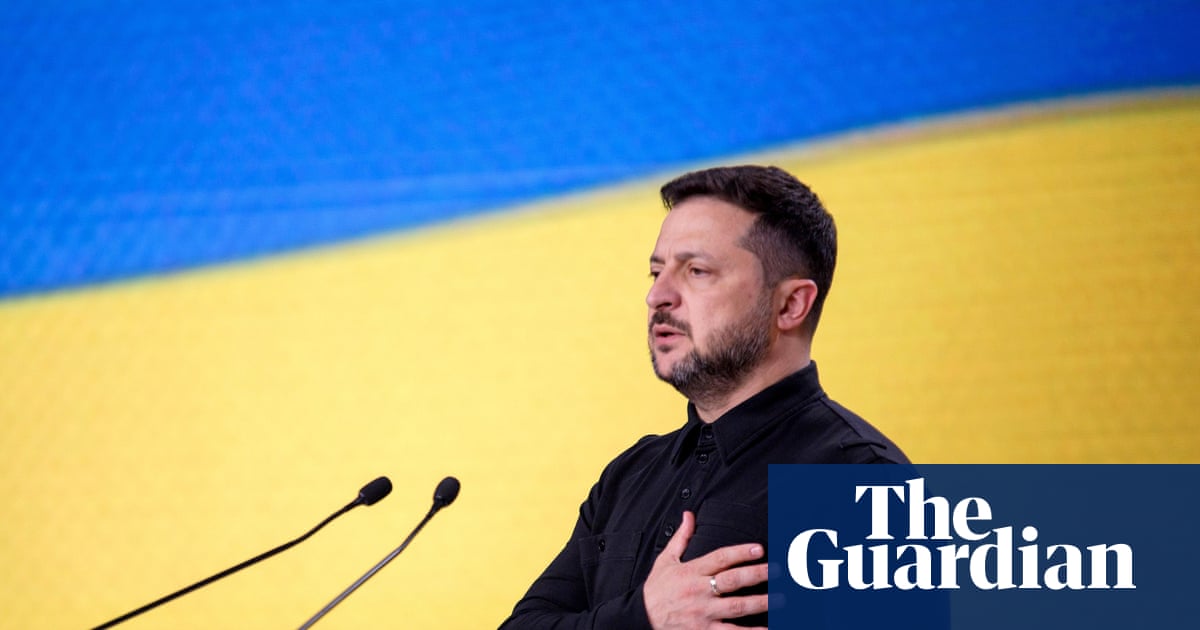
The Ballot as a Weapon
When Volodymyr Zelenskyy says holding elections during wartime would “destroy” Ukraine, he is not merely describing a logistical inconvenience. He is articulating something far more dangerous: that in a war of existential stakes, democracy can become a liability. Not because the instinct to vote is wrong, but because an opponent willing to shell polling stations and mobilize millions of displaced citizens across hostile territory turns a democratic right into a vector for state collapse.
The timing is significant. Fedorov, the sacked defence minister, has forced the issue into public debate at a moment when Russia is stockpiling 600 to 630 high-speed ballistic missiles and preparing what Zelenskyy calls a “peripheral mobilization” of up to 300,000 additional soldiers after its September parliamentary elections. The question of who gets to decide whether Ukrainians can vote is itself becoming a proxy war.
The Legitimacy Deficit
Zelenskyy’s five-year term expired in May 2024. Since then, martial law has kept Ukraine without a popular mandate. The standard justification — that elections cannot be held safely during active conflict — is technically sound but politically corrosive. Every day without a vote erodes the democratic credentials that have been Ukraine’s greatest asset in securing Western support. The longer the delay, the easier it becomes for critics abroad to frame Kyiv as an authoritarian drift rather than an应急 democracy.
Fedorov’s demand, however unlikely to succeed, signals that this eroding legitimacy is creating friction within Ukraine’s own ruling class. A former defence minister with a public profile does not issue challenges of this kind without calculating domestic or international audience. Whether Fedorov is motivated by genuine democratic concern or by grievance over his dismissal — Zelenskyy claims he was sacked for overreaching and refused four alternative posts — the fact that such a challenge can surface at all suggests pressure is building inside the government.
Zelenskyy’s Conditions
Zelenskyy’s response was careful. He did not dismiss the idea outright. He set out conditions: elections must include military personnel at the front, Ukrainians displaced abroad, and millions more who have fled — all conducted without strikes or shelling. If allies can guarantee those conditions, he said, he would support them.
This is both a credible stance and a clever one. On its face, it is reasonable. But practically, it is nearly impossible to satisfy while Russia continues its missile campaign. By framing his refusal as conditional rather than absolute, Zelenskyy preserves the appearance of openness while making the bar deliberately insurmountable. Any future accusation that he is avoiding democracy can be answered by pointing to his stated conditions.
The implicit message to Western partners is clear: secure the conditions, and Ukraine votes. Leave Ukraine exposed, and an election becomes a weapon aimed at the state itself.
The Military Calculus
The security context makes the electoral question even more fraught. Russia’s missile production is ramping up — roughly 100 new ballistic missiles per month heading into winter, with a maximum capacity of 1,300 annually. Ukraine’s air defense is critically under-resourced. Zelenskyy requested 300 Patriot missiles for winter; the Ukrainian air force wanted 360. Only about 600 PAC-3 interceptors are produced worldwide each year. Germany has committed to supplying roughly 600 PAC-2 and PAC-3 interceptors in 2027–28. France has agreed to provide at least one SAMP/T system this year. The United States has been asked to contribute 5 to 10 percent of its stockpiles.
Until these gaps close, any election held in Ukraine would risk mass casualties at polling stations. Russia has already demonstrated willingness to target civilian infrastructure with high-speed ballistic missiles. The prospect of doing the same to voting centers is not theoretical — it is the logical extension of a strategy that has already made infrastructure bombing a regular feature of the war.
Who Wins, Who Loses
The immediate winner of Zelenskyy’s positioning is the Ukrainian state. By tying elections to security conditions, he keeps the democratic clock paused while portraying himself as pro-democracy rather than anti-democracy. The loser is the argument that Ukraine has drifted from its liberal commitments — an argument that Russian propaganda has long sought to amplify.
But the longer-term stakes are more troubling. Ukraine has spent nearly three years earning a reputation as a democracy fighting for its life against autocracy. That narrative has been central to the level of Western support it has received. The longer elections remain suspended, the more that narrative frays. Allies who have championed Ukraine’s democratic credentials may begin to wonder whether those credentials are being maintained through temporary emergency measures or entrenched into a new normal.
Fedorov’s challenge, however marginal, proves that the question cannot be sidestepped indefinitely. If Zelenskyy remains president beyond any restored mandate — whether through continued martial law extension or other means — the legitimacy gap will widen. Each extension becomes harder to justify, even as the security rationale grows stronger.
The Post-War Question
The most consequential implication of this debate is not about now but about after. If Ukraine holds elections once the war ends, what happens to the legal and institutional framework that has operated under martial law? Who resets the democratic clock? And how does a country that has governed through emergency powers for nearly three years return to normal politics without fracturing?
Zelenskyy’s conditions for wartime elections suggest he envisions a postwar democratic reset. But the path there is uncertain. Russia’s apparent plan to conscript another 300,000 troops and press an offensive in eastern Ukraine before year’s end means the war is far from over. The coalition of willing nations meeting in the coming days to discuss ramping up pressure on Moscow will be acutely aware that every day of continued fighting pushes Ukraine’s democratic timeline further into the future.
The fundamental tension remains unresolved: democracies are supposed to hold elections even in crisis, because that is how they prove their resilience. But Ukraine is not experiencing a ordinary crisis. It is fighting a war of national survival against an adversary that has shown no interest in ceasefire and is actively working to exploit Ukraine’s democratic vulnerabilities. In that context, postponing elections is not a betrayal of democratic values — it is a calculation about which values survive long enough to matter.
What happens when the calculation changes remains the open question.