Huang's Doubling Bet Exposes the Real AI Bottleneck
Jensen Huang says NVIDIA will double chip sales next year — but the constraint shifting from design to factories could reshape the entire AI supply chain.
Huang Says Chips Will Double. The Real Story Is Where They’ll Be Made.
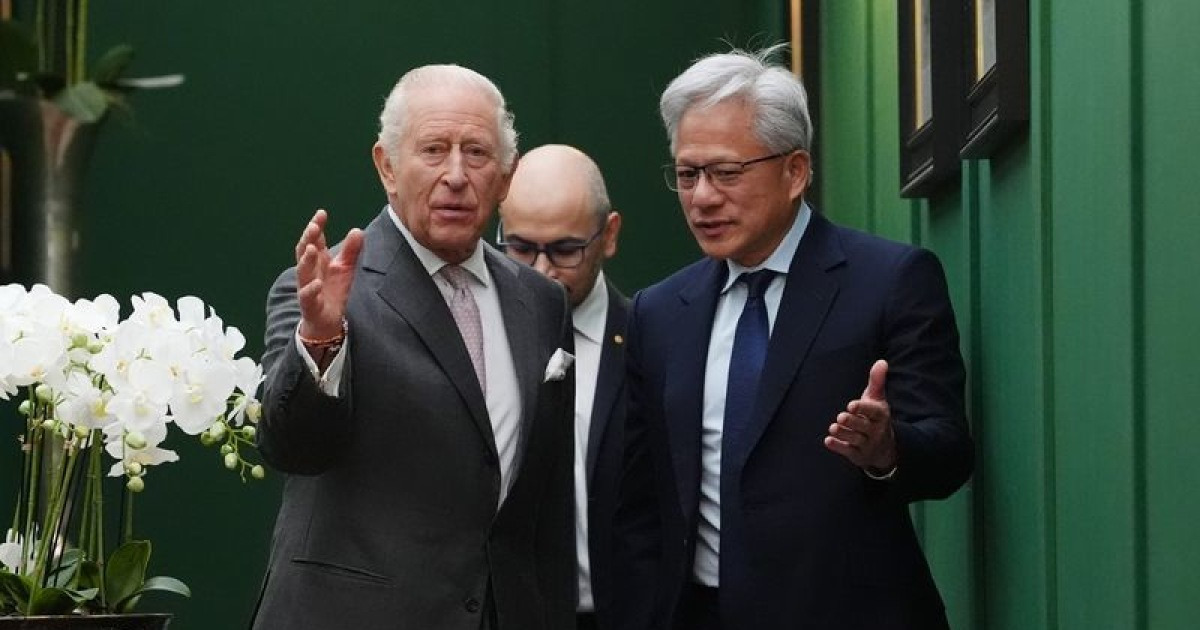
Jensen Huang made a striking claim last week at an event in Scotland alongside King Charles III: NVIDIA expects to ship twice as many chips next year as it does this year. It is the kind of public doubling projection that moves markets — and it landed immediately in the way only NVIDIA whispers can.
But the headline number obscures something more consequential. The constraint in AI infrastructure is no longer just about designing faster chips. It is about having enough factories, enough packaging capacity, and enough co-packaged optics to build them.
Huang did not break down the figure by product, but NVIDIA’s portfolio now stretches well beyond the datacenter GPUs that built its reputation. The company ships Blackwell and the next-generation Rubin architectures, yes — but also CPUs, datacenter switching chips, optical networking semiconductors, Jetson chips for robotics and autonomous vehicles, and even custom silicon for the Nintendo Switch 2. When Huang talks about doubling, he is likely talking about a much broader bill of materials than the GPU alone.
That breadth matters. A doubling of total chip volume spread across GPU, networking, CPU, and edge silicon means every supplier in the ecosystem — from TSMC to Coherent to the Korean and Taiwanese packaging houses — faces a similar inflection. The bottleneck is shifting downstream.
The Manufacturing Chokepoint
NVIDIA has long been a fabless company. It designs chips; TSMC builds them. The math on a doubling projection is deceptively simple — but it assumes the manufacturing side can keep pace. That assumption is under stress.
TSMC’s advanced-node capacity is already near maximum utilization. The company is investing tens of billions in new fabs in Arizona, Kumamoto, and Dresden, but those facilities will not reach meaningful volume until 2027 at the earliest. In the near term, NVIDIA’s ability to double shipment volume depends on squeezing more from existing lines and on co-packaged optics and advanced packaging being deployed at scale — areas where Samsung Foundry and Intel’s foundry business are also competing for the same slice of demand.
The networking side adds another layer. Modern AI clusters are limited not by raw GPU compute but by how fast GPUs can talk to each other. NVIDIA’s own switching and optical chips are critical to keeping clusters productive. If chip volume doubles but network fabric cannot scale proportionally, the effective compute delivered per dollar of GPU investment drops. The industry is already seeing this friction in the form of elongated lead times for NVLink and spectral networking components.
Even the packaging story is tightening. Advanced packaging — especially the co-packaged optics and 2.5D interposers that Rubin and future architectures will demand — requires specialized equipment and clean-room capacity that cannot be duplicated overnight. The companies that control this capacity, particularly in Taiwan and South Korea, hold outsized leverage.
The Safety Signal Is Undersold
Huang also used the Scotland appearance to reiterate a position he has been developing publicly: if a product is not safe, delay its release. The remarks came during a session that included representatives from Google DeepMind, OpenAI, and Anthropic — the three companies most exposed to the question of whether AI development is outpacing its governance.
This is easy to dismiss as rhetorical caution from a vendor whose business depends on AI accelerating. But Huang’s framing is technically specific. He is not talking about policy or regulation. He is talking about product safety — the idea that the same engineering discipline that governs semiconductor qualification should apply to AI system deployment.
The implication for the supply chain is indirect but real. If major cloud providers and model labs begin acting on a “safety-first” release cadence, demand for the most advanced chips could flatten temporarily even as the long-term trajectory stays steep. A quarter or two of deliberate pacing would not change NVIDIA’s annual projections, but it would change quarterly guidance — and quarterly guidance is what moves stock prices in the short term.
Who Wins, Who Loses
The winners from Huang’s doubling projection are clear: TSMC, Samsung Foundry, the Korean and Japanese materials suppliers, the packaging houses, and the optical component manufacturers. Every one of them is already running hot. A sustained demand surge gives them pricing power and leverage to demand longer-term capacity commitments from NVIDIA and its customers.
The losers are less obvious but potentially more significant. Companies that assumed they could buy their way into AI competitiveness by purchasing GPUs on spot market terms will find those terms disappearing. The shift toward managed capacity agreements favors hyperscalers like Microsoft, Meta, and Google — the same companies already signing multi-year supply deals with NVIDIA and TSMC. Mid-tier players and late entrants face a structural disadvantage: they are competing for capacity that is effectively allocated before they enter the conversation.
There is also a geographic dimension. The UK government’s push for AI investment, signaled by the invitation of both Huang and King Charles to the same event, is an attempt to position Britain as a node in the AI infrastructure chain. But without domestic semiconductor manufacturing — and the probability of building any meaningful fab capacity in the next decade is low — the UK’s role will remain design and software focused, not production focused.
What Happens Next
NVIDIA’s own guidance for fiscal year 2028 projects revenue of approximately $67.3 billion, representing roughly 70 percent year-over-year growth. Huang’s doubling claim for chip volume next year is consistent with that trajectory, though it is a bolder statement than the financial projection.
The critical variable to watch is not NVIDIA’s design output but TSMC’s advanced-node yield and packaging throughput. If either slips — and both are exposed to geopolitical, weather, and input-cost shocks — the doubling figure becomes aspirational rather than achievable. A shortfall would redirect demand toward alternative architectures and potentially accelerate the very diversification strategies that NVIDIA has worked to prevent.
Huang’s confidence is rooted in real demand. The question is whether the manufacturing ecosystem can translate that demand into shipped volume without breaking. The next six quarters will show whether the industry is building supply or merely forecasting it.